- Guides
- Low light houseplants: 3 plants that cope with dim rooms
Guide
Low light houseplants: 3 plants that cope with dim rooms
Three plants for dim rooms, an honest look at which ones hold up there, and how to measure the light in your home.
What low light houseplants can and can't do
Low light houseplants put up with a dim spot: a few feet back from a north-facing window, a hallway lit by a window in the next room, or the far side of a bedroom with one small window. There they survive and grow slowly, but they won't fill out as they would near a bright window, and gold or cream markings often fade toward plain green.
Few plants last long in a room with no windows, such as a closet or an inside bathroom, unless you add a grow light. Before you choose, try the shadow test further down this page to see how much light your spot gets.
Three of the nine plants we sell make this list. Every one tolerates low light, but each has a sweet spot that's a little brighter, so treat them as plants that cope, not plants that prefer the dark. They run roughly from the most shade-tolerant to the least, and each arrives already potted, so you can set it straight into its spot.
The plants
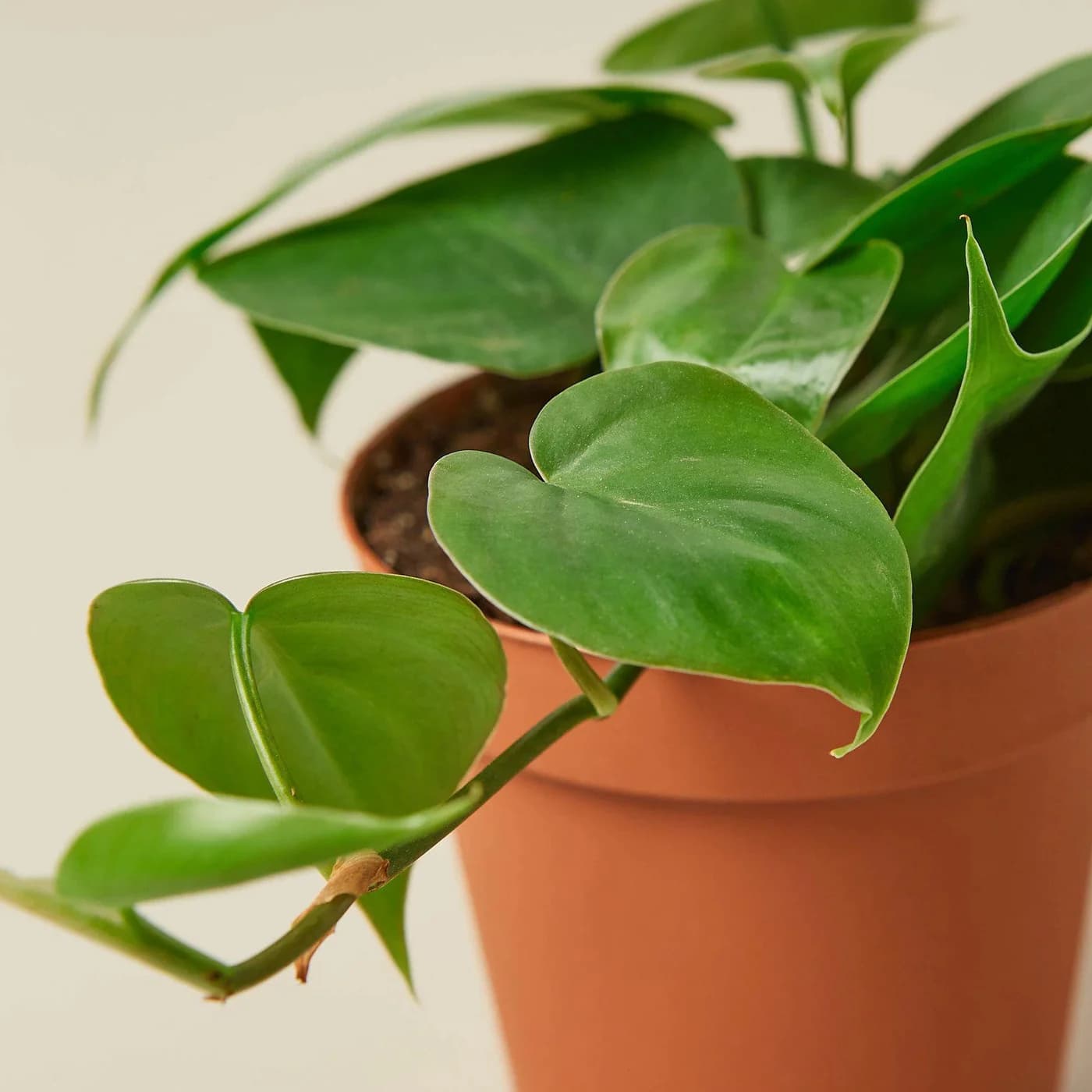
Heartleaf Philodendron
Philodendron hederaceum var. oxycardium
If your spot is truly dim, start here. Clemson Extension names the heartleaf philodendron as a low light plant for north-facing rooms or several feet back from an east window. In a dark spot the vines stretch out, with longer gaps between leaves, so snip the tips now and then to keep it full. The ASPCA lists it as toxic to cats and dogs.
Toxic to petsLow to bright lightGolden Pothos
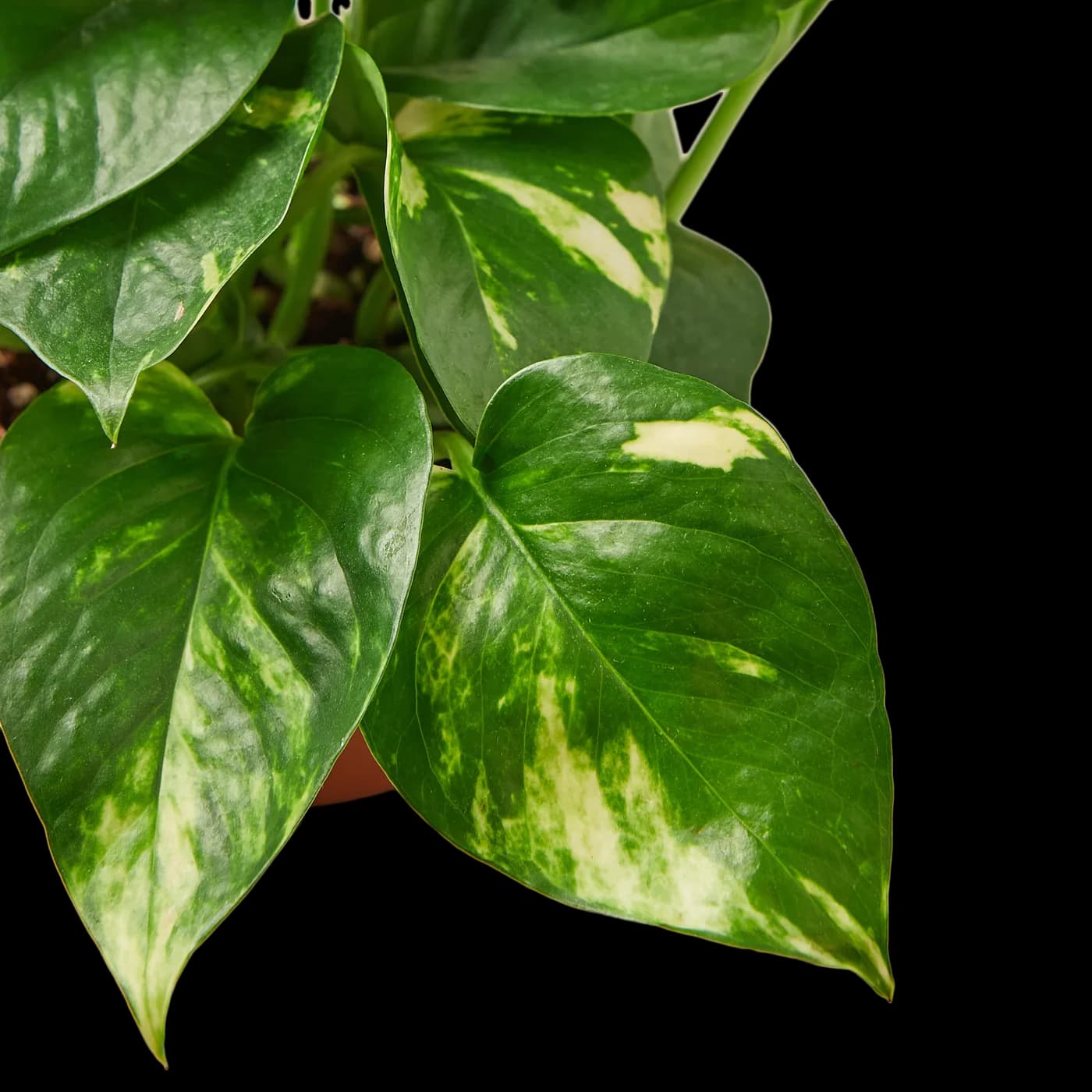
Epipremnum aureum
Clemson lists golden pothos among low light plants, though it grows faster with more light. It has gold to lose: Penn State Extension notes that pothos in low light eventually lose their variegation, so give it the brightest of your dim spots. Let the top inch of soil dry between waterings. The ASPCA lists it as toxic to cats and dogs.
Toxic to petsLow to bright lightRattlesnake Plant
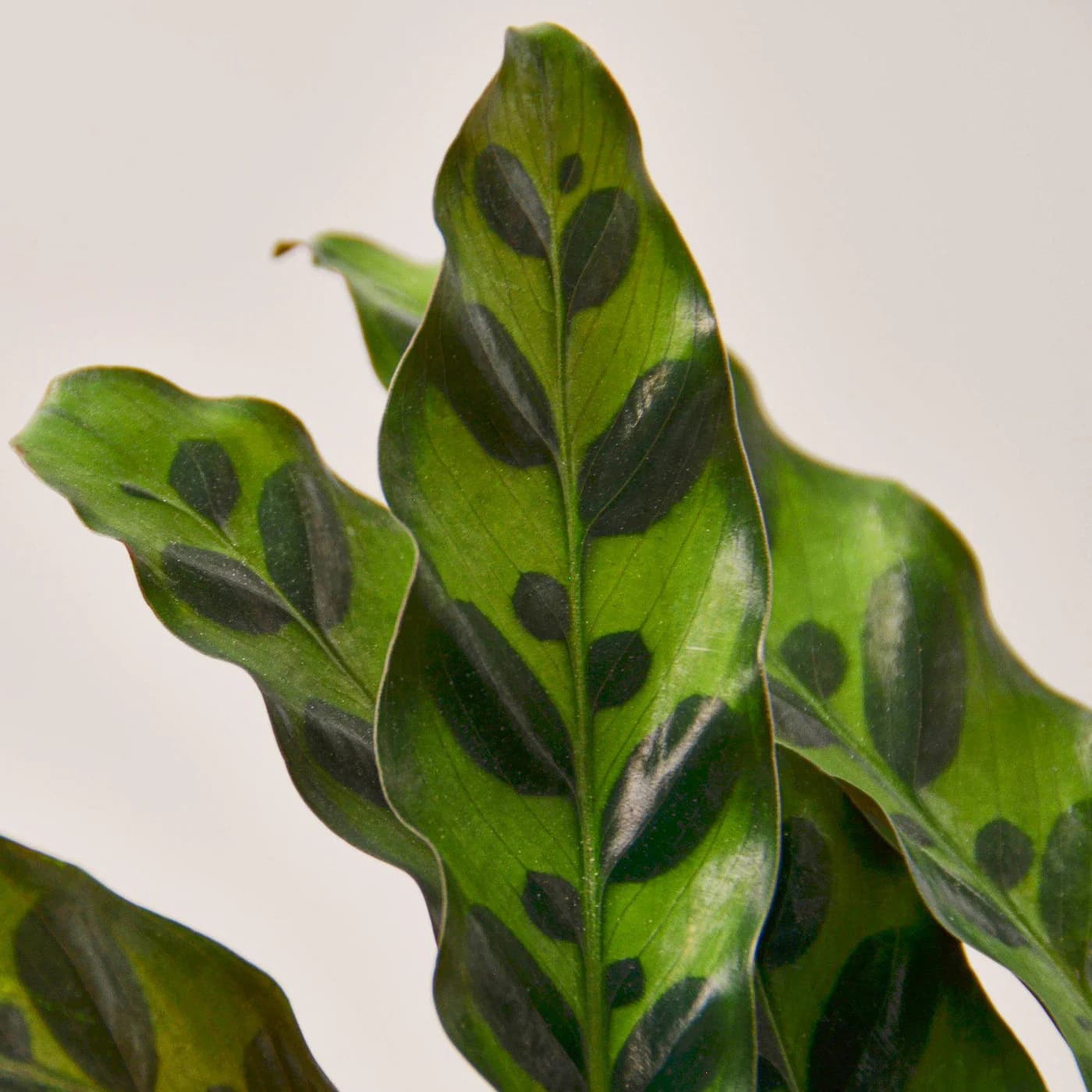
Goeppertia insignis
The one pick here that the ASPCA lists as non-toxic to cats and dogs. UF/IFAS Extension says calatheas tolerate as little as 75 foot-candles indoors, so it manages a dim spot, but it looks best with more light. It is fussier than the plants above in other ways too: UF/IFAS suggests 40 to 60 percent humidity, and UGA Extension says to keep its soil moist.
Pet safeLow to medium light
Do low light plants actually grow in low light?
Slowly, at best. Clemson Extension puts the bar at about 100 foot-candles for 12 hours a day just to keep a foliage plant in good condition for a year, and about 200 before feeding makes any difference to its growth. A dim corner often sits near or below that first number. Within this list, some plants hold up there much better than others:
- Hold up well: the heartleaf philodendron and golden pothos. Clemson Extension counts both as low light plants, and University of Georgia Extension rates both for anything from high light down to low. They keep their leaves for a long time in a dim spot, but expect slow growth and longer gaps between leaves.
- Tolerate it, but look better with more light: the rattlesnake plant. UF/IFAS Extension says calatheas, the group it belongs to, can get by on as little as 75 foot-candles indoors but look best at 150 to 200.
If a plant in a dim spot stops growing for months, it needs more light, not more fertilizer or water. Move it closer to the window.
How much light does your room get?
Light is easy to overestimate, because your eyes adjust to a dim room. A plant can't. Clemson Extension notes that the inside of a well-lit home is often under 100 foot-candles, while a clear day outdoors can top 10,000. Check four things: which way the window faces, how far the plant sits from it, what's outside the glass, and what the shadow test tells you.
- Window direction. A south- or west-facing window gets the most light, and an east-facing one gets gentler morning light. A north-facing window gets soft, steady light with little or no direct sun. Clemson Extension suggests low light plants for north-facing rooms or several feet back from an east window.
- Distance. Light drops off quickly as you move into a room. A table six feet from the window gets far less than the sill, and the far corner of a north-facing room is low light.
- What's outside. A big tree, a porch roof, a building across the street or a sheer curtain can turn a bright window into a dim one. Clemson notes that outdoor shade, curtains and even wall color change how much light a spot gets.
- The shadow test. Turn off the lamps and ceiling lights first, since electric light casts a sharp shadow even when it's too dim for plants. Then, around midday on a bright day, hold your hand a foot above a sheet of white paper where the plant will sit. A crisp, dark shadow means bright light, a soft, blurry one means medium light, and a faint one means low light. No shadow at all means the spot needs a grow light.
How often should you water low light plants?
A plant in low light grows slowly, so it drinks slowly too. University of Georgia Extension notes that plants in high light lose more water than plants in low light. In a dim, cool room the main risk is soil that stays wet so long that the roots rot.
Skip the schedule and check the soil instead. Push a finger an inch or so into the soil, as UGA Extension suggests, and water only when it has dried as far as that plant likes, which in a dim spot can take much longer than you'd expect, and longer again in winter. Then water slowly until the soil is evenly moist, and tip out any water that collects in a saucer or cover pot. Never leave the pot standing in water.
The golden pothos and heartleaf philodendron want water once the top inch is dry: UGA's care table says to let the surface dry before watering them again. The rattlesnake plant likes steadier moisture, and UGA puts it among plants to keep moist, so check it more often and water as soon as the surface feels dry. Our guide to watering houseplants goes into more detail, and our care guide covers the rest of the routine.
Feed lightly. Clemson Extension notes that plants in low light need less fertilizer, and that plants resting through the short days of winter shouldn't be fed at all. Wipe dust off the leaves with a damp cloth so they catch what light there is, and give the pot a quarter turn every week or two so the plant doesn't lean.
Which low light plants are safe for cats and dogs?
Only one of the three picks, the rattlesnake plant, is non-toxic to cats and dogs according to the ASPCA. The other two are toxic. Our pet-safe houseplants guide covers every plant we sell.
- Non-toxic to cats and dogs according to the ASPCA: the rattlesnake plant, listed there under its old name, Calathea insignis. The ASPCA notes that eating any plant can still cause stomach upset.
- Toxic to cats and dogs: golden pothos and heartleaf philodendron. The ASPCA lists both as toxic, so keep them in a room your pets don't use.
- If you think a pet has eaten a toxic plant, call your vet or the ASPCA Animal Poison Control Center's 24-hour line at (888) 426-4435.
Which houseplants need a brighter spot?
The other six plants we sell want more light than a dim corner gives. The neon pothos is the same species as golden pothos, but Penn State Extension notes that pothos kept in low light eventually lose the brightness or variegation of their leaves, and the neon's chartreuse is the whole point of it. The satin pothos is a different plant, Scindapsus pictus, and University of Georgia Extension rates it for medium light rather than low. Dieffenbachia 'Camille' belongs in a brighter spot too: Clemson Extension counts dumb canes as medium light plants and says they grow barely at all if light is low.
We also suggest a brighter spot for the Swiss cheese vine, the money tree and the Chinese money plant; each plant's own guide explains where to put it. In general, a spot near an east window, or a few feet back from a west or south one, out of hot direct sun, is a good place to start.
For pets: the ASPCA lists the money tree as non-toxic to cats and dogs, and the neon pothos, satin pothos and Dieffenbachia 'Camille' as toxic. The Swiss cheese vine has no ASPCA entry, but its larger cousin, Monstera deliciosa, is listed as toxic, so treat it as toxic. The Chinese money plant isn't on the ASPCA list at all, so we don't call it pet safe.
Questions
What is the best low light plant for a dark room?
For the dimmest spot that still gets some daylight, a heartleaf philodendron is the most reliable choice, with golden pothos close behind. Both are toxic to cats and dogs. If you have pets, the rattlesnake plant is the one non-toxic option on this list, placed as close to the window as the room allows.
Can houseplants live in a room with no windows?
Only with a grow light. Clemson Extension notes that many indoor plants grow well under fluorescent lamps or special plant lights, while ordinary incandescent bulbs tend to make plants stretch and turn leggy. Put the light on a timer and give the plant a dark stretch each night: Clemson suggests 16 hours of light and 8 of darkness for most plants.
Is a north-facing window considered low light?
Clemson Extension treats it as one. It suggests low light plants for north-facing rooms or several feet back from an east window, and medium light plants within several feet of a south or west window or in an east-facing one. The sill itself is brighter than the far side of the room, though, so a spot right by a north window suits every plant on this list.
How can I tell if my plant isn't getting enough light?
Look at the new growth. Long bare gaps between leaves, smaller leaves, stems leaning hard toward the window and colorful leaves turning greener all point to too little light. Soil that stays wet for days is another clue, since plants in low light use less water. Move the plant closer to the window, and feel the soil with a finger before you water again.
Can I keep a low light plant in a bathroom?
Yes, if the bathroom has a window. UF/IFAS Extension says calatheas keep their looks best at 40 to 60 percent humidity, so the rattlesnake plant is a good fit for a bathroom with some daylight. A bathroom with no window needs a grow light, and soil dries slowly in a cool, dim room, so feel it before you water.
Should you fertilize a low light plant?
Lightly, if at all. Clemson Extension says plants in low light need less fertilizer, and that foliage plants need at least 200 foot-candles before feeding does them any good, which is more than most dim spots get. Skip feeding in winter. If a plant in a dark corner is growing slowly, more light is the fix, not more fertilizer.
Sources
- Clemson Cooperative Extension HGIC 1450: Indoor Plants, Cleaning, Fertilizing, Containers and Light Requirements
- Clemson Cooperative Extension HGIC 1503: Dieffenbachia
- UF/IFAS Extension (EP285): Cultural Guidelines for Commercial Production of Interiorscape Calathea
- University of Georgia Extension Bulletin 1318: Growing Indoor Plants with Success
- Penn State Extension: Pothos as a Houseplant
- ASPCA Animal Poison Control: Toxic and Non-Toxic Plant List