- Guides
- How to water houseplants: how often, how much and how to tell
Guide
How to water houseplants: how often, how much and how to tell
Overwatering kills more potted plants than anything else, so the real skill is checking the soil before you reach for the watering can.
How often should you water houseplants?
There's no single answer. How often a houseplant needs water depends on the plant, its light, the season, the size of its pot, the soil and the warmth of the room. Clemson University's Home & Garden Information Center says there's no pat answer, and that the rule of thumb is to water when necessary.
That's why a fixed schedule goes wrong. A rattlesnake plant in a warm, bright room in July drinks fast. The same plant in a cool room in January can go much longer between drinks. Water both every Sunday and one goes thirsty while the other sits in wet soil.
Wet soil is the bigger risk. Clemson names overwatering as the main cause of death of potted plants: roots need oxygen as well as water, and roots surrounded by water can rot. The Royal Horticultural Society (RHS) warns that roots left sitting in water can drown, and says to check that the pot needs water before you water it. So check on a schedule, once or twice a week, and water only the plants that are ready.
The plants
Golden Pothos
Epipremnum aureum
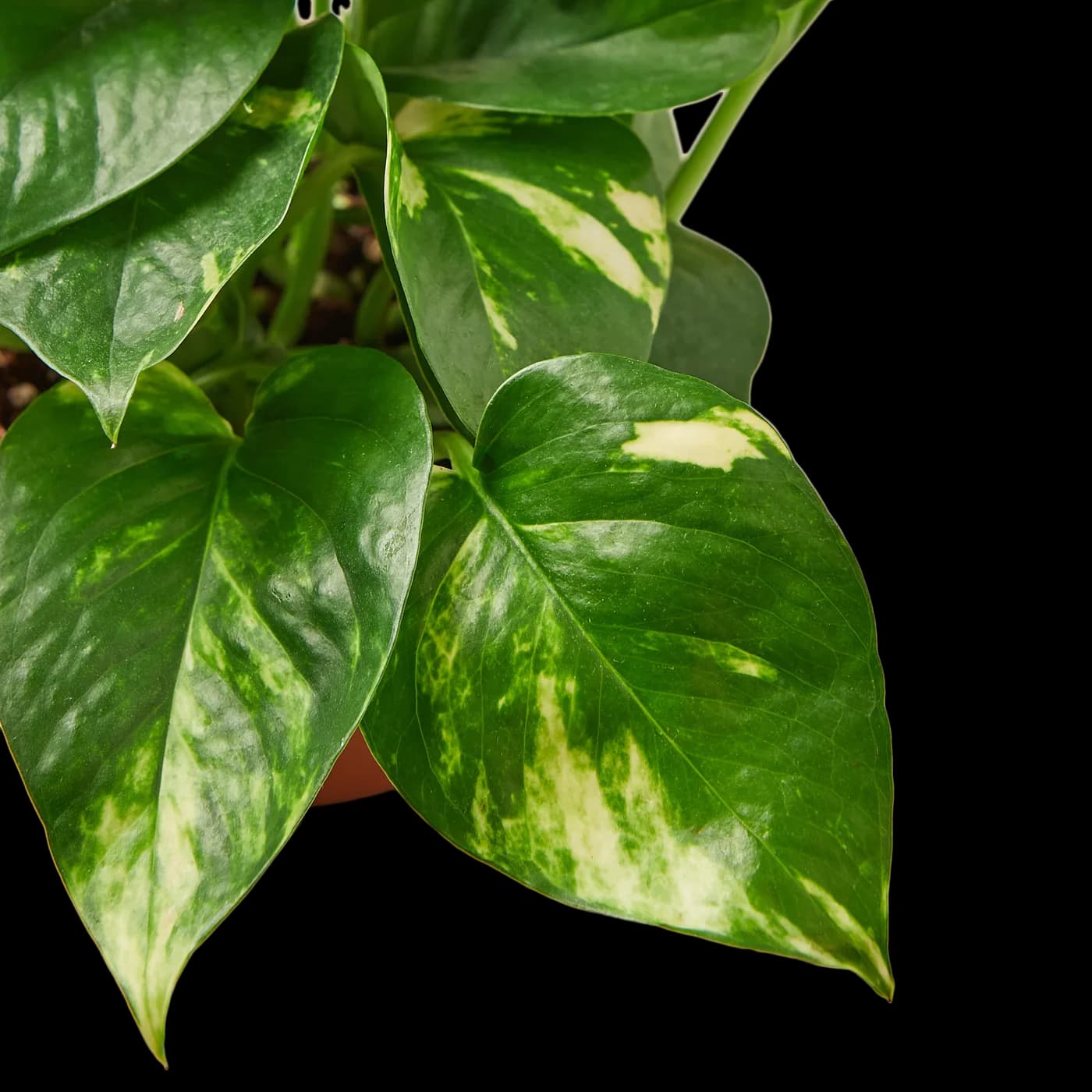
If you tend to forget, start here. Penn State Extension says pothos is better kept too dry than too wet, and that a thirsty plant's leaves droop for a while, so a late watering rarely does lasting harm. Water when the top inch is dry, and if you're unsure, give it another day.
Toxic to petsLow to bright lightHeartleaf Philodendron
Philodendron hederaceum var. oxycardium
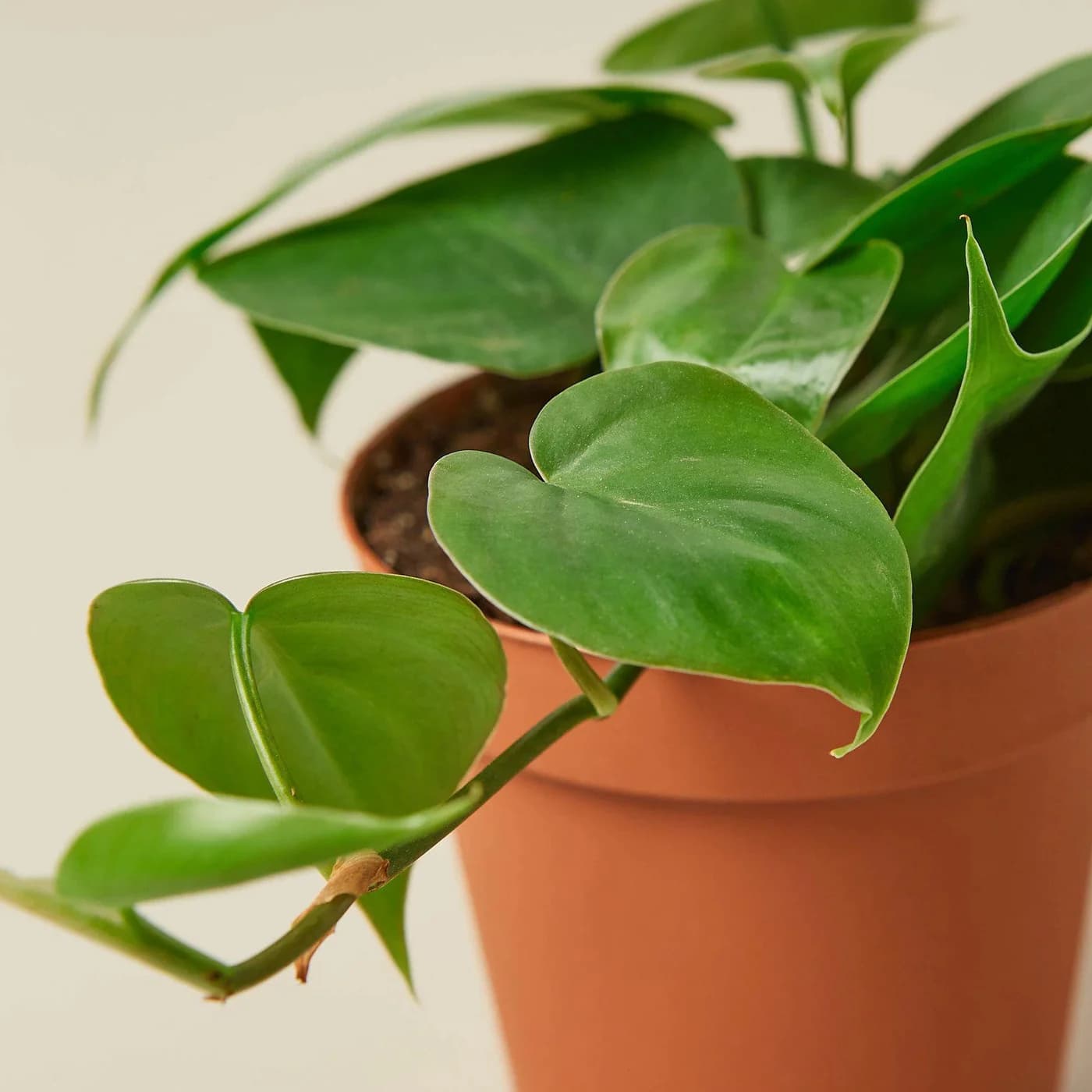
A good middle-of-the-road plant for learning the finger test. University of Georgia Extension puts it in the group that should dry at the surface before the next watering, but not much further. Check every few days, water when the top inch is dry, and tip out anything left in the saucer or cover pot.
Toxic to petsLow to bright lightRattlesnake Plant
Goeppertia insignis
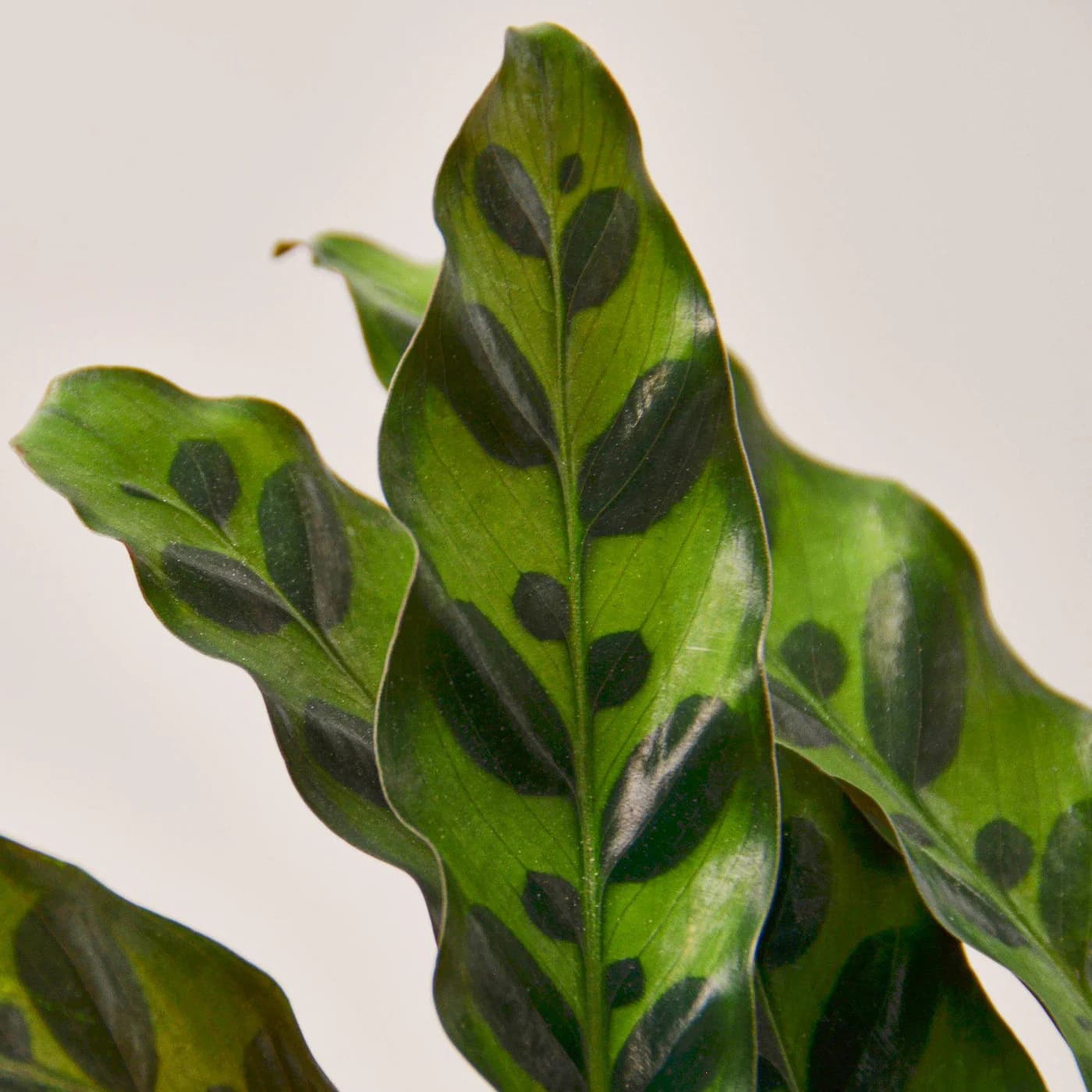
For people who like to water. UGA Extension's care table lists the rattlesnake plant among plants to keep moist, so check it more often than the others and water as soon as the surface feels dry. Never leave it standing in water, though: the RHS warns that roots left sitting in water can drown.
Pet safeLow to medium light
How to tell when a plant needs water
Use your hands before the watering can. Each of these checks takes a few seconds:
- The finger test: Push a finger into the soil up to the first joint, about an inch deep. If it's dry at your fingertip, most plants are ready for water. If it's cool and damp, check again in a day or two. Clemson calls touching the soil the most accurate test.
- Pot weight: The RHS notes that drier pots feel lighter than wet ones. Lift the pot right after watering so you know what wet feels like, and with a little practice you can judge a Small plant just by picking it up.
- Soil color: Most potting mixes turn paler as they dry, though that only tells you about the surface.
- Moisture meters: Clemson notes they vary widely in accuracy, so treat one as a second opinion.
Don't go by drooping leaves alone. Clemson points out that roots damaged by rot can't take up water, so a plant in soggy soil wilts too, and watering it makes things worse. Feel the soil before you water a droopy plant.
What changes how often a plant needs water
The same plant can need water often in one spot and rarely in another. These are the main reasons:
- Light: More light means faster drinking. University of Georgia Extension notes that plants in high light lose more water than plants in low light, and Clemson says a plant in a warm, sunny spot needs water more often than one in a cool, dim spot. Expect a new rhythm whenever you move a plant. Plants in dim rooms, like those in our low light houseplants guide, usually need water least often.
- Season: Clemson notes that a plant needs less water while it is resting, and most houseplants slow down in winter. Heating pulls the other way, though: the RHS notes that pots dry out faster in winter when central heating dries the air. Keep checking rather than switching to a winter routine.
- Room temperature: The RHS notes that plants in a cool room need watering less often than plants in a warm one. Check more often near a heating vent, a radiator or a hot window.
- Pot size: Less soil holds less water, so a Small plant in its 4-inch pot will usually need a drink sooner than a Medium in its 6-inch pot. Clemson adds that a large plant in a small pot needs water more often than a small plant in a large one. If a plant dries out very quickly and makes little growth, the RHS says it may have outgrown its pot.
- Pot material and soil: Clemson notes that water evaporates quickly through the sides of a porous clay container, so those need watering more often than plastic or glazed ones, and that dense, peaty mixes hold more water than loose ones.
How to water indoor plants
When the soil says it's time, water thoroughly. A small splash only wets the top, while Clemson explains that a thorough watering reaches the bottom two-thirds of the pot, where most of the roots are. Here's how:
- Go slowly and evenly: Pour at the base of the plant and work around the pot so the whole surface gets wet, not just one side. Keep water off the leaves where you can, since the RHS advises against leaving foliage wet after dark in cool weather.
- Stop when the soil is evenly moist: In a pot with a drainage hole, a little water running out of the bottom tells you the soil is soaked through. Either way, the soil should feel like a wrung-out sponge, not soupy.
- Never leave the pot standing in water: Once it has drained, tip out any water that has collected in the saucer or cover pot. Clemson says to empty the saucer, and the RHS warns that waterlogged soil can kill a pilea's roots.
- Use room-temperature water: Clemson recommends water between 62 and 72°F, and the RHS warns that cold water can harm plants, especially in winter. Filling the watering can the day before is an easy way to get there.
- Skip softened water: Clemson notes that water from a home softener adds sodium and chloride to the soil, which can damage plants, and the RHS says never to use it.
- Watch for brown tips: The RHS notes that fluoride and chlorine in tap water can harm some plants over time. UGA Extension notes that fluoride can scorch leaf tips and lists the rattlesnake plant among plants sensitive to fluoride and chlorine. Letting tap water stand for 24 hours lets the chlorine escape, and the RHS suggests rainwater or filtered water for plants such as pileas.
If the soil has dried out completely, water may run down the sides without soaking in. Clemson's fix is to water once, then again half an hour later. If the pot has a drainage hole, you can also stand it in a sink of water until the surface turns moist, then let it drain completely.
Signs of overwatering and underwatering
The two can look alike. Clemson notes that both lead to poor root health, and damaged roots can make a plant wilt either way. Let the soil break the tie:
- Overwatering: The soil stays damp for days, lower leaves turn yellow and drop, and the plant may wilt or collapse even though the soil is wet. The RHS lists collapse and yellowing leaves that drop as possible signs. Stop watering until the top inch has dried, tip out any standing water, and move the plant nearer a window, out of direct sun, so it uses water faster.
- Underwatering: The soil is dry, the pot feels light, the leaves go limp and their edges may turn brown and crisp. The RHS notes that overly dry soil can cause wilting and dieback, and Penn State Extension notes that a thirsty pothos droops for a while. Some plants drop leaves instead: the Missouri Botanical Garden says the money tree sheds leaves if its soil dries out. Water thoroughly, using the two-step method above if water runs straight through, and check sooner next time.
Yellow or dropping leaves alone won't tell you which it is. Feel the soil and change one thing at a time. Each plant's own guide lists the fixes for its usual problems.
How to water plants while you're on vacation
The RHS says houseplants can go a week or two without water in winter if the room stays cool, though in summer the warmth makes them dry out faster. Before you leave:
- Water the day before: Give each plant that needs it a thorough drink, then tip out the saucer or cover pot. Don't leave pots standing in water to tide them over, since that's how roots rot.
- Move plants out of direct sun: A cooler spot a few feet back from the window slows how fast the soil dries.
- Group them together: The RHS suggests clustering plants and covering them with a sheet of clear plastic to cut water loss.
For longer trips, or any trip in a hot summer, ask a friend to check on the plants that mind drying out most: the rattlesnake plant and the money tree. Show them the finger test so they water only what needs it. The pothos are the most forgiving if a watering gets missed.
How often to water each of our plants
Every plant in our shop arrives already potted, in a Small 4-inch or Medium 6-inch pot. Use the finger test for all nine. What changes is how dry the soil should get before you water again. University of Georgia Extension's care table sorts houseplants into three groups: keep the soil moist, let the surface dry before watering again, or let the mix get moderately dry. Our nine fall into the first two:
- Water when the top inch is dry: golden pothos, neon pothos, satin pothos, heartleaf philodendron, Swiss cheese vine, Dieffenbachia 'Camille', Chinese money plant and money tree. UGA's table puts pothos, satin pothos, heartleaf philodendron, monsteras and dumb cane in its middle group, and the RHS gives the same advice for pilea: water once the top few centimeters start to dry.
- Within that group, the golden and neon pothos are the most forgiving: Penn State Extension says pothos is better kept too dry than too wet. The money tree is the least forgiving of dry soil: the Missouri Botanical Garden says it does best with moderate but even moisture and drops leaves if the soil dries out, so check it a little sooner than the others.
- Keep lightly moist: rattlesnake plant. UGA's table lists it among plants to keep moist, so water as soon as the surface feels dry and don't let the soil dry out further down. Lightly moist still means never soggy, and it still shouldn't stand in water.
Expect all nine to need less water in winter, especially in a cool room. When a new plant arrives, feel the soil before you water it. After a few days in a box it may be dry or still damp, and the finger test tells you which. Each plant's own guide has more detail, and if you're just starting out, our easy houseplants for beginners guide is a good next read.
Questions
How often should I water my houseplants?
When the soil tells you to, not on a set day. Check once or twice a week. Most of our plants, from pothos to the money tree, are ready when the top inch is dry, while the rattlesnake plant wants water as soon as the surface dries. Expect to water less in winter and in cool, dim rooms.
Is it better to water houseplants from the top or the bottom?
Both work. Watering slowly from the top until the soil is evenly moist is simplest. Bottom watering, standing the pot in a sink of water until the surface turns moist, only works if the pot has a drainage hole, and Clemson suggests it for soil that has dried out and is hard to rewet. Either way, let the pot drain and never leave it standing in water.
Is it worse to overwater or underwater a houseplant?
Overwatering kills more plants. Clemson calls it the main cause of death of potted plants, because roots in soggy soil can't get oxygen and rot. Letting soil get very dry does harm too: it can damage roots, and dry, peaty soil is hard to rewet. If you're unsure, wait a day and check again.
Can I use tap water on houseplants?
For most plants, yes, as long as it's at room temperature and hasn't been through a water softener. The RHS notes that fluoride and chlorine in tap water can harm some plants over time, and suggests letting tap water stand for 24 hours so the chlorine can escape. For pileas it prefers rainwater or filtered water, though it says they tolerate tap water.
How long can houseplants go without water?
It depends on the plant and the season. The RHS says houseplants can go a week or two in winter if the room is cool, but they dry out faster in summer. Pothos cope best with a missed watering. The rattlesnake plant and the money tree are the ones to arrange help for.
Sources
- Clemson Cooperative Extension HGIC 1459: Indoor Plants, Watering
- Royal Horticultural Society: How to grow houseplants
- University of Georgia Extension Bulletin 1318: Growing Indoor Plants with Success
- Penn State Extension: Pothos as a Houseplant
- Missouri Botanical Garden Plant Finder: Pachira aquatica
- Royal Horticultural Society: How to grow pilea