- Guides
- Satin Pothos
Plant guide
Satin Pothos Care: How to Grow the Silver-Splashed Vine
A slow, silver-splashed trailing vine that isn't a true pothos, likes bright indirect light, curls its leaves when thirsty, and is toxic to cats and dogs.
What is satin pothos?
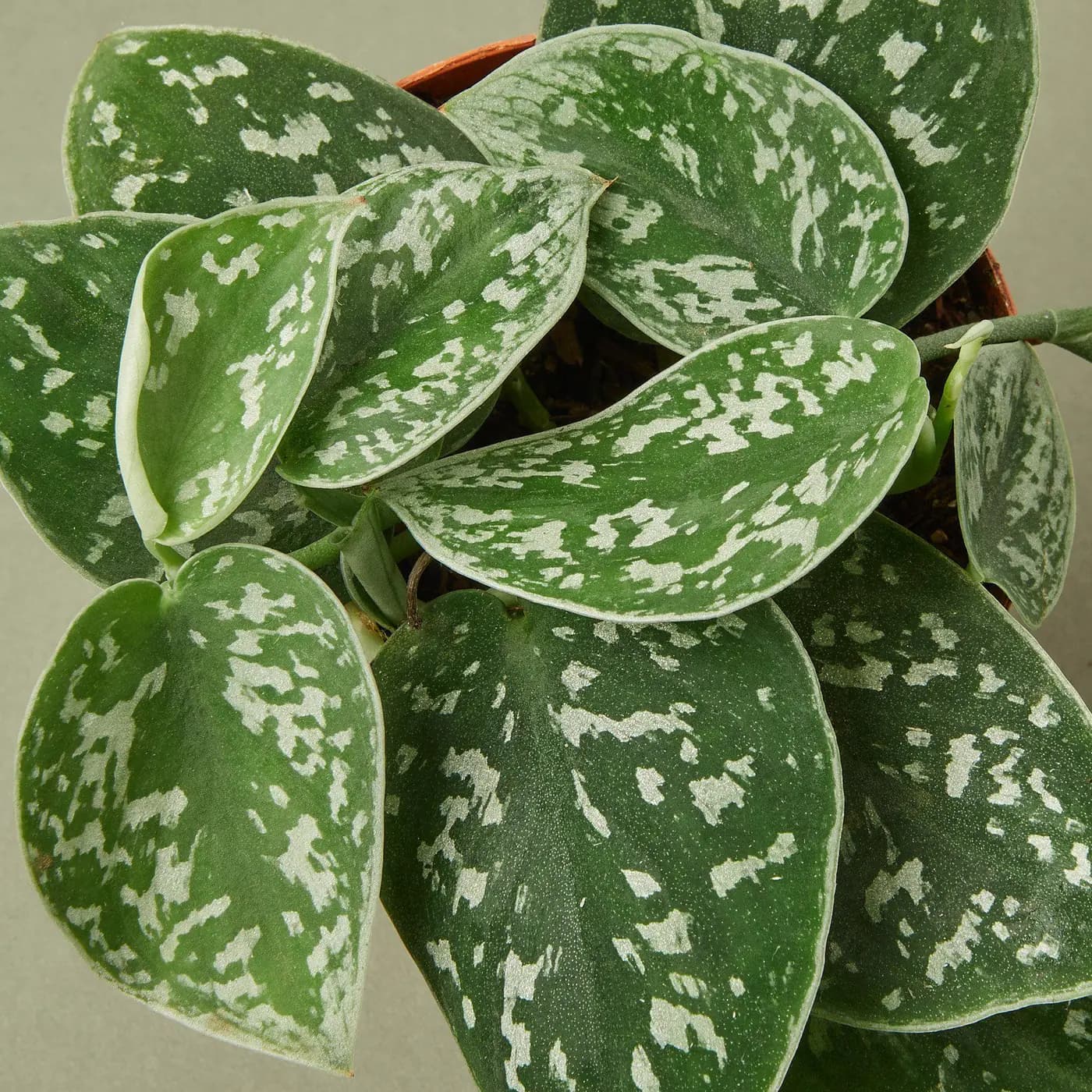
Satin pothos is a slow-growing trailing vine with dark green leaves splashed with silver. Its botanical name is Scindapsus pictus, and it's also sold as silk pothos. Missouri Botanical Garden describes the leaves as satin-textured and matte, with irregular silver-gray blotches, and notes that pictus means painted.
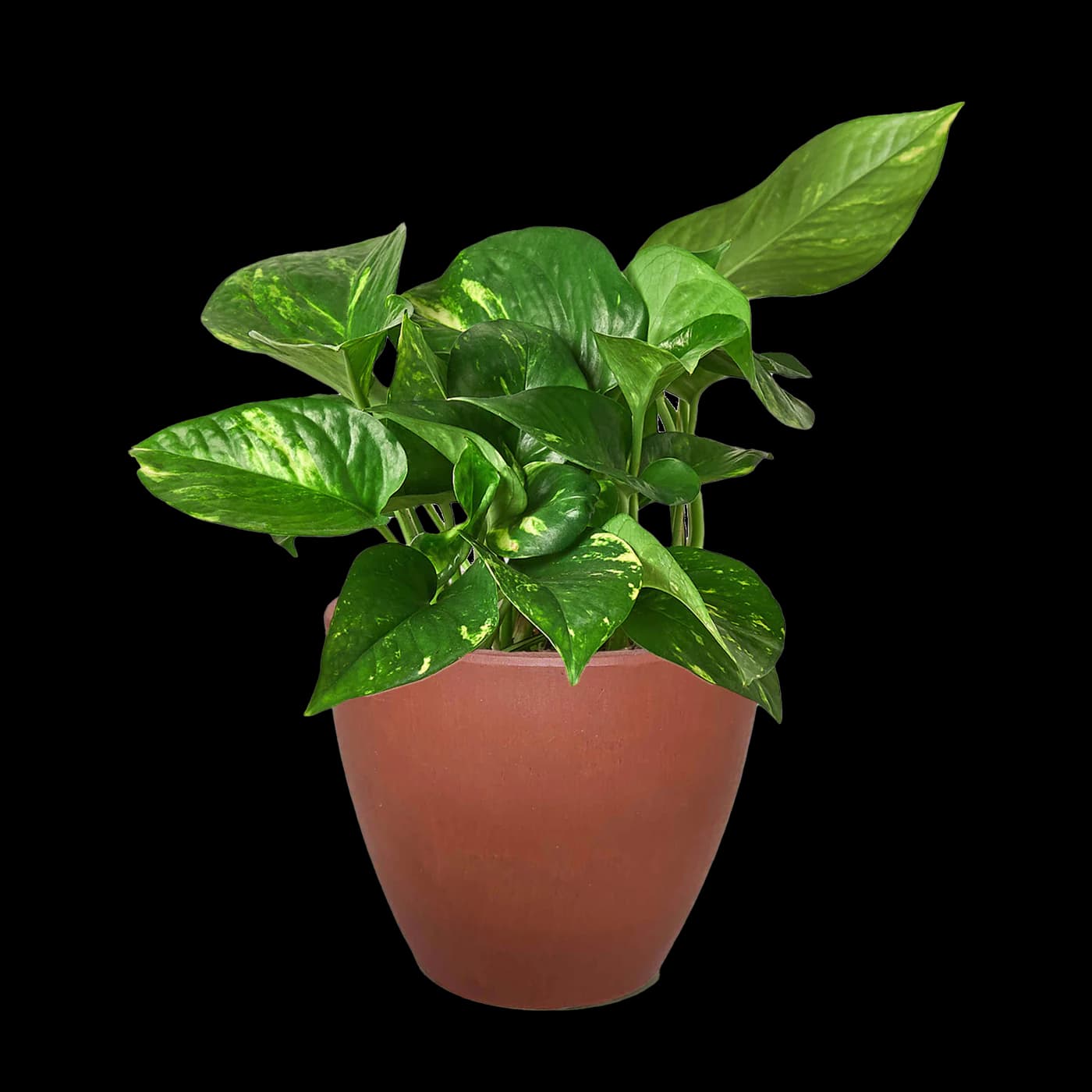
Despite the name, it isn't a true pothos. Clemson Extension puts it plainly: it's typically called satin pothos, although it's not a true pothos. The plant most people mean by pothos is golden pothos, Epipremnum aureum. Satin pothos belongs to a different genus, Scindapsus, in the same arum family, and Clemson says it's often mistaken for pothos because the leaves and growth habit are so similar.
In the wild it climbs tree trunks in Bangladesh and tropical Southeast Asia, NC State Extension says. Indoors it usually keeps its juvenile oval leaves, 3 to 4 inches long. NC State lists several named forms, including 'Argyraeus', with small dark green leaves edged in silver, and 'Exotica'. We sell ours simply as satin pothos, already potted at the greenhouse in a terracotta or black eco pot.
Is satin pothos a good houseplant for you?
Satin pothos suits you if you want a trailing plant with more texture than the usual green vine and you're happy with slow, steady growth. Here's what it does well:
- It stays compact. NC State and Missouri Botanical Garden both call it slow growing, and indoors it reaches about 1.5 to 3 feet. Our guide to small plants for desks and shelves has more ideas.
- It tells you when it's thirsty. NC State notes that curling leaves can be a sign of underwatering.
- It can trail from a shelf or hanging pot, or climb an upright stake or moss pole, as NC State and Missouri Botanical Garden suggest.
What it doesn't do is grow fast or forgive soggy soil. Clemson says it grows much more slowly than pothos, is less tolerant of overwatering, and is more prone to pests and disease. It rarely flowers indoors, and it's toxic to cats and dogs.
It's a good match if you check on your plants once or twice a week. If you want a vine that copes with a dim corner and fills out quickly, golden pothos is the easier choice; Clemson says pothos tolerate lower light.
Is satin pothos toxic to cats and dogs?
Yes. The ASPCA lists satin pothos (Scindapsus pictus), also called silk pothos, as toxic to dogs, cats and horses. The toxic principle it names is insoluble calcium oxalates, the same culprit Clemson names for golden pothos.
Signs the ASPCA lists include oral irritation, pain and swelling of the mouth, tongue and lips, excessive drooling, vomiting and difficulty swallowing. People should take some care too: the RHS describes the plant as harmful if eaten and a skin and eye irritant, and recommends wearing gloves when handling it. Keep it out of reach of small children, and wash your hands after pruning.
If you think your pet has chewed it, call your veterinarian or the ASPCA Animal Poison Control Center at (888) 426-4435. A consultation fee may apply.
A high shelf helps, but trailing vines hang down and fallen leaves land on the floor. If you share your home with a cat or dog that chews plants, our guide to pet-safe houseplants rounds up plants the ASPCA lists as non-toxic to cats and dogs.
How much light does a satin pothos need?
Give satin pothos bright, indirect light. NC State, Missouri Botanical Garden and the RHS all recommend bright indirect or filtered light and warn against direct sun. Near a bright window but out of the sun's direct rays is ideal; a sheer curtain helps in a sunny room.
It copes with a little less. Missouri Botanical Garden calls it a good houseplant for sunny to shady areas, so a spot farther back from the window is fine. But it's slow even in good light, so don't expect much from a dim corner, which is why we list it as medium to bright light. If your room is truly dim, our low light houseplants guide has better picks.
Keep it out of hot direct sun, which NC State says it won't tolerate, especially harsh afternoon sun through the glass in summer.
How often should you water a satin pothos?
Water a satin pothos when the top inch of soil feels dry, not on a fixed day of the week. Missouri Botanical Garden says to keep the soil consistently moist in the growing season, and the RHS says to water moderately. But Clemson warns that satin pothos is less tolerant of overwatering than pothos, and NC State says root rot can follow in wet, poorly drained soil. Waiting for the top inch to dry keeps the roots lightly moist without leaving them soggy.
To check, push a finger into the soil up to the first joint, the test Clemson recommends. If it's dry at your fingertip, it's time. If it still feels damp, wait a few days and check again.
When you water, pour slowly around the base of the plant until the soil is evenly moist, then stop. Never leave the pot standing in water, and tip out anything that collects in a saucer or cover pot. Clemson calls overwatering the main cause of death in potted plants, because roots surrounded by water can't take up oxygen.
How often that works out to depends on your room; Clemson notes that a plant in a warm, sunny spot needs water more often than one in a cool, dim spot. In spring and summer, check a Small every few days and a Medium about once a week. In winter, water less, as both Missouri Botanical Garden and the RHS advise.
Use water at about room temperature: Clemson suggests 62 to 72°F and advises against softened water. Our guide to watering houseplants covers the basics.
Why are my satin pothos leaves curling?
Curling leaves are often the satin pothos thirst signal. NC State lists curling leaves as a possible sign of underwatering and yellow leaves as a possible sign of overwatering, which makes this plant fairly easy to read.
When you notice curled leaves, feel the soil before you do anything else:
- Dry an inch or more down: it's thirsty. Water slowly until the soil is evenly moist, tip out any extra, and check the leaves again over the next day or two.
- Bone dry and hard to rewet: use Clemson's double watering method. Water once, then again half an hour later.
- Still damp: don't add more water. Clemson notes that wilting isn't always a sign of thirst; roots damaged by too much water can't take up what's there, and watering can make it worse. Let the soil dry out.
Treat curling as a late cue, not a schedule. If you check the soil once or twice a week, you'll usually water before the leaves have to tell you. Letting it reach the curling stage over and over isn't ideal: Clemson advises against letting potting soil get excessively dry, since peat that dries out completely holds less water afterward.
Everyday satin pothos care: feeding, pruning and repotting
Keep it warm. NC State and Missouri Botanical Garden both give 65 to 85°F as the best range, and Missouri Botanical Garden says to avoid temperatures below 60°F, since cooler air can damage the leaves. In winter, keep it away from drafty doors and windows. None of the care sources we used call for misting or a humidifier.
Feed it monthly in spring and summer with a balanced liquid houseplant fertilizer, as the RHS and Missouri Botanical Garden suggest, and ease off over winter.
Pruning is optional. The RHS says none is required, and NC State says pinching the stems helps keep the plant tidy. Snip a stem just above a leaf when a vine gets longer than you'd like.
For a climbing look, give it a moss pole or upright stake and tie the stems loosely as they grow. Missouri Botanical Garden says plants trained on a support indoors typically reach 18 to 36 inches tall, and that mature plants can produce lobed leaves, though it's usually grown in its juvenile phase.
Your plant arrives potted, so there's nothing to repot this season. Clemson says most plants can be repotted every year or two depending on their growth rate, once they're overcrowded or root-bound, and satin pothos is slow. When it's time, a Small can move up to a 6 inch pot. Use a well-drained potting mix high in organic matter, as NC State describes.
What to do when your satin pothos arrives
Your satin pothos leaves the greenhouse already potted, in one box, so there's nothing to set up. It usually reaches you in about 3 to 8 business days, with extra protection packed in cold weather; our shipping page has the details. Open the box the day it arrives. For the first week:
- Unwrap it, lift it by the pot rather than the vines, and set it where it will live: bright, indirect light, out of direct sun and away from cold drafts.
- Feel the soil. If it's dry an inch down, water slowly until it's evenly moist and tip out anything that collects in a saucer or cover pot. If it's damp, leave it a few days.
- Curled leaves with dry soil mean it got thirsty on the way, so water it. Curled leaves with wet soil are a reason to hold off.
- Snip off a yellow or bent leaf or two at the stem if the trip left any.
- Leave it in its pot and skip fertilizer while it settles in.
The pot is our grower's recycled eco pot, which they describe as recycled plastic blended with stone powder and wood dust, in terracotta or black. If your plant arrives damaged or declines in its first 30 days, we'll replace it.
Common satin pothos problems and how to fix them
Most satin pothos problems come back to water, light or temperature:
- Curled leaves and dry soil: thirst, as NC State notes. Water slowly until the soil is evenly moist, and check the soil a little more often.
- Yellow leaves and soggy soil: probably too much water. NC State says yellow leaves may be a sign of overwatering. Let the top inch dry before you water again, tip out any water sitting under the pot, and move it somewhere brighter if it's in a dim spot.
- Wilting or curling while the soil is wet: possibly root rot, which NC State and Missouri Botanical Garden both say can happen in wet, poorly drained soil. Let the soil dry before you water again. If it keeps declining in its first 30 days, get in touch and we'll replace it.
- Scorched patches on the side facing the window: too much direct sun. Pull it back from the glass or add a sheer curtain.
- Damaged leaves after a cold snap: chill. Missouri Botanical Garden says air below 60°F can damage the foliage, so move it away from drafty windows and doors.
- Very little new growth: often just its nature. Clemson says it grows much more slowly than pothos, and it will do even less in winter.
- Small insects on stems or under leaves: NC State says to watch for scale, mites, mealybugs and thrips. Check leaf undersides when you water, and move an infested plant away from your others.
Every satin pothos from our shop arrives potted in a Small or Medium eco pot in terracotta or black, and comes with our 30-day guarantee.
Questions
What is the difference between satin pothos and golden pothos?
They're separate plants in the same arum family. Golden pothos is Epipremnum aureum; satin pothos is Scindapsus pictus. Clemson Extension says satin pothos has broader leaves, grows much more slowly, and is less tolerant of overwatering. Its leaves are splashed with silver, while golden pothos leaves have yellow variegation. Both are toxic to pets.
Does satin pothos grow fast?
No. NC State, Missouri Botanical Garden and the RHS all describe it as slow growing, and Clemson says it grows much more slowly than pothos. That makes it easy to keep on a shelf or desk, but don't expect it to cover a bookcase quickly.
Can satin pothos climb a moss pole?
Yes. In the wild it climbs tree trunks, and NC State and Missouri Botanical Garden both suggest training it on an upright stake or moss stick indoors. Tie the stems loosely to the pole as they grow, or simply let it trail.
How do you propagate satin pothos?
With stem cuttings. Missouri Botanical Garden says new plants are easily started from 4-inch stem cuttings taken in spring or early summer. Clemson's advice for pothos cuttings is a useful guide: include at least one node, the bump where a leaf joins the stem, and root it in water or moist potting mix.
Is satin pothos toxic to humans?
It isn't something to eat. The RHS describes it as harmful if eaten and a skin and eye irritant, and recommends gloves when handling it. Keep it out of reach of small children, and wash your hands after pruning.
Sources
- ASPCA Animal Poison Control: Satin Pothos
- NC State Extension Plant Toolbox: Scindapsus pictus
- Missouri Botanical Garden Plant Finder: Scindapsus pictus 'Argyraeus'
- Clemson Cooperative Extension HGIC 1568: How to Grow Pothos Indoors
- Clemson Cooperative Extension HGIC 1459: Indoor Plants, Watering
- RHS: Scindapsus pictus 'Argyraeus'