- Guides
- Desk plants: five small plants for offices and shelves
Guide
Desk plants: five small plants for offices and shelves
Compact plants matched to the light your desk actually gets, from ceiling panels to a bright window, with clear notes for homes with cats and dogs.
Small indoor plants for desks and shelves
The best desk plants are the ones that suit the light you actually have. This list starts with plants that cope with a desk well back from a window and ends with two that want to sit closer to one. Every pick comes in our Small size, a 4-inch pot that fits beside a keyboard or on a bookshelf.
Each plant is potted at the greenhouse and arrives in a recycled eco pot in terracotta or black, so there is nothing to set up. Take it out of the box and set it on a saucer or tray to protect the desk. NC State Extension notes that larger containers dry out more slowly, so a small pot needs checking more often, and the watering notes below matter more for a desk plant than for most. Here is how it works.
If you work from home with a cat or dog, read the pet notes. Of these five, the ASPCA lists the rattlesnake plant as non-toxic to cats and dogs, and the two pothos and the heartleaf philodendron as toxic. The pilea, or Chinese money plant, has no entry on the ASPCA plant list.
The plants
Golden Pothos
Epipremnum aureum
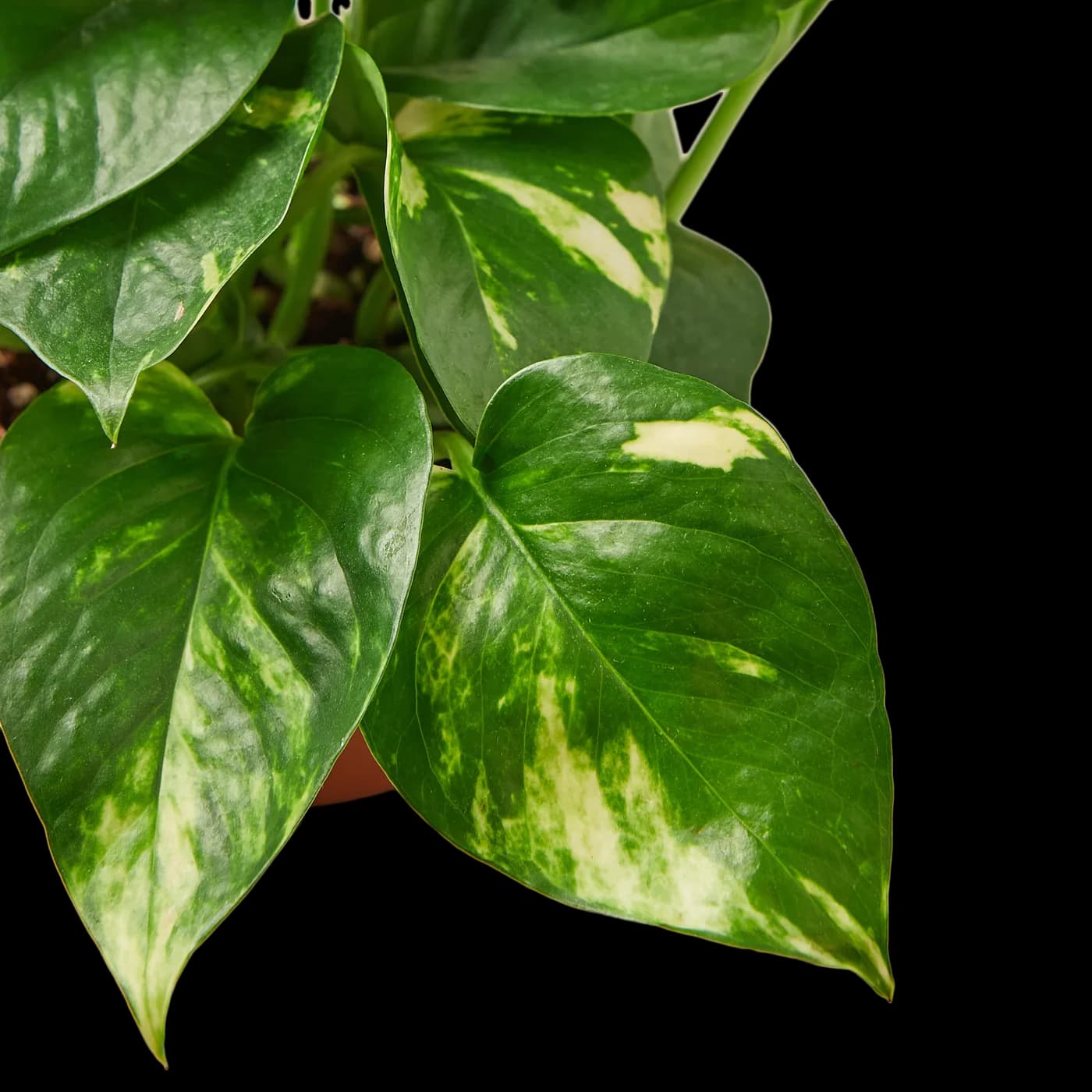
The classic office vine. NC State Extension names pothos among the plants to try when you have very little light, and rates it for anything from high to low light. Under ceiling lights alone it tends to hold steady rather than grow, so a desk that gets some window light keeps it fuller. It is toxic to cats and dogs according to the ASPCA.
Toxic to petsLow to bright lightHeartleaf Philodendron
Philodendron hederaceum var. oxycardium
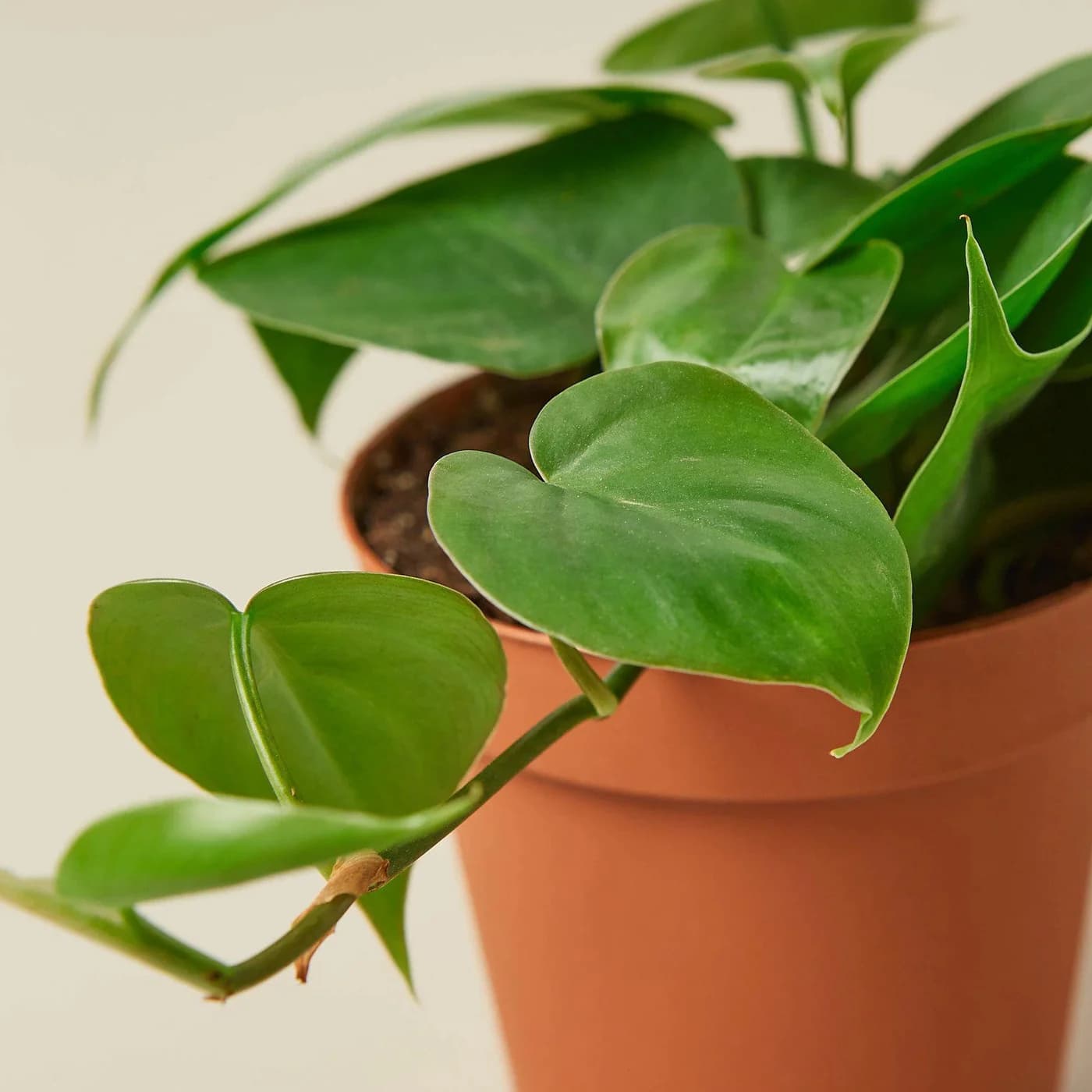
A good match for a desk well back from the window. NC State's figures give philodendrons about 30 months of good looks at 25 to 50 foot-candles, roughly office level, and about a year even at 15 to 20. Its heart-shaped leaves trail neatly from a shelf or monitor riser. It is toxic to cats and dogs according to the ASPCA, and the vines hang to paw height.
Toxic to petsLow to bright lightRattlesnake Plant
Goeppertia insignis
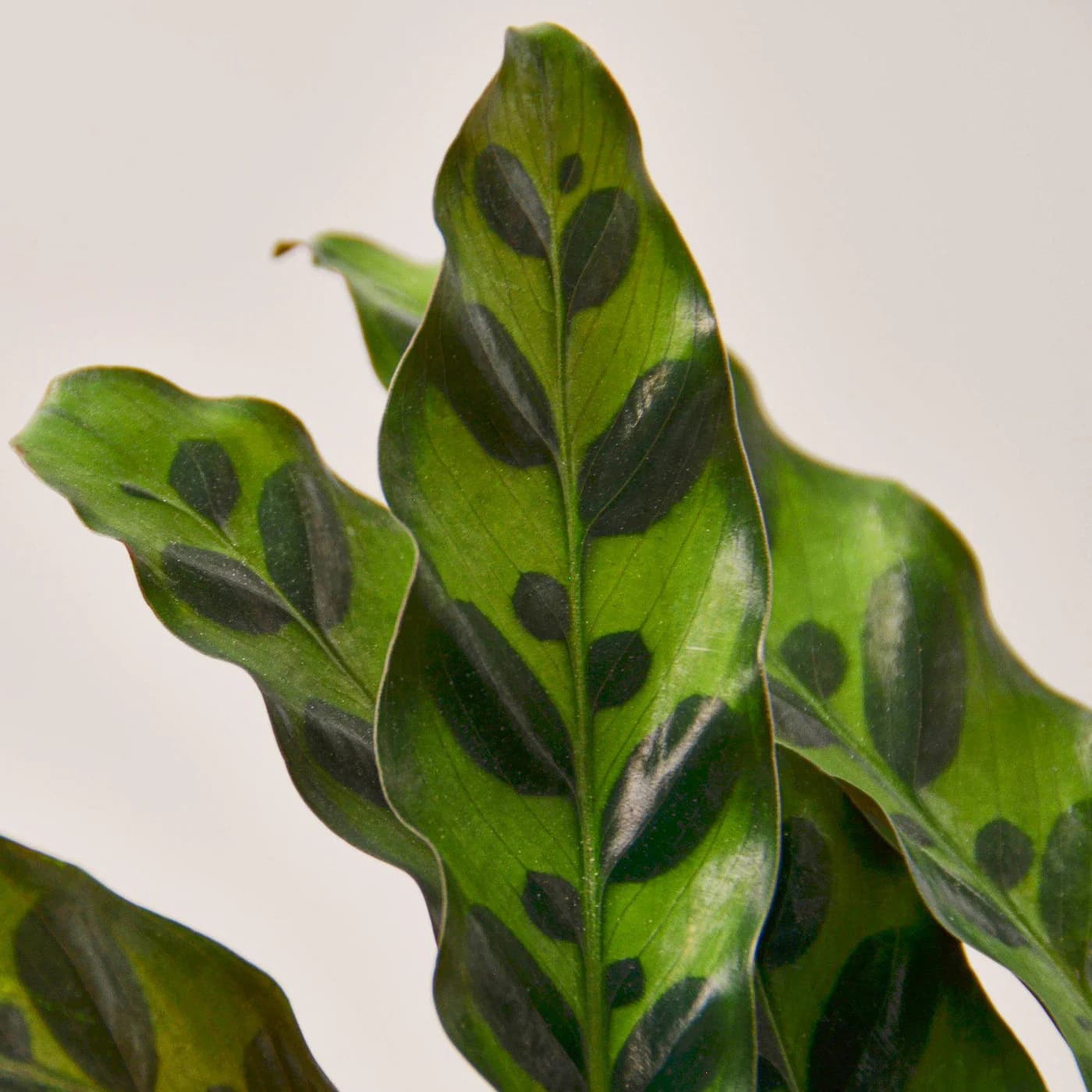
The pet-friendly pick for a desk a few feet from a window. NC State describes its long, wavy leaves as light green with dark spots and purple undersides, says it typically grows to about 1 1/2 feet tall indoors, and suits light from limited sun to bright shade. It wants evenly moist soil, humid air and steady warmth, so keep it off vents and check the soil often. The ASPCA lists it, as Caeroba, as non-toxic to cats and dogs.
Pet safeLow to medium lightNeon Pothos
Epipremnum aureum 'Neon'
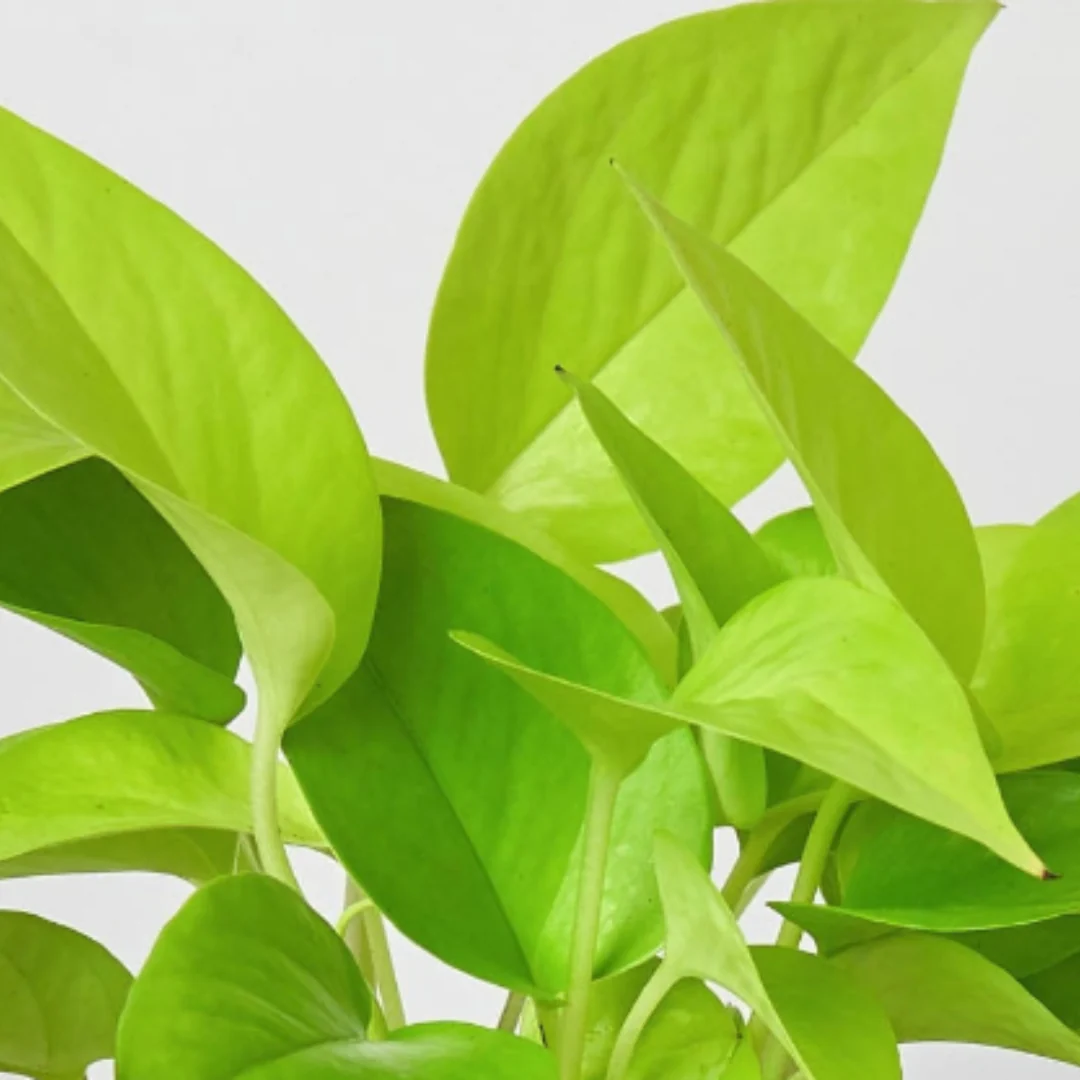
The same species as golden pothos, Epipremnum aureum, in bright chartreuse. Its color is the reason to choose it, so give it a desk with some window light rather than ceiling panels alone, since NC State notes that leaves turn pale when light is too low. Pick it when you want the most color a Small can bring to a desk. Like golden pothos, it is toxic to cats and dogs according to the ASPCA.
Toxic to petsMedium to bright lightChinese Money Plant
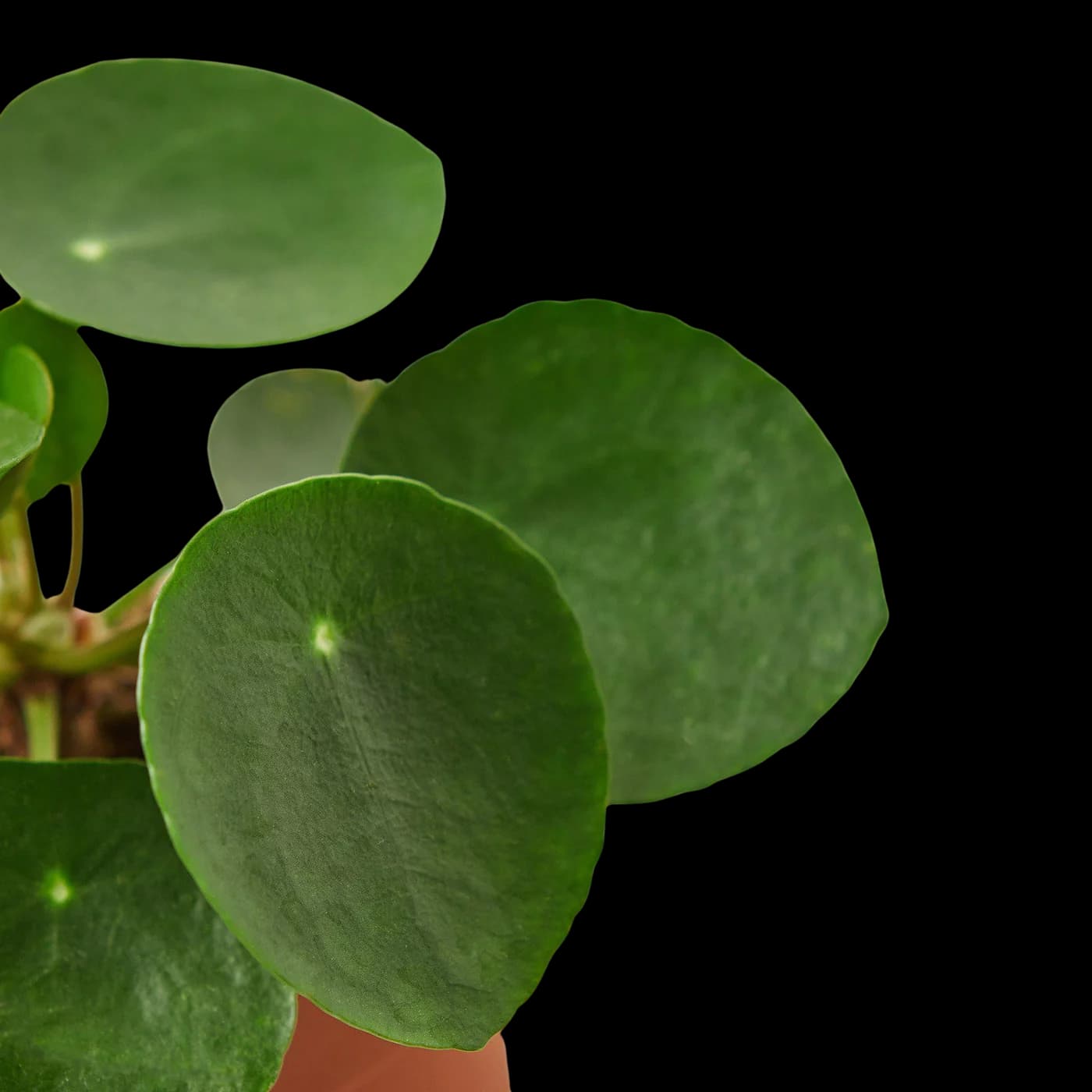
Pilea peperomioides
For a bright desk a few feet from a window. Penn State Extension says this coin-leaved plant stays compact at about 8 to 12 inches tall and wide, and wants bright, indirect light, such as a spot several feet back from a window or behind a sheer curtain. An ASPCA article from 2021 calls it non-toxic, but it has no entry on the ASPCA plant list, so we don't call it pet safe.
Not on ASPCA listMedium to bright light
Is office light enough for desk plants?
Just barely, for the right plant. NC State Extension puts a typical office at about 50 foot-candles. Low-light plants need roughly 25 to 74 foot-candles to hold steady and 75 or more to grow. So a desk under ceiling lights can keep a pothos or philodendron going, with slow new growth at best.
The same handbook estimates how long plants stay attractive at different light levels. At 25 to 50 foot-candles, it gives philodendrons about 30 months. Pothos isn't rated that low, but at 50 to 75 foot-candles it also gets about 30 months. In other words, a plant under office lights can look fine for a long time without really growing. NC State adds that the average houseplant needs about 85 foot-candles for 12 hours a day just to keep its quality for a year.
Light from a fixture falls off fast with distance. A 40-watt fluorescent tube gives about 120 foot-candles at 1 foot but only 75 at 2 feet, so a small LED grow light a foot above the plant does far more than ceiling panels several feet up. Office lights often switch off at night and over the weekend, too, so the plant gets fewer hours than the room suggests.
Daylight from a nearby window beats ceiling lights. As a rough guide from NC State, a spot within 4 feet of a large south, east or west window counts as high light, and anything more than 8 feet from a window counts as low. Our guide to low-light houseplants goes further.
Signs a desk plant wants more light:
- Long bare stretches of stem between leaves.
- New leaves smaller than the old ones.
- Pale, washed-out leaf color.
- Leaves dropping from the stems with no other obvious cause.
How often should you water a desk plant?
There's no fixed schedule. NC State notes that watering needs shift with light, temperature, humidity and the size of the container, so a 4-inch pot in a sunny window dries at a different pace than one under ceiling lights. Check with a finger instead: push it into the soil about an inch and water when it feels dry at that depth. The rattlesnake plant is the exception. NC State advises keeping its soil evenly moist but not wet, so water it as soon as the surface starts to dry.
When you do water, pour slowly until the soil is evenly moist. After a few minutes, tip out any water that has collected in the saucer or cover pot. A desk plant should never stand in water: NC State warns that a pot left sitting in runoff can become waterlogged, which leads to root rot.
Before a long weekend, check the soil and water anything that is dry. Plants in a cool, dim office use water slowly, so check again when you get back before you water. Keep pots off warm electronics, too, since NC State notes that potting mix on a warm appliance dries out quickly. Our guide to watering houseplants covers the details.
Pet-safe desk plants for a home office
If a cat or dog shares your office, two of our nine plants are non-toxic to cats and dogs according to the ASPCA. One is the rattlesnake plant, which the ASPCA lists as Caeroba. The other is the money tree. Don't mix up the rattlesnake plant with the snake plant, a different plant that the ASPCA lists as toxic. An ASPCA article on succulents adds that non-toxic doesn't mean no problem, since some pets get a mild stomach upset from eating any plant.
Golden pothos, neon pothos, satin pothos, heartleaf philodendron and Dieffenbachia are all on the ASPCA's toxic list. Our Swiss cheese vine, Monstera adansonii, isn't on the list, but its close relative Monstera deliciosa is listed as toxic, so we never call it pet safe. A high shelf is no barrier to most cats, and trailing vines hang right down to paw height, so if your pet climbs or chews, keep these in a room it doesn't use.
The pilea is the in-between case. The ASPCA's 2021 article on succulents names the Chinese money plant as non-toxic, but the ASPCA plant list has no entry for it, so we don't call it pet safe. Our guide to pet-safe houseplants covers all nine of our plants.
How to care for a desk plant
Small habits that help:
- Give the pot a quarter turn now and then so the plant doesn't lean toward the window. NC State suggests a quarter turn every three months, but turn it sooner if you see it leaning.
- Wipe dust off the leaves with a soft, damp cloth every couple of months. NC State notes that dust on the leaves slows photosynthesis.
- Keep plants away from heating and air-conditioning vents. Penn State Extension says to keep pileas out of drafts and away from vents, and NC State says the rattlesnake plant wants 65 to 75°F and doesn't tolerate drafts or sudden temperature changes.
- Give the rattlesnake plant some humidity. NC State suggests standing it on a tray of wet pebbles, with the pot above the water line, and notes that brown, curling leaf edges can mean the air is too dry.
- Ease a new plant into a dim spot. NC State explains that nursery plants are usually grown in high light, and that a plant moved abruptly into low light can decline slowly, sometimes over a few months. Start it in the brightest spot you have, then move it to a dimmer desk gradually.
- Each plant's care guide covers feeding, repotting and trimming, and our care page has the full routine.
Questions
What is the best desk plant for an office with no windows?
No plant grows well on ceiling lights alone, but golden pothos and heartleaf philodendron hold up longest. NC State Extension recommends pothos for very little light, and its figures give philodendrons about 30 months of good looks at office light levels. Add a small LED grow light if you want new leaves, and switch it off at night, since NC State notes that plants need a dark period. Both plants are toxic to cats and dogs, so at home keep them in a room your pet doesn't use. If a pet shares your workspace, the rattlesnake plant is non-toxic according to the ASPCA, though it still wants steady moisture and humid air.
Can plants grow under LED or fluorescent office lights?
Yes, as long as the light is close and stays on long enough. NC State Extension says fluorescent fixtures for plants typically sit about 12 inches above them, and that horticultural LED grow lights run cool and last a long time. The same source says the average houseplant needs about 85 foot-candles for 12 hours a day just to keep its quality for a year, while a typical office gets about 50. For real growth, add a desk lamp with an LED grow bulb on a timer.
How do I keep a desk plant alive over a holiday office closure?
Some buildings turn the heat and lights down while the office is closed. NC State says the rattlesnake plant wants 65 to 75°F and dislikes sudden temperature changes, and Penn State advises keeping pileas above 55°F at night, so take both home if the office might get cold. A windowless office with the lights off is fully dark, so take plants home for any closure longer than a few days. For a short break, water anything that's dry before you leave, and check the soil when you get back before you water again.
Which small indoor plants are safe for cats?
Of our nine plants, the ASPCA lists two as non-toxic to cats and dogs: the rattlesnake plant and the money tree. The pilea is in between, since a 2021 ASPCA article calls it non-toxic but the ASPCA plant list has no entry for it, so we don't call it pet safe. Golden pothos, neon pothos, satin pothos, heartleaf philodendron and Dieffenbachia are listed as toxic, and the Swiss cheese vine isn't listed, but its close relative Monstera deliciosa is listed as toxic, so treat it as toxic too. The ASPCA also notes that non-toxic doesn't mean no problem, because eating any plant can upset a pet's stomach. If you think your pet ate something toxic, call your vet or the ASPCA Animal Poison Control Center at (888) 426-4435.
Do small pots need watering more often?
Usually, yes. NC State Extension notes that larger containers don't dry out as quickly and need watering less often, so a 4-inch Small on a desk needs checking more often than a 6-inch Medium. Check the soil with a finger every few days at first until you learn its pace. Water most of these plants when the top inch is dry, and the rattlesnake plant as soon as the surface dries.
Sources
- NC State Extension Gardener Handbook, Chapter 18: Plants Grown in Containers (indoor light levels and care)
- NC State Extension Plant Toolbox: Goeppertia insignis (rattlesnake plant)
- Penn State Extension: Pilea as a Houseplant
- ASPCA Animal Poison Control: Toxic and Non-Toxic Plant List, Cats
- ASPCA Animal Poison Control: Toxic and Non-Toxic Plant List, Dogs
- ASPCA (April 2021): Are Succulents Safe to Have Around Pets? (lists Chinese money plant as non-toxic)