- Guides
- Neon Pothos
Plant guide
Neon Pothos Care: How to Keep the Chartreuse Vine Bright
A fast-growing pothos with solid chartreuse leaves that stays brightest in medium to bright light, likes its soil to dry a little between drinks, and is toxic to cats and dogs.
What is neon pothos?
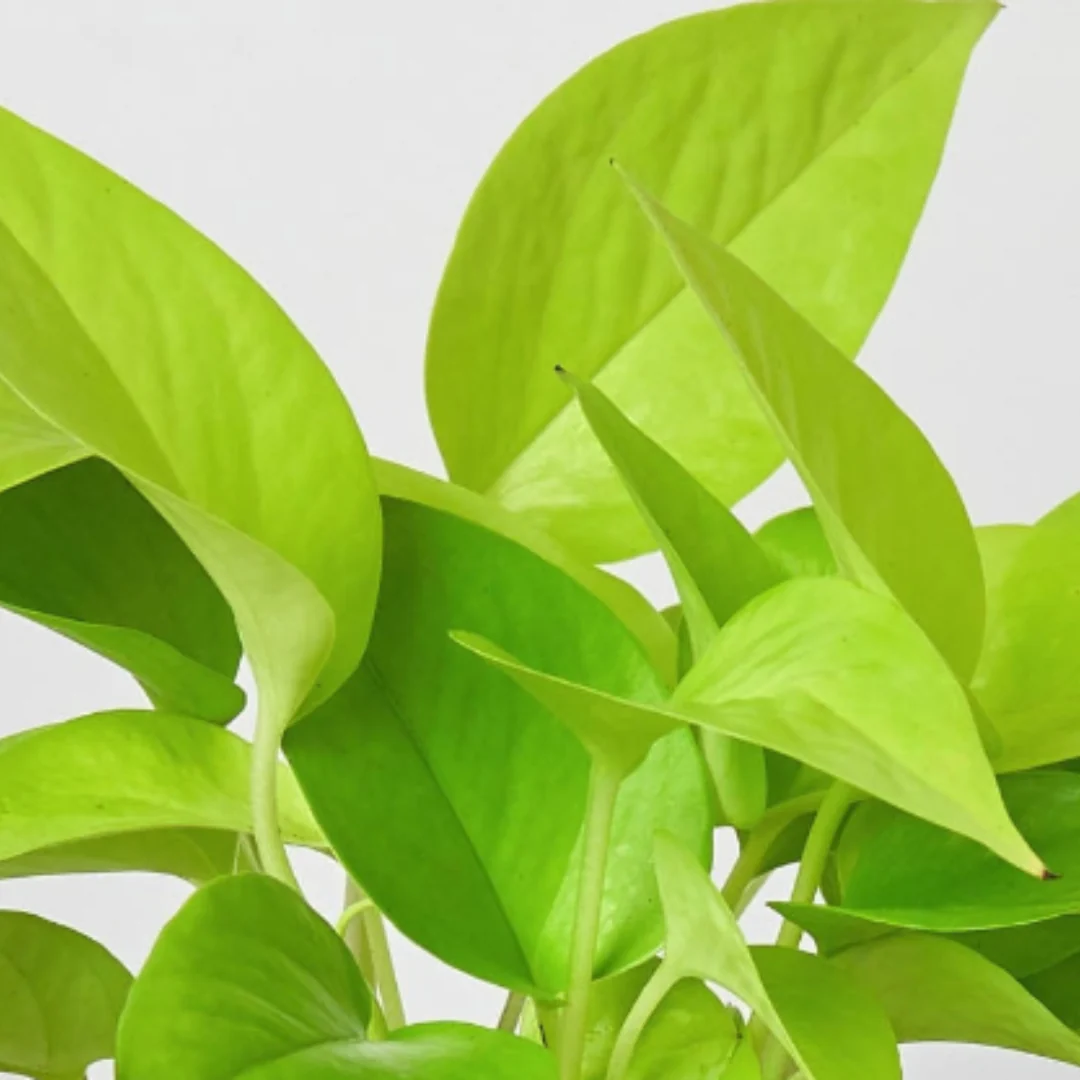
Neon pothos is the same easygoing vine as golden pothos in a much louder color. Its botanical name is Epipremnum aureum 'Neon', and instead of green leaves streaked with yellow, it has heart-shaped leaves in a solid, bright chartreuse. Penn State and NC State Extension both list Neon among the named cultivars of the species.
Clemson Extension describes Neon as a hardy, quick-growing cultivar with slender leaves that are thinner than most. Penn State says pothos leaves run 3 to 6 inches long on vines that can reach 8 to 10 feet, and NC State traces the species to the Society Islands in the South Pacific.
Ours arrives already potted at the greenhouse in a terracotta or black eco pot. Of the trailing vines in our lineup, it's the brightest.
Neon pothos vs golden pothos: what's the difference?
They are the same species, so the basics carry over: the same toxicity, the same easy cuttings, the same dislike of soggy soil. If you already keep a golden pothos, you know most of what you need. The differences are in the leaves and the light:
- Color. Golden pothos has green leaves marked with yellow. Neon is an even chartreuse across the whole leaf.
- Leaf shape. Clemson describes Neon's leaves as slender and thinner than other cultivars', so the plant looks lighter.
- Light. Penn State notes that pothos kept in low light for a long time loses its best leaf quality: the variegation on some cultivars, the brightness on others. A dim golden pothos loses some yellow but still looks like a healthy green plant. A dim Neon loses the color you bought it for, so we rate it for medium to bright light rather than low.
- Speed. Clemson calls Neon a quick grower, so plan on trimming.
Neon pothos benefits, and who it suits
The main benefit is the color. A trailing Neon brings the brightness of a vase of flowers to a shelf or bookcase, and Penn State calls pothos a long-lived plant, so it keeps doing it for years.
It's also forgiving. Penn State says pothos is better kept too dry than too wet, and Clemson calls Neon a hardy cultivar. It suits:
- Beginners who want something more striking than a plain green vine. See our easy houseplants for beginners.
- Bright rooms, desks near a window, and shelves where a vine can hang down. A Small sits easily on a desk; see small plants for desks and shelves.
- Gift givers. It's cheerful and arrives potted, ready to set down. Our houseplant gifts guide has more ideas.
It's a weaker choice for a dim room, where heartleaf philodendron or golden pothos will look better for longer; see our low light houseplants guide. It's also wrong for a home with a cat or dog that chews plants.
It won't clean your air in any way you'd notice. Plants remove some chemicals in small sealed test chambers, but a 2020 review by Cummings and Waring found it would take 10 to 1,000 plants per square meter of floor to match what ordinary air exchange already does in a typical building. Our look at houseplants and clean air has more.
Is neon pothos toxic to cats and dogs?
Yes. The ASPCA lists Epipremnum aureum, under names including golden pothos, pothos and devil's ivy, as toxic to both cats and dogs. Neon is a cultivar of that species, so treat it the same way. The plant contains insoluble calcium oxalate crystals.
The signs the ASPCA lists are oral irritation, intense burning of the mouth, tongue and lips, excessive drooling, vomiting and difficulty swallowing. NC State rates the poison severity as medium and notes the sap can irritate skin, so wear gloves when you trim it. Penn State describes pothos as poisonous but not lethal to people and pets; keep it away from small children all the same.
If you think your pet has chewed it, call your veterinarian or the ASPCA Animal Poison Control Center at (888) 426-4435. A consultation fee may apply.
A high shelf helps less than you'd think, since vines trail down and dropped leaves land on the floor. If you live with a plant-chewer, start with our guide to pet-safe houseplants.
How much light does neon pothos need?
Give neon pothos medium to bright, indirect light: a few feet from an east- or west-facing window, right beside a north-facing one, or well back from a south-facing window or behind a sheer curtain. Penn State recommends moderate to bright light for pothos and says that's where it grows fast and vigorously.
Think of the color as a built-in light meter. Clemson says Neon tolerates lower light, and it will survive in a dim corner, but Penn State notes that pothos kept in low light eventually loses the brightness of its foliage. If new leaves come in duller than the old ones, it wants a brighter spot.
Keep it out of hot direct sun. Penn State says direct sun yellows pothos leaves, and Clemson lists intense light as a cause of leaf scorch. On Neon, watch for pale, washed-out patches on the side facing the glass. Penn State also suggests turning the pot every week, since the vines grow toward the light.
How often should you water a neon pothos?
Water a neon pothos when the top inch of soil is dry, not on a schedule. NC State says to let the potting mix dry out between waterings, and Penn State warns that too much water leads to root rot, one of the few real problems pothos has. The rhythm is the same as for golden pothos.
Push a finger into the soil to the first knuckle. Dry at your fingertip means it's time; cool and damp means wait a few days and check again. When you water, water thoroughly, as Clemson advises, so it reaches all the roots: pour slowly around the base until the soil is evenly moist. Never leave the pot standing in water, and tip out anything that collects in a saucer or cover pot.
Expect to water more often in a bright spot in summer, when it's growing fast, than in winter, when NC State notes the plant is resting. Penn State says too little water makes pothos leaves droop for a while, so a soft, droopy Neon with dry soil is simply thirsty.
Our guide to watering houseplants goes into more detail.
Everyday neon pothos care: feeding, pruning and repotting
Feed every other month in spring and summer with a houseplant fertilizer, as Clemson suggests, and skip winter, when NC State says the plant is dormant. Follow the label and don't double up.
Neon likes a warm room. Clemson gives 70 to 85°F by day and 60 to 70°F at night, and advises keeping pothos away from air conditioning vents in summer and from windowsills and heating vents in winter. Pothos prefer 50 to 70 percent humidity but tolerate the 30 to 60 percent of most homes, Clemson says; a humidifier helps if leaf tips brown in winter.
Prune whenever it gets longer than you'd like. Penn State says you can shorten a vine just above a node anywhere along its length, or cut a whole vine back to a 2-inch stub. Because Neon grows quickly, a light trim every few months keeps it full.
Every trimming can become a new plant. Clemson says a stem cutting with at least one node roots easily in water or soil, and Penn State finds cuttings take best in spring and summer. Plant rooted cuttings back into the pot to fill a thin spot, or give them away. If you'd rather it climb, add a moss pole; NC State says that with support and enough light, pothos begins to produce large, mature leaves.
Your Neon arrives potted, so there's nothing to repot this season. Clemson suggests repotting pothos every year or two, once it's crowded and root-bound, and Penn State recommends moving up to a slightly larger pot in spring, with a potting mix that drains well. Go easy on water afterward; Penn State says excess water after repotting adds stress.
What to do when your neon pothos arrives
Your Neon leaves the greenhouse already potted and comes in one box, ready to set down. It usually reaches you in about 3 to 8 business days, with extra winter protection packed in cold weather. We ship to the contiguous US; our shipping page has the details. In the first week:
- Open the box the day it arrives, lift the plant out by the pot rather than the vines, and set it in medium to bright, indirect light, away from vents and cold drafts.
- Feel the soil. If the top inch is dry, water slowly until it's evenly moist and tip out any water that collects underneath. If it's damp, leave it for a few days.
- Expect a bent or yellowed leaf or two after the trip. Snip them off at the stem.
- Judge the color by the leaves it grows in its new spot, not by how it looks coming out of the box.
- Leave it in its pot, and hold off on fertilizer while it settles in.
The pot is our grower's recycled eco pot, which they describe as recycled plastic blended with stone powder and wood dust. If your plant arrives damaged or declines in its first 30 days, we'll replace it.
Common neon pothos problems and how to fix them
Most Neon problems trace back to light or water:
- New leaves duller than the old ones: not enough light. Move it closer to a window and watch the next few leaves.
- Pale, bleached or scorched patches on the side facing the window: too much direct sun. Pull it back a few feet or add a sheer curtain.
- Limp, yellowing leaves with soggy soil, or blackened leaf edges: too much water. NC State says overwatering causes root rot and blackened leaf margins. Let the top inch of soil dry before you water again, and empty any water standing under the pot.
- Drooping with wet soil: don't add more. Let it dry out, since soggy soil is what leads to root rot.
- Brown, crispy leaf tips: Clemson lists low humidity and intense light as causes of tip dieback. Move it out of direct sun and away from heating vents, or run a humidifier in winter.
- Bare stems with leaves only at the tips: NC State says older leaves naturally yellow and drop, leaving foliage at the ends of the vines. Cut a few vines back to keep it bushy.
- White, cottony clumps, small brown bumps or fine webbing: mealybugs, scale or spider mites, which NC State and Clemson name as the usual pothos pests. Move the plant away from your others and wipe the leaves and stems clean.
You can find neon pothos in our shop in Small (4 inch) and Medium (6 inch) sizes, potted in terracotta or black, with our 30-day guarantee.
Questions
Why is my neon pothos turning green?
Almost always light. Neon keeps its bright chartreuse in medium to bright, indirect light, and Penn State notes that pothos kept in low light gradually loses the brightness of its foliage. Move it closer to a window, out of hot direct sun, and judge the result by the new leaves it puts out.
How can you tell neon pothos from a chartreuse philodendron?
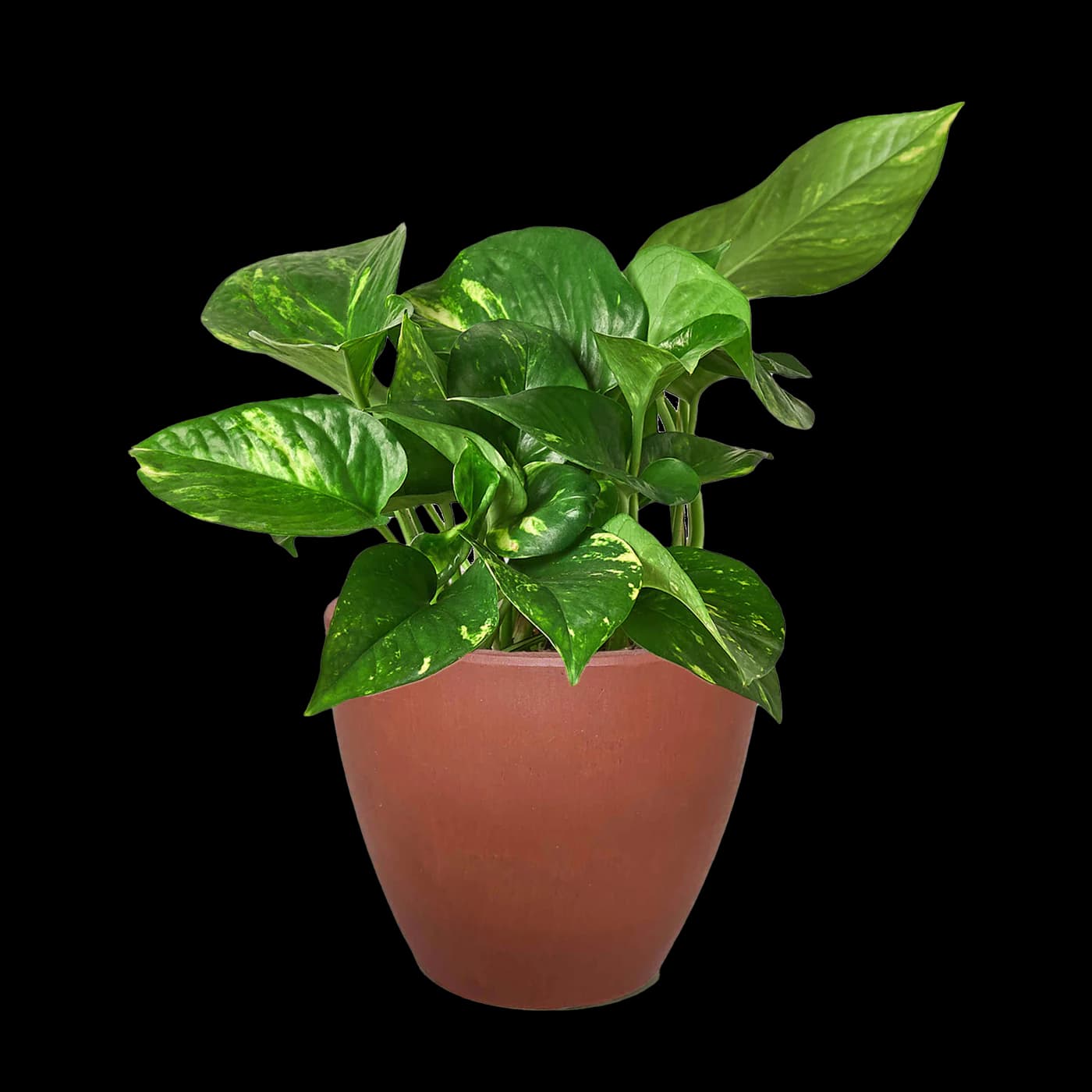
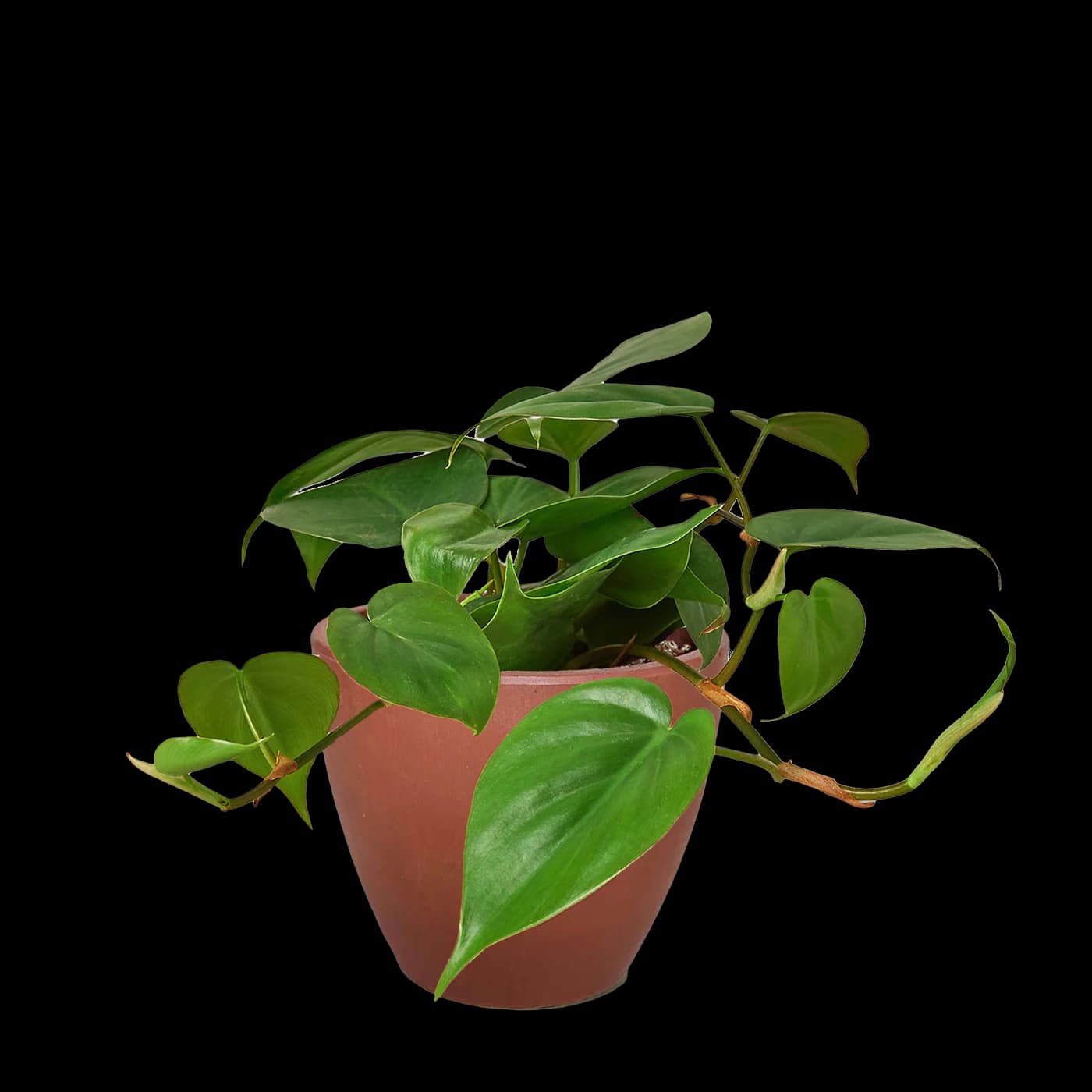
Heartleaf philodendron comes in a chartreuse form too; Clemson Extension lists one as 'Aureum'. Look at the leaf stalks. Clemson and Penn State say pothos petioles are grooved while philodendron petioles are not, and each new philodendron leaf emerges from a thin sheath that dries and falls off. Clemson notes that both plants are toxic if eaten.
Is neon pothos toxic to cats?
Yes. The ASPCA lists Epipremnum aureum, the species Neon belongs to, as toxic to cats and dogs because it contains insoluble calcium oxalates. Chewing it can cause mouth irritation, drooling, vomiting and trouble swallowing. If your cat bites it, call your vet or the ASPCA Animal Poison Control Center at (888) 426-4435; a fee may apply.
Does neon pothos grow fast?
Yes, in good light. Clemson Extension calls Neon a quick grower, and Penn State says pothos in moderate to bright light is vigorous and fast-growing. Growth slows in dimmer spots and in winter. Trim it whenever it gets longer than you'd like, and root the cuttings in water if you want more plants.
Does neon pothos flower?
Almost never. Penn State notes that pothos rarely flowers, even in its native habitat, which is why there are no pothos hybrids. Grow it for the leaves.
Sources
- ASPCA Animal Poison Control: Golden Pothos (Epipremnum aureum)
- Penn State Extension: Pothos as a Houseplant
- Clemson Cooperative Extension HGIC 1568: How to Grow Pothos Indoors
- NC State Extension Plant Toolbox: Epipremnum aureum
- Clemson Cooperative Extension HGIC 1509: Philodendron
- Cummings & Waring (2020), Potted plants do not improve indoor air quality, J. Expo. Sci. Environ. Epidemiol.