- Guides
- Easy houseplants for beginners: five that forgive mistakes
Guide
Easy houseplants for beginners: five that forgive mistakes
Watering mistakes kill more houseplants than anything else, so start with a forgiving plant and one simple habit: feel the soil before you water.
What makes a houseplant easy for beginners?
Easy houseplants for beginners share two traits: they cope with ordinary indoor light, and they forgive an occasional mistake. The five below are the most forgiving of the nine plants we sell, the ones we'd hand to a friend who is sure they kill everything.
When a houseplant dies, the most likely cause is water, not a lack of talent. Clemson University's Home & Garden Information Center says the main cause of death for potted plants is overwatering. Roots need oxygen as well as water, and soil that stays soggy suffocates them. Forgetting is the other half of the problem: a busy week, a trip away, and the leaves go limp.
Every plant in our shop arrives already potted at the greenhouse, ready to set down. There's nothing to repot on day one, so your only real job is watering, and the habit that matters most is simple: feel the soil before you water. See how it works for what arrives at your door.
The plants
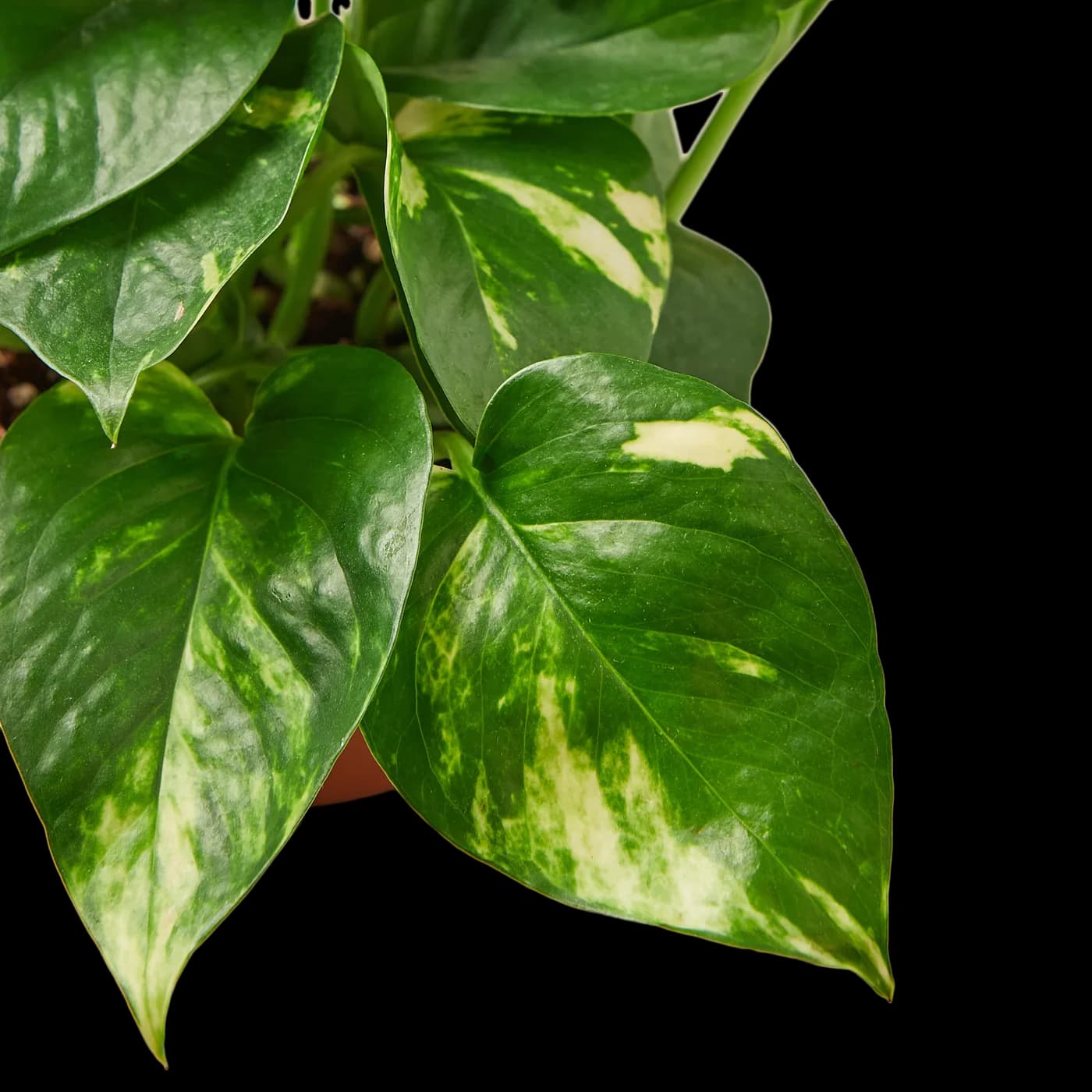
Golden Pothos
Epipremnum aureum
Penn State Extension calls pothos very easy to grow and a great plant for the houseplant novice. It survives low light for a long time, though it grows faster and keeps its gold better in moderate to bright light, out of direct sun. Water when the soil is dry: Penn State says it is better kept too dry than too wet. It is toxic to cats and dogs, so it belongs in a room your pet can't get into.
Toxic to petsLow to bright lightHeartleaf Philodendron
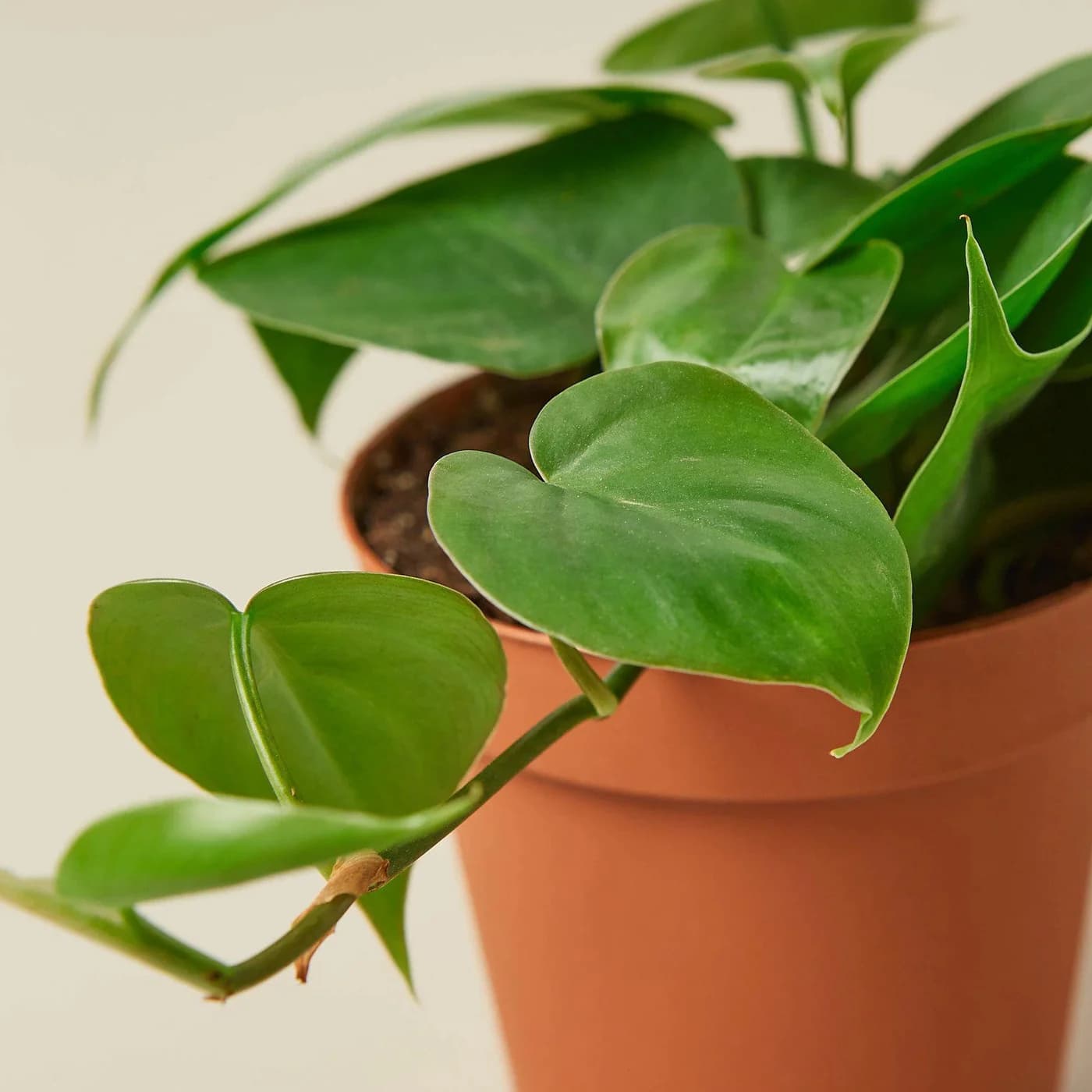
Philodendron hederaceum var. oxycardium
If your only option is a dim corner, start here. Clemson Extension says the heartleaf philodendron tolerates very low light, grows well under ordinary room light or near a north, east or west window, and is very easy and adaptable. Water when the top inch of soil is dry, and never let it stand in water. Like pothos, it is toxic to cats and dogs.
Toxic to petsLow to bright lightNeon Pothos
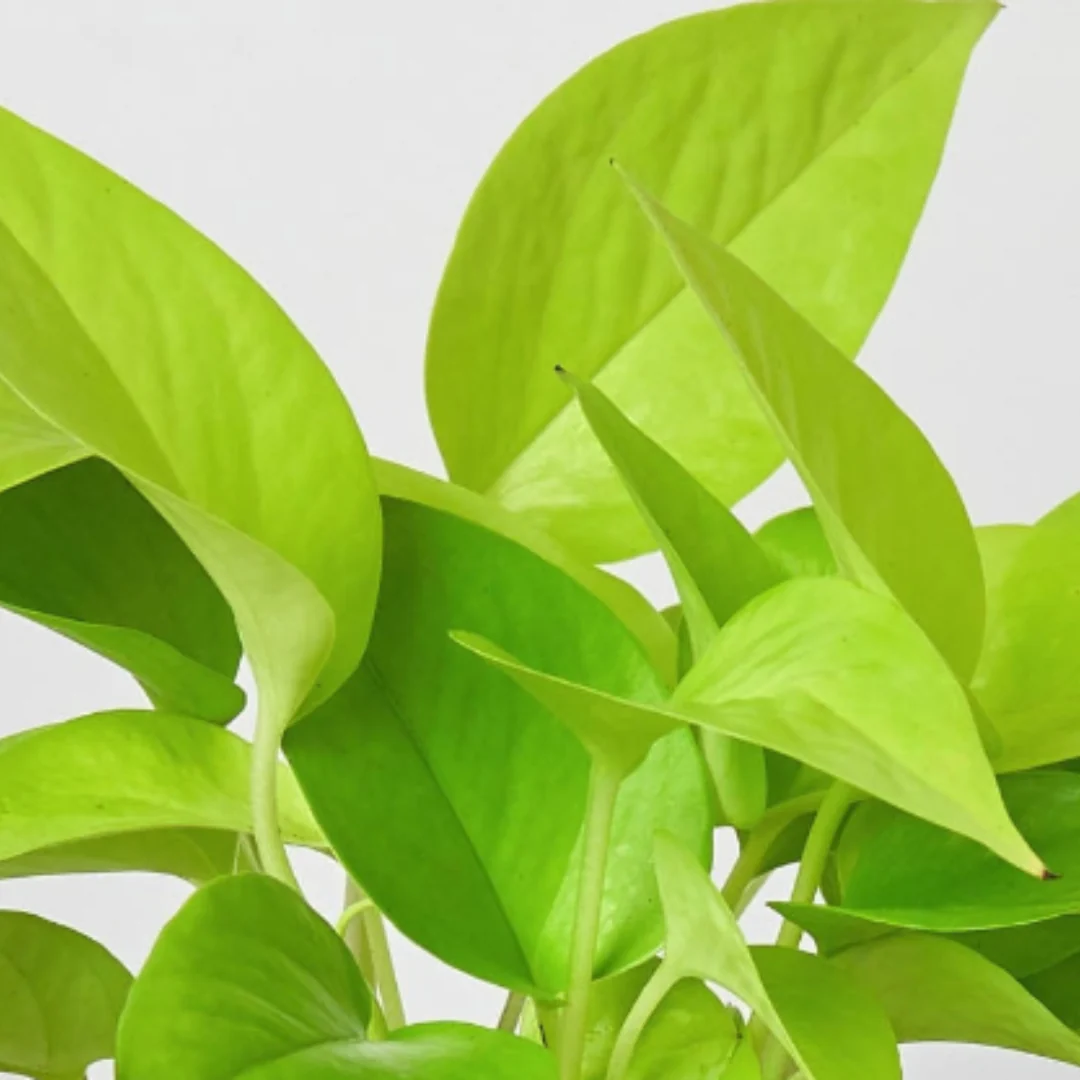
Epipremnum aureum 'Neon'
The same easygoing plant as golden pothos, with bright chartreuse leaves. It needs a brighter spot than golden pothos to look its best, since Penn State notes that pothos in low light eventually lose the brightness of their leaves. Give it moderate to bright light out of direct sun and water when the soil is dry, and it grows fast. It is toxic to cats and dogs.
Toxic to petsMedium to bright lightDieffenbachia Camille
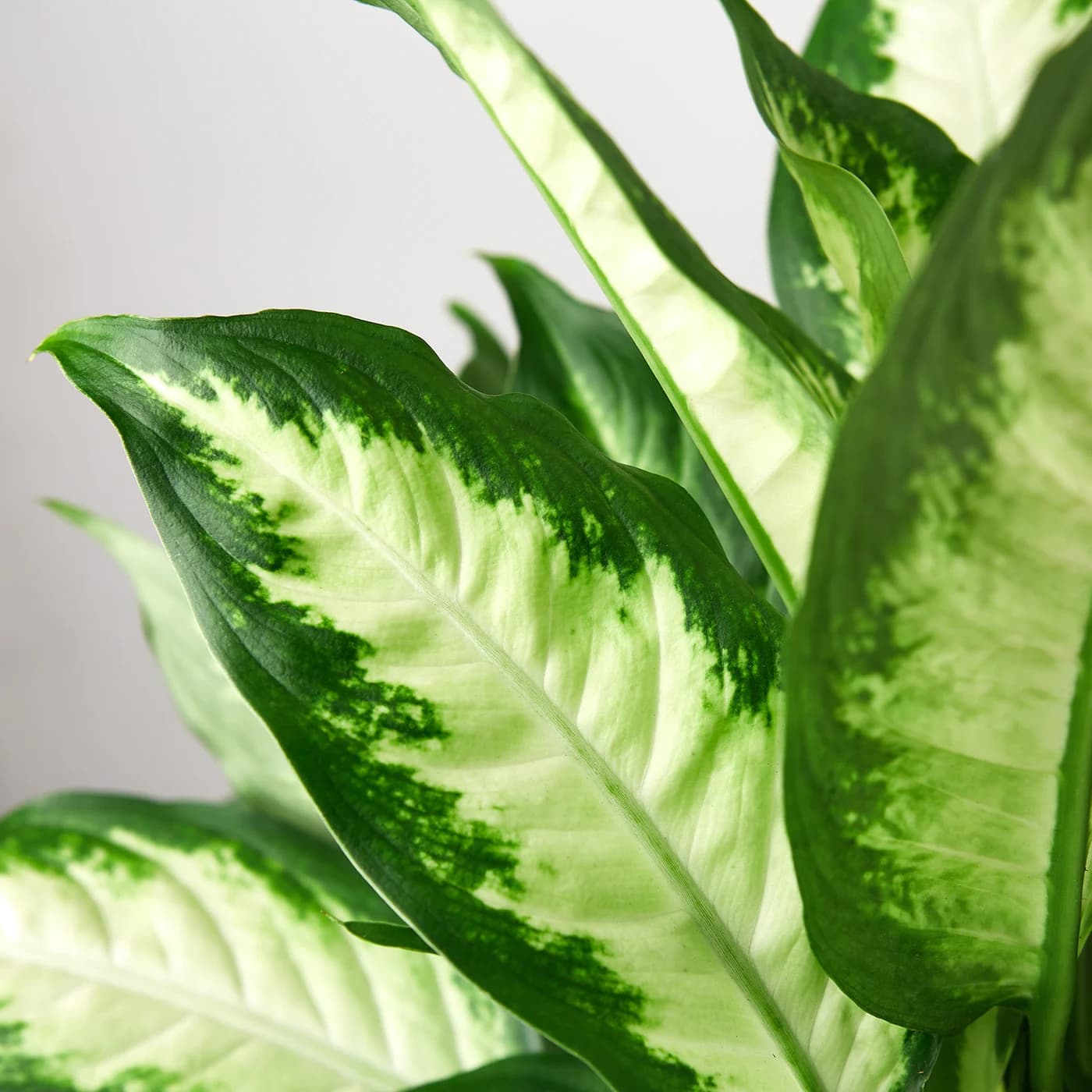
Dieffenbachia 'Camille'
Clemson Extension calls dieffenbachias easy houseplants that tolerate a wide range of conditions, and names 'Camille', with creamy yellow leaves edged in green, as one of the best-known cultivars, bushy and with few problems. Water thoroughly, then wait until the soil is dry to the touch an inch down. It is toxic to cats and dogs, and its sap can give some people a skin rash, so wear gloves when you trim it.
Toxic to petsMedium to bright lightChinese Money Plant
Pilea peperomioides
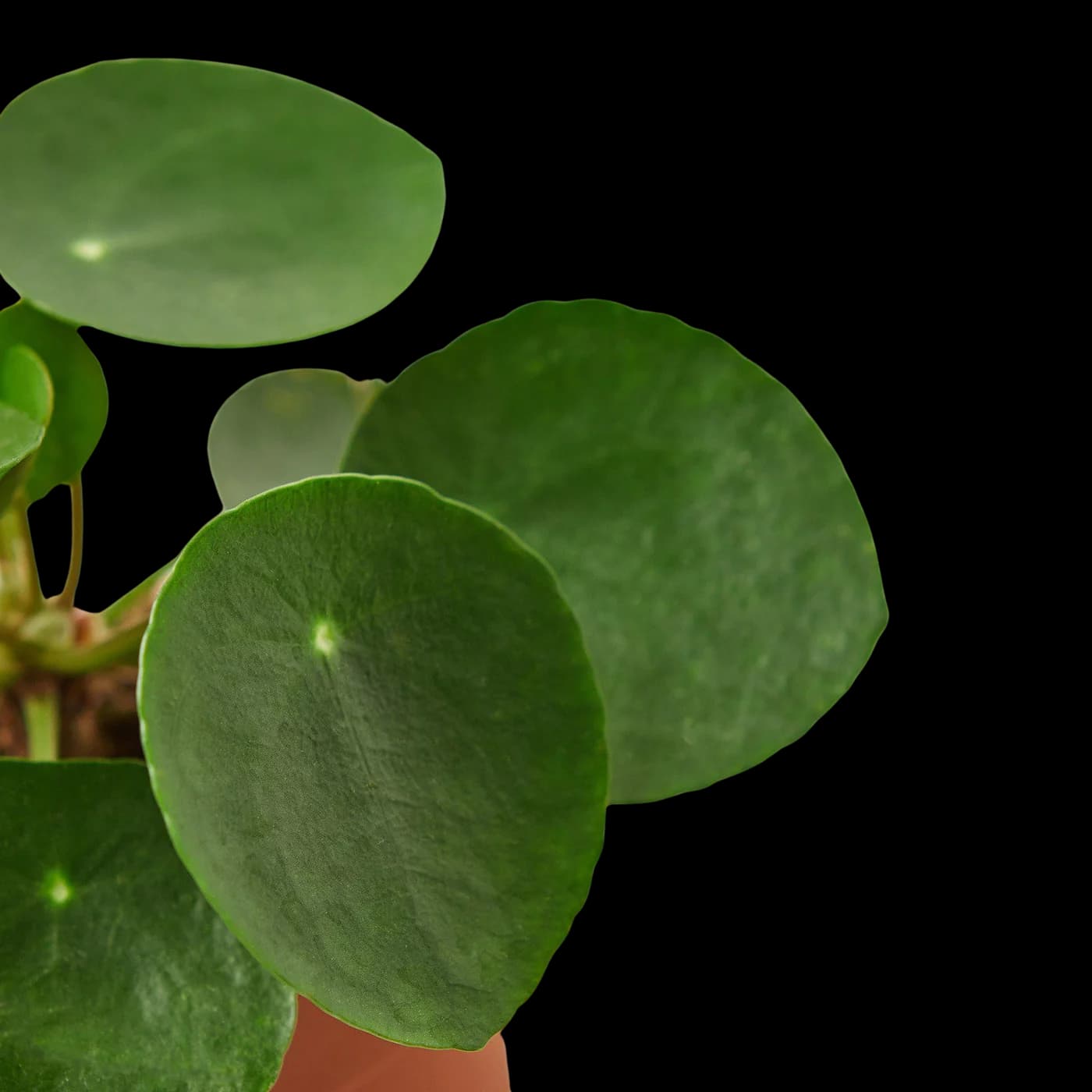
An upright plant with flat, disc-shaped leaves on long stalks, from a group the RHS calls easy to grow. Give it bright, indirect light near a north-, east- or west-facing window, water once the top inch or so of soil starts to dry, and turn the pot a quarter turn each time you water so it grows straight. It isn't on the ASPCA's plant list, so we don't call it pet safe.
Not on ASPCA listMedium to bright light
The three things that keep easy houseplants alive
Light, water and patience. Get those right and any plant on this list can last for years:
- Light: A spot a few feet back from a window gets much less light than it looks, so start close to a window, out of direct sun. Low light means a room bright enough to read in during the day, not a windowless bathroom.
- Water: Too much rots the roots and too little leaves the plant limp and crisp at the edges. Push a finger into the soil up to the first joint, the test Clemson Extension calls the most accurate, and water only when it feels dry at your fingertip.
- Patience: A new plant needs a few weeks to adjust to your light and air. Pick its spot and leave it there.
When you do water, pour slowly until the soil is evenly moist, then tip out any water that collects in a saucer or cover pot. Never leave the pot standing in water. In winter, in a dim room or in a cool spot, the soil takes longer to dry, so expect longer gaps. Our guide to watering houseplants goes through it step by step.
How to choose easy houseplants for beginners
Choose for the room you have, not the photo you like best. Stand where the plant will live around midday and look at the nearest window.
- A dim room or a north-facing window: heartleaf philodendron or golden pothos. Our low light houseplants guide covers shady spots in more detail.
- A brighter room, near an east- or west-facing window or set back from a south-facing one, out of direct sun: neon pothos, Chinese money plant or Dieffenbachia 'Camille'.
- You tend to forget to water: golden or neon pothos. Penn State Extension says pothos is better kept too dry than too wet.
- You'd rather have a bushy plant than a trailing vine: Dieffenbachia 'Camille' or the Chinese money plant.
- You share your home with a cat or dog: read the next section before choosing anything.
Are easy houseplants safe for cats and dogs?
Most of these aren't. Four of the five, golden pothos, neon pothos, heartleaf philodendron and Dieffenbachia 'Camille', are toxic to cats and dogs according to the ASPCA. Clemson Extension notes that pothos and philodendrons contain calcium oxalate crystals that burn and irritate the mouth, lips and tongue and cause drooling, vomiting and trouble swallowing, and it doesn't recommend dieffenbachias in homes with children or pets. If you still want one of these four, keep it in a room your pet can't get into. A high shelf isn't enough: cats climb, and trailing vines hang down within reach.
The Chinese money plant isn't on the ASPCA's plant list at all, so we don't call it pet safe or toxic. Two of our plants are on the ASPCA's non-toxic list, the rattlesnake plant and the money tree. Neither made this list of our five most forgiving plants, but if you have a pet, our guide to pet-safe houseplants covers both.
If you think your pet has chewed a toxic plant, call your vet or the ASPCA Animal Poison Control Center at (888) 426-4435 right away, even if it seems fine.
Your first month with a new houseplant
Here is what a normal first month looks like, so you know what to ignore and when to act.
- Day one: Unbox the plant and set it in the spot you chose for its light. It arrives potted, so leave it as it is. Feel the soil, and if the top inch is dry, water until the soil is evenly moist and tip out any extra.
- Week one: A bent or yellow leaf or two is normal after a trip in a box. Snip it off at the base, and wear gloves for pothos and dieffenbachia, whose sap can irritate skin. A pothos that arrives droopy with dry soil usually perks up after a drink.
- Weeks two and three: Check the soil every few days with a finger, and water only when it's dry at your fingertip. How often that happens depends on the plant, the light and the season, so let the soil tell you rather than the calendar.
- Week four: Look for a new leaf unfurling, the best sign the plant has settled. In winter or a dim room, that can take longer. Give the pot a quarter turn every week or two so it grows evenly. The RHS suggests turning a pilea a quarter turn every time you water.
- All month: Don't repot and don't feed. After that, each plant's guide covers when and how much to feed.
- Any time: A plant that droops while its soil is still wet is usually getting more water than it can use. Clemson notes that damaged roots can't take up water, so watering a wilted plant in wet soil makes things worse. Let the soil dry, move the plant closer to a window, and follow the fixes in our care guide.
Questions
What is the easiest houseplant to keep alive?
For most homes, the golden pothos, with the heartleaf philodendron close behind. Pothos copes with a dim room and forgives a late watering, and Clemson Extension calls the heartleaf philodendron very easy and adaptable. Both are toxic to cats and dogs, so if you have a pet, read our pet-safe guide first.
Is a dieffenbachia a good plant for beginners?
Yes, as long as you don't have children or pets. Clemson Extension calls dieffenbachias easy houseplants that tolerate a wide range of conditions, and 'Camille' a bushy cultivar with few problems. Water thoroughly, then wait until the soil is dry to the touch an inch down. Its sap can cause a skin rash in some people, so wear gloves when you trim it, and Clemson doesn't recommend it in homes with children or pets.
How do I know if I'm overwatering my plant?
Soil that stays damp for days, yellowing lower leaves and a plant that droops even though the soil is wet are the usual signs. Clemson Extension notes that overwatering and underwatering look alike, since both damage the roots, so always feel the soil before you decide. If it's wet, hold off and let it dry.
Why are the leaves on my houseplant turning yellow?
It depends on which leaves. An old lower leaf yellowing now and then is normal aging, and Clemson notes that dieffenbachias drop their lower leaves as they mature. Several at once, with soil that stays damp, usually means more water than the plant can use, so move it nearer a window, out of direct sun, and give the soil longer to dry between waterings.
Do I need to repot a new houseplant?
Not right away. Our plants arrive already potted at the greenhouse, so set yours down and let it settle into its new spot. Repot only once the roots have filled the pot, and do it in spring, as Clemson suggests for dieffenbachia and Penn State for pothos, when the plant is starting to grow.
How long can a houseplant go without water while I'm away?
It depends on the plant, the pot size and the season. Pothos handle a missed watering better than most, since Penn State says they are better kept too dry than too wet. Before you leave, water any plant whose top inch is dry, and move plants back from hot, sunny windows so they dry more slowly. For a longer trip, ask someone to check the soil.
Sources
- Clemson Cooperative Extension HGIC 1459: Indoor Plants, Watering
- Penn State Extension: Pothos as a Houseplant
- Clemson Cooperative Extension HGIC 1509: Philodendron
- Clemson Cooperative Extension HGIC 1503: Dieffenbachia
- Royal Horticultural Society: How to grow pilea
- ASPCA Animal Poison Control: Toxic and Non-Toxic Plant List