- Guides
- Chinese Money Plant
Plant guide
Chinese Money Plant Care: How to Grow the Coin-Leaf Pilea
A compact plant with round, coin-shaped leaves that wants bright, indirect light and a dry top inch between drinks, sends up pups to pass on, and isn't on the ASPCA plant list.
What is a Chinese money plant?
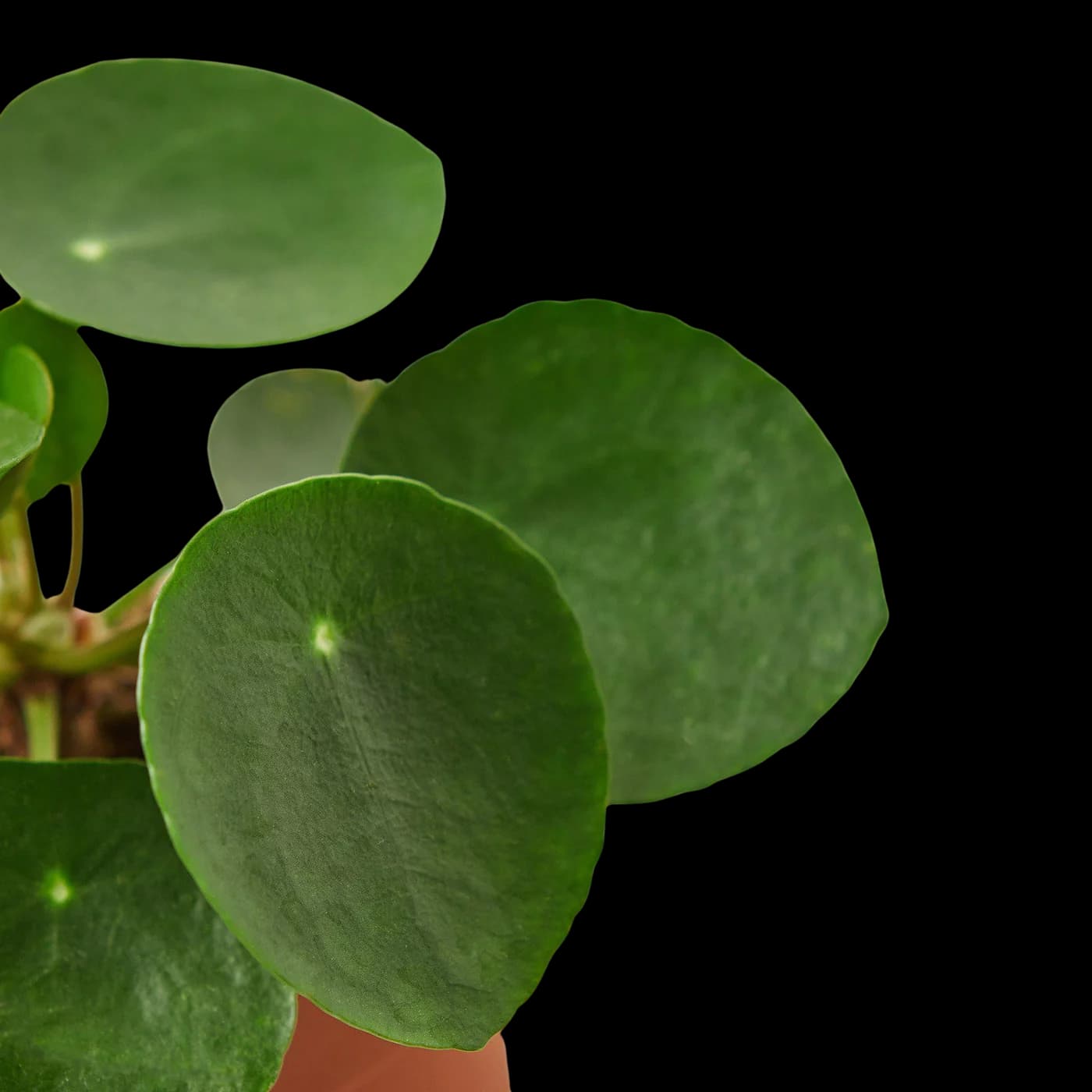
The Chinese money plant (Pilea peperomioides) is the one with round, flat, glossy leaves held out on long, thin stalks. Each stalk joins the middle of its leaf rather than the edge, which is why NC State Extension compares the leaves to lily pads.
It also goes by coin plant, missionary plant, pancake plant and UFO plant, and most people just call it pilea. It's in the nettle family, though Penn State Extension notes it has none of the stinging hairs of its cousin, stinging nettle. It comes from cool, shady mountains in Yunnan Province, southwest China, and grows into an upright clump about 8 to 12 inches tall and wide.
Care comes down to three habits: keep it in bright, indirect light, water once the top inch of soil is dry, and give the pot a quarter turn each time you water so it grows straight.
Chinese money plant benefits: what it does well, and what it doesn't
The main draw is the look. A healthy pilea is tidy and symmetrical, with leaves fanning out from one stem like a little stand of coins. It also does a few practical things well:
- It stays small, about 8 to 12 inches tall and wide, so it fits a sill, desk or shelf.
- It grows quickly in good light. NC State rates it a rapid grower.
- It makes pups, small new plants around its base that you can pot up and give away.
- It's fine in ordinary home air, so there's no need to mist it.
It has limits. In a dim spot it stretches into long stems with small leaves. It leans toward the window unless you turn it, rarely flowers indoors, and over a few years the main stem turns bare and woody at the bottom.
It won't noticeably clean the air either. That idea comes from a 1989 NASA study in small sealed chambers; a 2020 review by Cummings and Waring found that normal ventilation clears indoor VOCs far faster than any realistic number of plants. More in our look at whether houseplants clean the air.
Who should get a Chinese money plant, and who shouldn't
A pilea suits anyone with a bright window and a small surface beside it: a kitchen sill, a desk near an east- or west-facing window, a shelf a few feet back from a south-facing one. The Small fits a desk or shelf; the Medium suits a side table or a wide sill. It's a good pick if you like sharing plants, too, since spare pups make easy gifts.
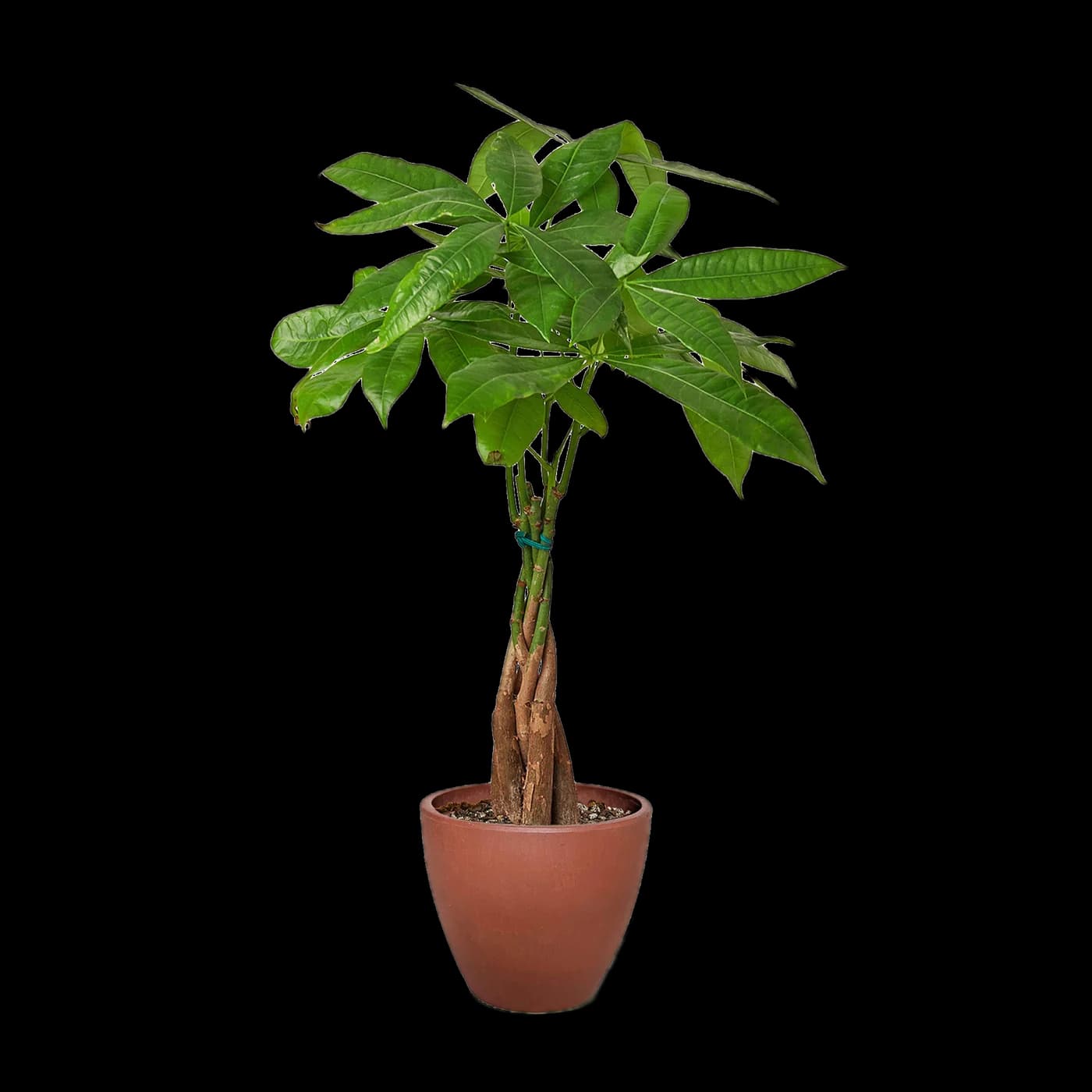
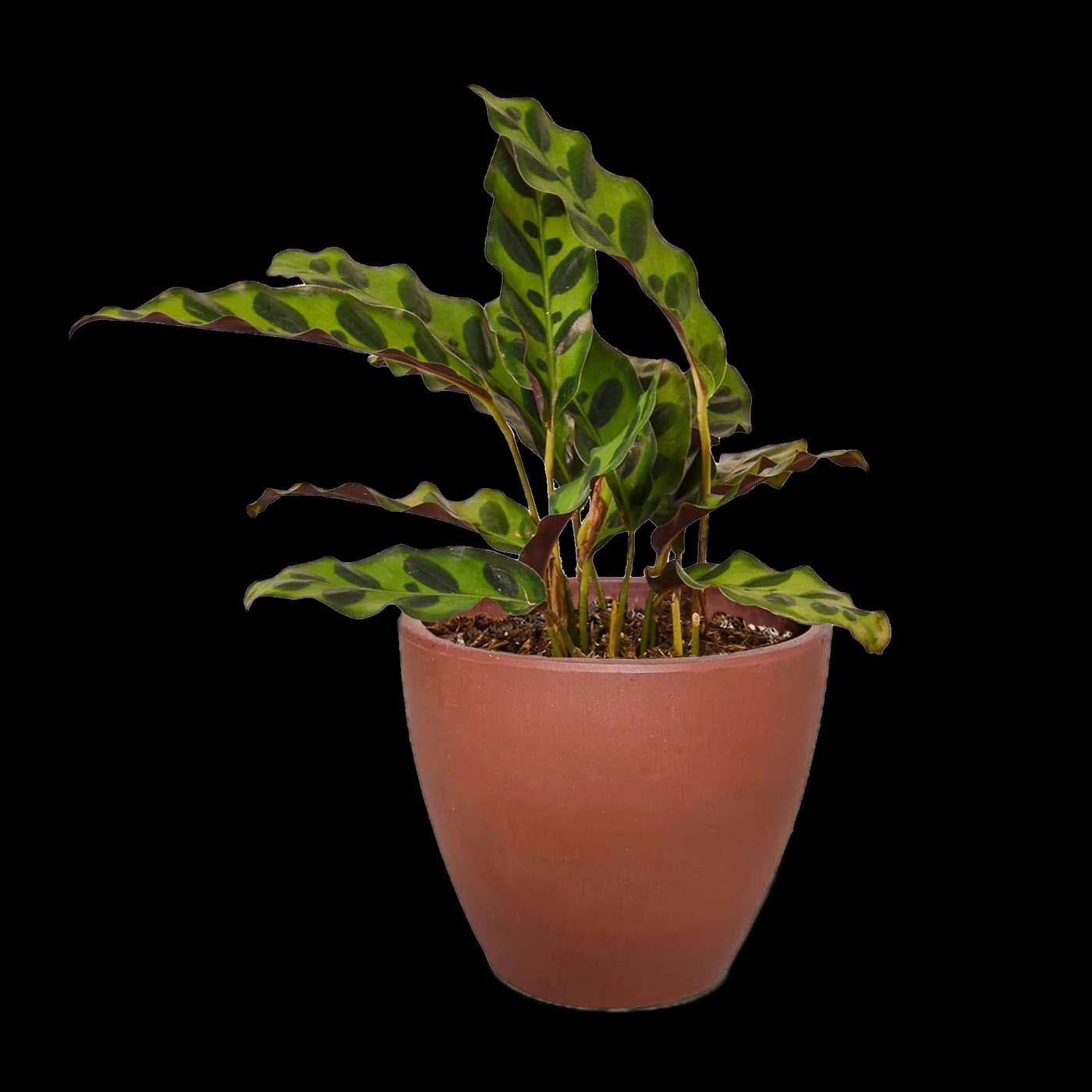
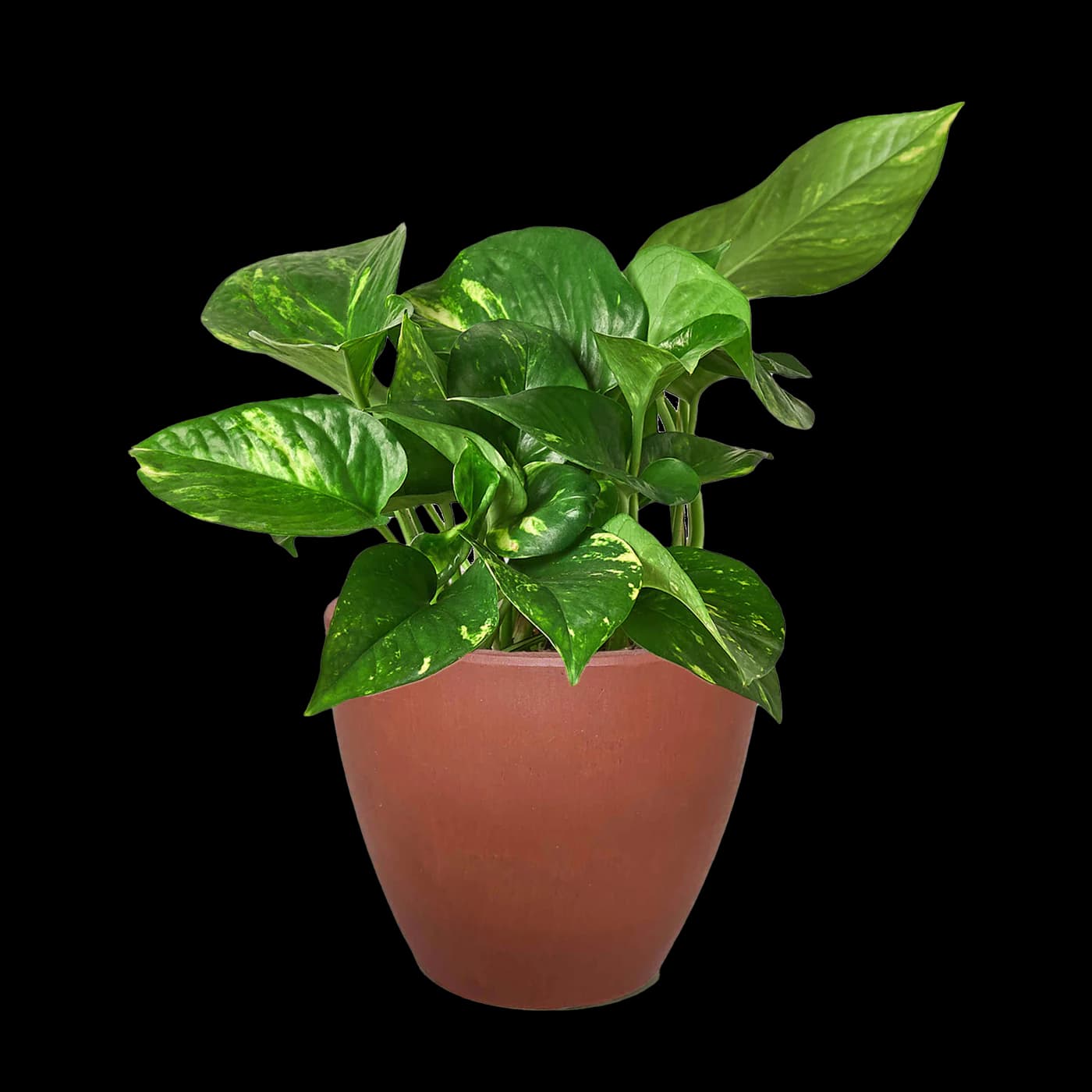
Skip it if your only spot is dim. A golden pothos copes far better with low light, though it's toxic to cats and dogs. Skip it, too, if you want a plant the ASPCA lists as non-toxic. The money tree and rattlesnake plant are both listed as non-toxic to cats and dogs.
Is a Chinese money plant safe for cats and dogs?
It isn't on the ASPCA's plant list. When we checked its cat and dog plant lists in November 2026, Pilea peperomioides wasn't there, under its botanical name or under common names like Chinese money plant, missionary plant or pancake plant. A 2021 ASPCA news article on succulents does name the Chinese money plant as non-toxic, but the list itself has no entry for it, so we don't call it pet safe. The ASPCA says its list isn't meant to be all-inclusive, so being left off it tells you nothing either way.
NC State Extension also describes it as safe for pets and children, and the ASPCA lists relatives such as the aluminum plant (Pilea cadierei) and the friendship plant (Pilea involucrata) as non-toxic to cats and dogs. Those entries cover those species, not this one.
The ASPCA also notes that eating any plant material can cause vomiting and stomach upset in cats and dogs, so keep it out of reach of a chewer. If your pet eats some and seems unwell, call your veterinarian or the ASPCA Animal Poison Control Center at (888) 426-4435. Our guide to pet-safe houseplants covers plants the ASPCA does list as non-toxic.
How much light does a Chinese money plant need?
Medium to bright indirect light, ideally on the bright side. The RHS suggests a spot near a north-, east- or west-facing window. In a south-facing room, set it a few feet back from the glass or behind a sheer curtain; Penn State says pileas shouldn't sit in direct light.
Too much direct sun flushes the leaves red-brown, the RHS notes. Too little light is more common: NC State says leggy growth comes from inadequate light, so stems stretch and leaves shrink.
Turn it as it grows. A pilea reaches for the light and soon leans toward the window. The RHS tip is to give the pot a quarter turn every time you water, which keeps the stem upright and the leaves evenly spread.
It likes the temperatures most people do: Penn State suggests 65 to 75°F by day and above 55°F at night. Keep it away from cold drafts, heating vents and radiators.
How often should you water a Chinese money plant?
Water when the top inch of soil feels dry, not on a schedule. The RHS suggests checking with a finger or lifting the pot to feel its weight. Check about once a week: it dries faster in a warm, bright room in summer and needs less in winter, when growth slows. A Small dries out sooner than a Medium.
Water slowly at the base until the soil is evenly moist, keeping water off the leaves, since NC State warns that wet foliage can cause leaf spots. After a few minutes, tip out any water in a saucer or cover pot. Never leave it standing in water: the RHS says waterlogged soil can kill the roots, and NC State warns that overwatering leads to root rot.
When in doubt, wait a day or two. A thirsty pilea's leaves go a little soft and droopy, then firm up after a drink; a waterlogged one is much harder to save. The RHS says pileas tolerate tap water, though rainwater or filtered water is ideal. More in how to water houseplants.
Everyday Chinese money plant care: feeding, repotting and pups
Ordinary home air suits it; NC State and the RHS both say average household humidity is fine. Skip the misting, since Penn State links overly high humidity to bacterial leaf spot.
Feed every month or two from April to September with a balanced liquid houseplant fertilizer at label strength, and not at all in fall and winter. The RHS warns that overfeeding does more harm than good.
The lowest leaves yellow and drop one at a time as a pilea grows, so an older plant often has a tall, bare stem. The RHS says tall stems can be cut back in spring or summer to prompt new growth from the base.
There's no rush to repot: the RHS says a newly bought plant can usually stay in its pot for the first year or so. Check the roots each spring, and when they're crowded, usually every couple of years, move it to a pot about 2 inches wider than the roots, as Penn State suggests, with a drainage hole and well-drained houseplant mix. A much bigger pot keeps the soil wet too long, the RHS warns.
Pups come up from the soil around the base, and sometimes from the main stem. Penn State and the RHS both say you can detach them and pot them up on their own; NC State says spring and early summer are the best time. Wait until a pup is a few inches tall with several leaves, brush back the soil, and cut it free below the surface with a clean knife, keeping any roots. Pot it in moist houseplant mix in bright, indirect light. If it has few roots, stand it in water until they grow, then plant it.
What to do when your Chinese money plant arrives
Your pilea comes already potted at the greenhouse in a recycled eco pot, in one box. Unpack it soon after delivery, stand it upright and remove the packing, including any winter protection.
Put it straight into its long-term spot, then feel the soil. If the top inch is dry, water slowly until the soil is evenly moist and tip out any water that collects in a saucer or cover pot. If it's still damp, check again in a few days.
A leaf or two may droop or curl after the trip. Give it a week in good light before you worry, and don't water extra to perk it up. Leave it in its pot for now, hold off on feeding until spring if it arrives between October and March, and start the quarter turn at its first watering.
If it arrives damaged or declines in its first 30 days, we replace it. Delivery times are on our shipping page.
Common Chinese money plant problems and how to fix them
Most pilea problems come back to water or light, so start with the soil and the spot:
- Drooping, soft leaves: dry soil means it's thirsty, so water slowly until the soil is evenly moist and it should firm up within a day. Wet soil means too much water. Tip out any standing water, let it dry further, and move it somewhere brighter.
- Yellow leaves: one low leaf now and then is normal. Several at once in damp soil usually means too much water. Yellowing between the veins points to a lack of nutrients, which the RHS says a balanced feed fixes.
- Leaning or lopsided growth: it's reaching for the light. Give it a quarter turn every time you water.
- Long, bare stems with small, widely spaced leaves: not enough light. Move it closer to a bright window.
- Curling or puckered leaves: too much or too little water, or too little light, the RHS says. Check the soil, then the spot.
- A red-brown flush on the leaves: too much direct sun. Pull it back from the glass or add a sheer curtain.
- Brown to black spots that turn mushy: likely bacterial leaf spot, which Penn State links to overly high humidity. Remove those leaves, improve air flow and keep water off the foliage.
- White specks under the leaves: often harmless mineral deposits or sap the plant pushes out after temperature swings, the RHS says. Wipe them off.
- Cottony white clusters or small brown bumps: mealybugs or scale. Move the plant away from your others, wipe off what you can with a damp cloth or cotton swab, and check again every few days. Fine webbing and speckled leaves mean spider mites; rinse the leaves well in the shower.
- Tiny black flies around the soil: fungus gnats, a sign the soil stays too wet. Let the surface dry out between waterings.
Every Chinese money plant from our shop comes in a Small or Medium size, potted at the greenhouse in a recycled eco pot in terracotta or black, with our 30-day guarantee.
Questions
Is pilea toxic to cats?
It isn't on the ASPCA's list of toxic or non-toxic plants for cats or dogs, so we don't call it pet safe. NC State Extension describes it as safe for pets and children, and a 2021 ASPCA article on succulents calls it non-toxic. Eating any plant can upset a cat's stomach, so keep it out of reach of a chewer, and call your vet or the ASPCA Animal Poison Control Center at (888) 426-4435 if you're worried.
Is a Chinese money plant the same as a money tree?
No. The money tree is Pachira aquatica, a small tree often sold with a braided trunk, and the ASPCA lists it as non-toxic under money tree, with money plant as another name. The Chinese money plant is an unrelated plant with round leaves, and it isn't on the ASPCA list. Check the botanical name before relying on any pet listing.
Why is my pilea leaning?
It's growing toward the light. The RHS suggests giving the pot a quarter turn every time you water so it grows straight. If it's leaning and stretching at the same time, it also needs a brighter spot.
Why are my pilea leaves curling?
The RHS links curling and puckering to too much or too little water, or too little light. Feel the soil first: if it's soggy, let it dry out; if it's bone dry, water slowly until it's evenly moist. If the soil seems fine, try a brighter spot out of direct sun.
How big does a Chinese money plant get?
Usually about 8 to 12 inches tall and wide indoors, according to NC State and Penn State, with leaves up to about 4 inches across. Older plants get taller as the stem lengthens, and pups fill in around the base.
What is the difference between pilea and peperomia?
They look alike but aren't closely related: pilea is in the nettle family, peperomias are in the pepper family. Its name means peperomia-like, and NC State notes it's often confused with raindrop peperomia. Look at the leaf shape. A pilea's leaves are round, like coins. A raindrop peperomia's are teardrop-shaped, even though its stalks also join the middle of the leaf.
Sources
- ASPCA Animal Poison Control: Toxic and Non-Toxic Plants List
- ASPCA: Are Succulents Safe to Have Around Pets? (2021)
- NC State Extension Plant Toolbox: Pilea peperomioides
- Penn State Extension: Pilea as a Houseplant
- RHS: How to Grow Pilea
- Cummings & Waring (2020), Potted plants do not improve indoor air quality, J. Expo. Sci. Environ. Epidemiol.