- Guides
- Golden Pothos
Plant guide
Golden Pothos Care: How to Grow the Classic Trailing Vine
An easygoing trailing vine that copes with dim rooms and missed waterings, likes its soil to dry a little between drinks, and is toxic to cats and dogs.
What is golden pothos?
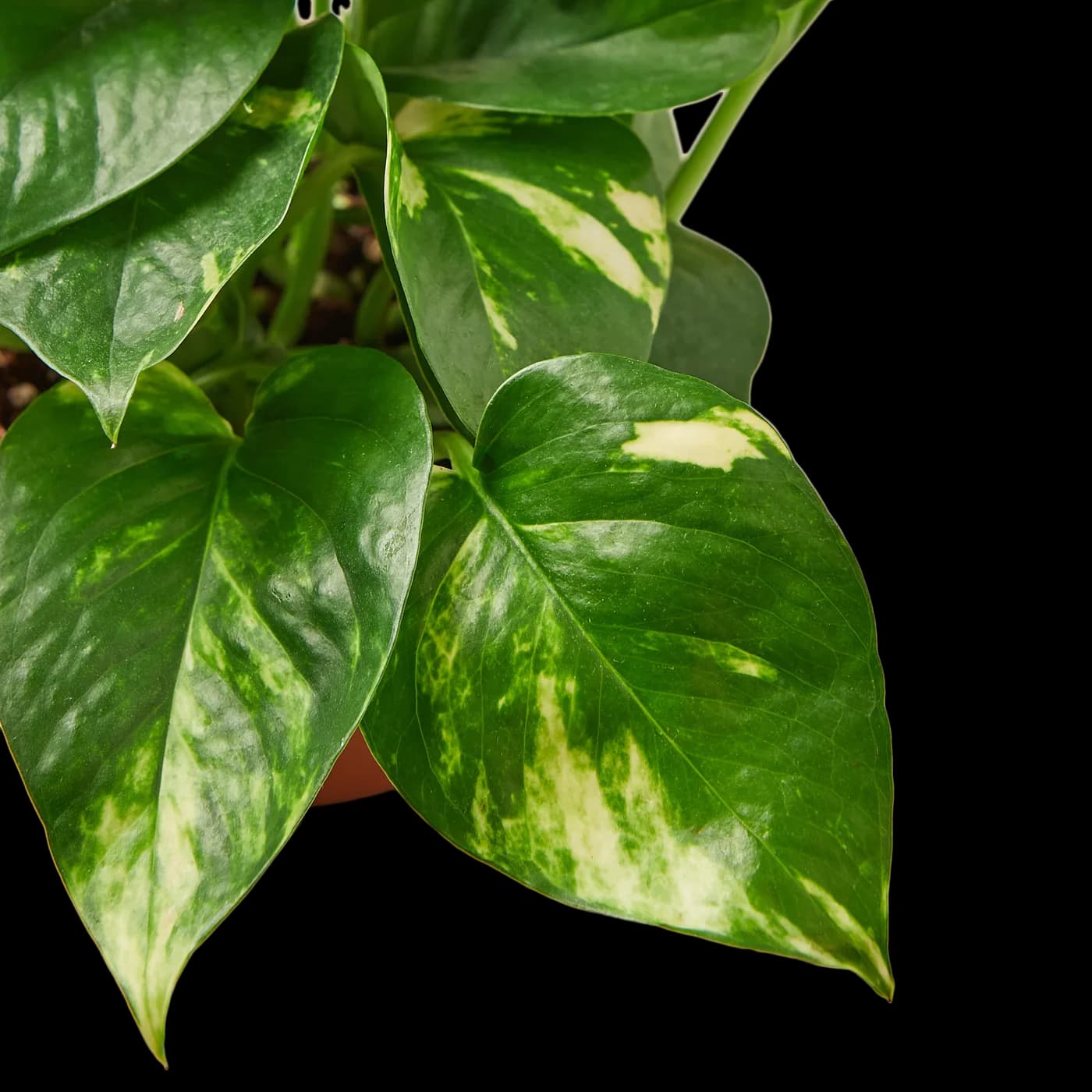
Golden pothos care is about as simple as houseplant care gets: give it some light, let the soil dry a little between drinks, and trim the vines when they get long. Golden pothos (Epipremnum aureum) is the trailing vine often seen spilling off bookshelves, with heart-shaped green leaves streaked with yellow.
It also goes by devil's ivy and was once called Scindapsus aureus. NC State Extension says it is native to the Society Islands in the South Pacific, and that its climbing vines can grow as long as 40 feet. In a pot it usually keeps its smaller juvenile leaves.
People like it because it forgives a lot. Ours arrives already potted at the greenhouse, and its yellow-streaked vines look good trailing over a terracotta or black pot.
Golden pothos benefits: what it does well, and what it doesn't
The biggest benefit is that it's hard to kill. Penn State Extension says pothos is better kept too dry than too wet, and its leaves droop for a while when it's thirsty, so it's easy to read. It also does a few other things well:
- It keeps going in dim rooms where many plants would struggle.
- In bright, indirect light it grows fast and can trail several feet.
- A cut piece of vine roots in water in three to four weeks, says UW-Madison Extension, so one plant easily becomes several.
It won't noticeably clean the air in your home. That idea comes from a 1989 NASA study in small sealed chambers; a 2020 review by Cummings and Waring found that normal ventilation clears indoor VOCs far faster than any realistic number of plants. More in our look at whether houseplants clean the air.
Who should get a golden pothos, and who shouldn't
Golden pothos is a strong first plant for beginners, apartments with one north-facing window, and office shelves. It suits busy people and travelers too: Penn State calls its tolerance for dry spells a valuable trait for busy offices, so a missed watering or a week away does far less harm than soggy soil.
Skip it if you have a cat or dog that chews plants, since the whole plant is toxic. Our guide to pet-safe houseplants rounds up plants the ASPCA lists as non-toxic to cats and dogs, though eating any plant can cause mild stomach upset.
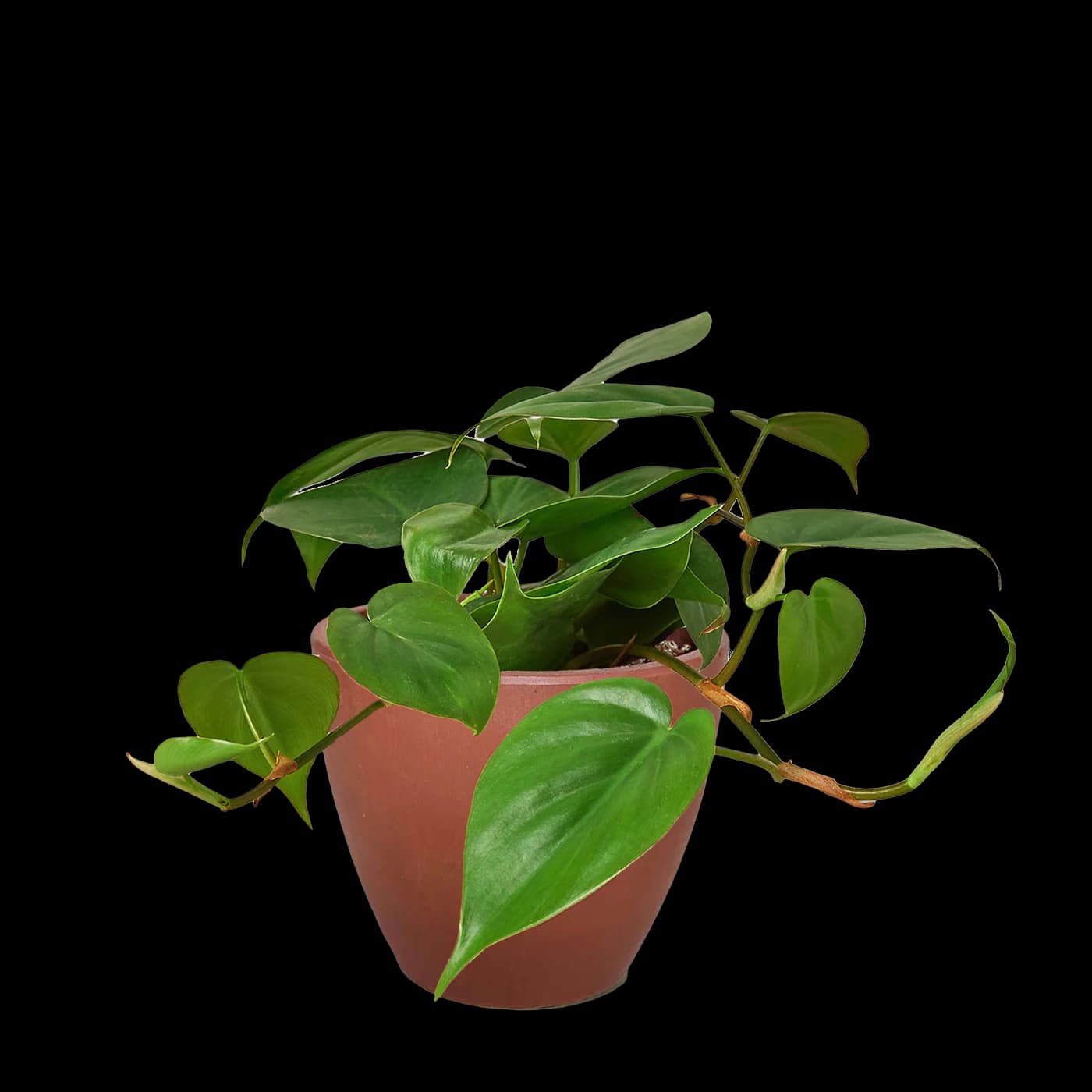
It may also disappoint you if you want flowers or a compact upright plant. For the trailing look with a softer, plainer leaf and similar care, try the heartleaf philodendron, which is also toxic to pets.
Is golden pothos safe for cats and dogs?
No. The ASPCA lists golden pothos as toxic to both cats and dogs. Every part of the plant contains insoluble calcium oxalate crystals, which irritate the mouth when a pet bites into a leaf or stem.
Signs the ASPCA lists include intense burning and irritation of the mouth, tongue and lips, excessive drooling, vomiting and trouble swallowing. NC State adds swelling and diarrhea. The sap can irritate skin too, so wear gloves when you prune, and keep the plant away from small children.
If you think your pet has chewed it, call your veterinarian or the ASPCA Animal Poison Control Center at (888) 426-4435. A consultation fee may apply.
Hanging it high helps, but vines trail down, leaves fall, and cats climb. If you live with a chewer, look up the exact plant on the ASPCA list rather than going by a group name like palm or fern, since some look-alikes are toxic.
How much light does golden pothos need?
Golden pothos does best in bright, indirect light, and it survives long stretches in low light. A few feet back from an east- or west-facing window is ideal; right beside a north-facing window works too.
In dim light the yellow fades, new leaves come in mostly green, and vines stretch out with long gaps between leaves. It still makes our low light houseplants guide; just expect slower growth.
Keep it out of hot direct sun, which yellows or scorches the leaves. In a south-facing room, set it several feet back from the glass or behind a sheer curtain. Penn State suggests turning the pot every week, since the leaves grow toward the light.
How often should you water a golden pothos?
Water a golden pothos when the top inch of soil feels dry, not on a fixed day of the week. NC State and UW-Madison Extension both say to let the soil dry out a little between waterings, and Penn State warns that too much water leads to root rot, one of the few problems this plant really has.
To check, push a finger into the soil up to the first joint, the test Clemson Extension recommends. If it feels dry at your fingertip, it's time. If it still feels cool and damp, wait a few days and check again.
When you water, pour slowly around the base of the plant until the soil is evenly moist, then stop. Never leave the pot standing in water. If any collects in a saucer or a decorative cover pot, tip it out. Roots need air as well as water, and Clemson calls overwatering the main cause of death in potted plants.
How often that works out to depends on the room. Clemson notes that a plant in a warm, sunny spot needs water more often than one in a cool, dim room, and that a big plant in a small pot dries out faster. As a rough guide, a Small in a bright room in summer may want water about once a week, and a Medium a little less often. In winter, or in a dim corner, it can go two weeks or more. Let the soil decide.
Room-temperature tap water is fine. Clemson suggests water between 62 and 72°F and advises against softened water, which adds sodium to the soil. If the soil ever dries so far that water beads on the surface, use Clemson's double watering method: water a little, wait half an hour, then water again. Our guide to watering houseplants covers the basics.
Everyday golden pothos care: feeding, pruning and repotting
Feed every other month from spring through fall and skip winter, as NC State and UW-Madison suggest. Use an ordinary houseplant fertilizer at the label rate, and don't double up. Extra fertilizer builds up in the soil as salt, which UW-Madison says can blacken leaf tips.
Keep it between about 60 and 80°F, the range Penn State gives, and away from cold drafts. UW-Madison says it does best with high humidity but survives a wide range of conditions, so ordinary home air is fine.
Prune whenever vines get too long, cutting just above a node, the small bump where a leaf meets the stem. Older leaves drop over time, leaving foliage bunched at the tips; cutting a few vines back near the pot brings new shoots at the base. A scraggly plant can go back to 2 inches above the soil, says UW-Madison.
To propagate, take a cutting a few inches long with at least one node, remove the lowest leaf, and stand it in water. When the roots are an inch or two long, plant it back in the pot. UW-Madison suggests planting several rooted cuttings together for a fuller look.
Your pothos arrives potted, so there's nothing to repot this season. After that, Penn State suggests moving it up to a slightly larger pot each spring, in a good-quality potting mix that drains well. A Small can move up to a 6 inch pot. To keep a Medium, our largest size, in the same pot, do as Penn State describes: trim some roots, cut the vines back by up to a third of their length, and replant in fresh mix. Go easy on water afterward; Penn State says excess water after repotting adds stress.
What to do when your golden pothos arrives
Your pothos leaves the greenhouse already potted, in one box, so there's no setup. It usually reaches you in about 3 to 8 business days, with extra protection packed in cold weather; our shipping page has the details. Open the box the day it arrives. For the first week:
- Unwrap it, lift it out by the pot rather than the vines, and set it where it will live: bright, indirect light, out of hot sun and away from cold drafts.
- Check the soil with a finger. If it's dry an inch down, water slowly until it's evenly moist and tip out anything that collects in a saucer or cover pot. If it's damp, leave it a few days.
- Expect a yellow or bent leaf or two after several days in a dark box. Snip them off at the stem.
- Drooping on day one with dry soil means it got thirsty in transit, and the leaves should lift within a day of a drink. If it droops and the soil is wet, hold off on water.
- Leave it in its pot. It was potted at the greenhouse and doesn't need moving or feeding while it settles in.
The pot is our grower's recycled eco pot, which they describe as recycled plastic blended with stone powder and wood dust. If your plant arrives damaged or declines in its first 30 days, we'll replace it.
Common golden pothos problems and how to fix them
Most pothos problems come back to water or light:
- Yellow leaves, soggy soil and blackened leaf edges: usually too much water, as NC State notes. Let the top inch of soil dry before you water again, tip out any water sitting under the pot, and move it somewhere brighter. If it keeps happening, check for brown, mushy roots, which UW-Madison links to overwatering; trim them off and repot in fresh mix.
- Drooping leaves: feel the soil. Dry soil means it went too long, so water slowly until the soil is evenly moist and it should perk up within a day. Wet soil means the roots may be struggling. Clemson notes that when roots are damaged, more water can make wilting worse, so let it dry out instead.
- Mostly green new leaves and long bare stems: not enough light. Move it closer to a window and trim the leggy vines.
- Yellowed or bleached patches on the side facing the window: too much direct sun. Pull it back a few feet or add a sheer curtain.
- Black or brown leaf tips while the soil isn't soggy: UW-Madison lists letting it go too dry and too much fertilizer as causes, alongside overwatering. Water before the soil is bone dry, and feed less.
- Scattered brown patches in the middle of leaves after a cold snap: chill damage, says UW-Madison. Move it away from drafty doors and windows.
- White, cottony spots or small brown bumps on stems: mealybugs or scale. Dab them with a cotton swab dipped in rubbing alcohol. For a heavy infestation, UW-Madison suggests starting over from clean cuttings.
Every golden pothos from our shop arrives potted in a Small or Medium eco pot in terracotta or black, and comes with our 30-day guarantee.
Questions
Is pothos toxic to cats?
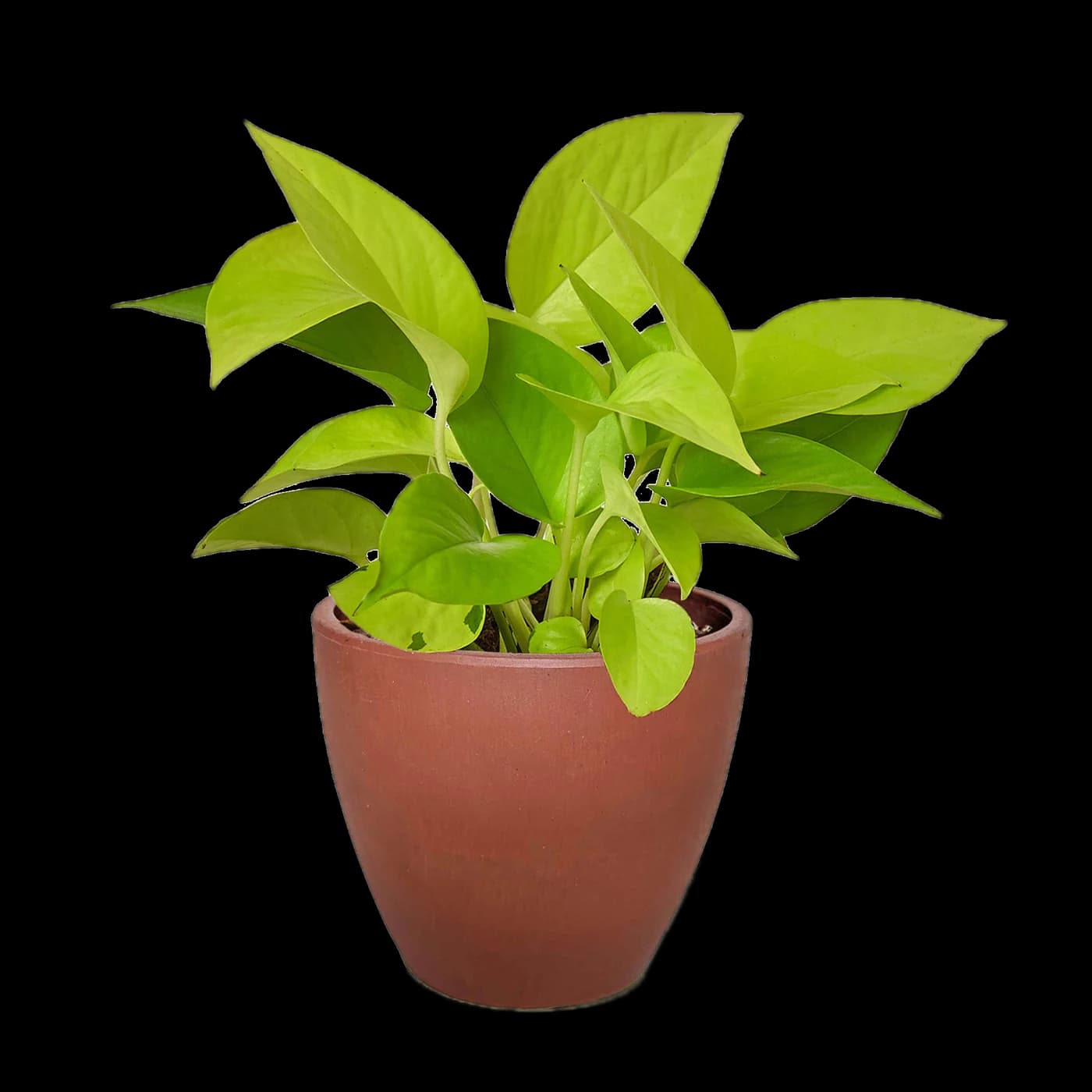
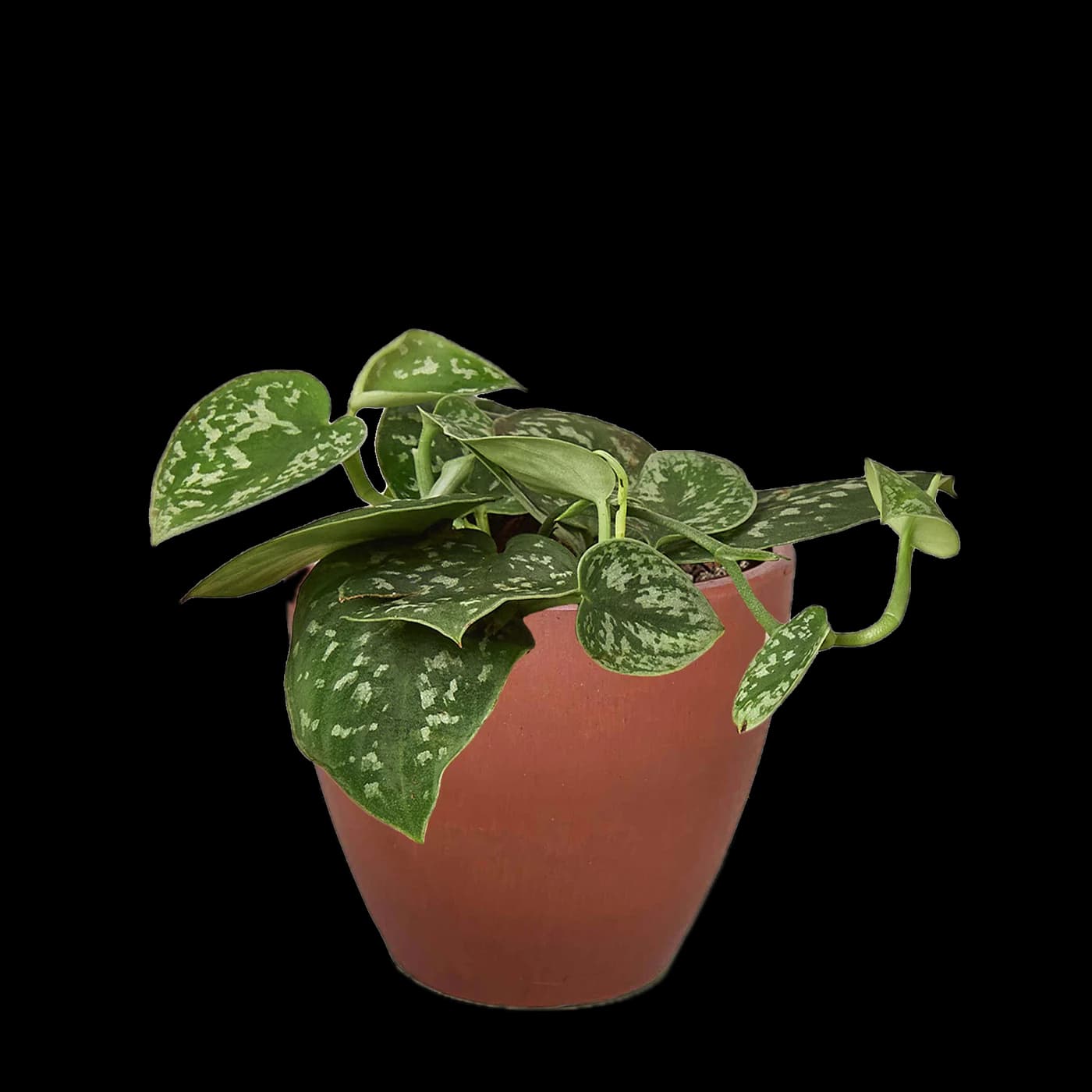
Yes. The ASPCA lists golden pothos, also sold as devil's ivy, as toxic to cats. Marble Queen, Neon and Jade are forms of the same species, Epipremnum aureum, so treat them as toxic too. If your cat chews one, the ASPCA Animal Poison Control Center is at (888) 426-4435; a fee may apply.
What is the difference between pothos and philodendron?
They are separate plants in the same family that look alike and often get mixed up. Penn State Extension points to two tells: pothos leaf stems have a groove, and new philodendron leaves emerge from a thin sheath that dries and falls off, while pothos leaves don't. Golden pothos leaves are also thicker and waxier, usually streaked with yellow. Both are toxic to cats and dogs.
Can golden pothos grow in a room with no windows?
It needs some light to grow. An office lit by overhead lights for most of the day can keep a pothos going, though growth will be slow and the leaves will turn greener. A bathroom where the light is on for a few minutes a day is too dark; a small LED grow light on a timer is the simplest fix there.
How do I make my pothos fuller?
Trim a few vines back to within a few inches of the soil, which Penn State Extension says keeps pothos short and bushy. You can also pin a long vine across the soil at a node with a bent paper clip, a method called layering. Roots form where each node touches the soil, so the vine covers the bare top, and once it has rooted you can snip between nodes to prompt new shoots.
Why are my pothos leaves turning yellow?
Look at which leaves are turning. One old leaf near the base now and then is normal. Several at once while the soil is still damp usually means the roots are staying too wet, most often in winter, when the plant drinks less. Pale, washed-out yellow on the side facing the window points to too much direct sun.
Sources
- ASPCA Animal Poison Control: Golden Pothos
- NC State Extension Plant Toolbox: Epipremnum aureum
- Penn State Extension: Pothos as a Houseplant
- UW-Madison Extension: Pothos, Epipremnum aureum
- Clemson Cooperative Extension HGIC 1459: Indoor Plants, Watering
- Cummings & Waring (2020), Potted plants do not improve indoor air quality, J. Expo. Sci. Environ. Epidemiol.