Care
Your plant arrives potted and ready. Here is how to keep it that way. For one plant in detail, see the plant guides.
The first week
Open the box the day it arrives and lift the plant out by its pot. A few bent or yellow leaves after a trip in the dark are normal; snip them off.
Then feel the soil. If it's dry an inch down, give it a drink. If it's damp, leave it be and let it settle in.
Light
Most of these plants are happiest in a bright room, out of strong direct sun. Each plant's page says how much shade it will take.
Short on light? These cope best with shade. Give the pot a quarter turn every week or two so the plant grows evenly.
Water: the finger test
Push a finger into the soil up to the first knuckle, about an inch. If it feels dry, water slowly at the base until the soil is evenly moist. If it's still damp, check again in a few days.
Some plants like to dry out more than that, and a few like to stay a little moister. Each care guide says which. Most want less water in winter, when growth slows.
Never leave it standing in water
Roots need air as well as water, and soil that stays soggy is the quickest way to lose a plant. If any water collects in a saucer or cover pot, tip it out after about half an hour.
The rattlesnake plant can get brown tips from the minerals in tap water. Filtered or rain water helps.
Feeding
Feed with a houseplant fertilizer at half strength about once a month in spring and summer. Skip it in fall and winter, when the plant is resting.
There's no need to feed a new plant in its first month or two with you.
Repotting
Your plant can stay in its pot for a year or more. When roots fill the pot, or the soil dries out within a day or two of watering, it's ready for more room.
Repot in spring into a pot about 2 inches wider, with fresh potting mix. Keep it out of strong sun for a week while it settles.
Pets
The Rattlesnake Plant and Money Tree are non-toxic to cats and dogs, according to the ASPCA. The Swiss Cheese Vine and Chinese Money Plant aren't on the ASPCA list either way, so keep them out of reach to be safe.
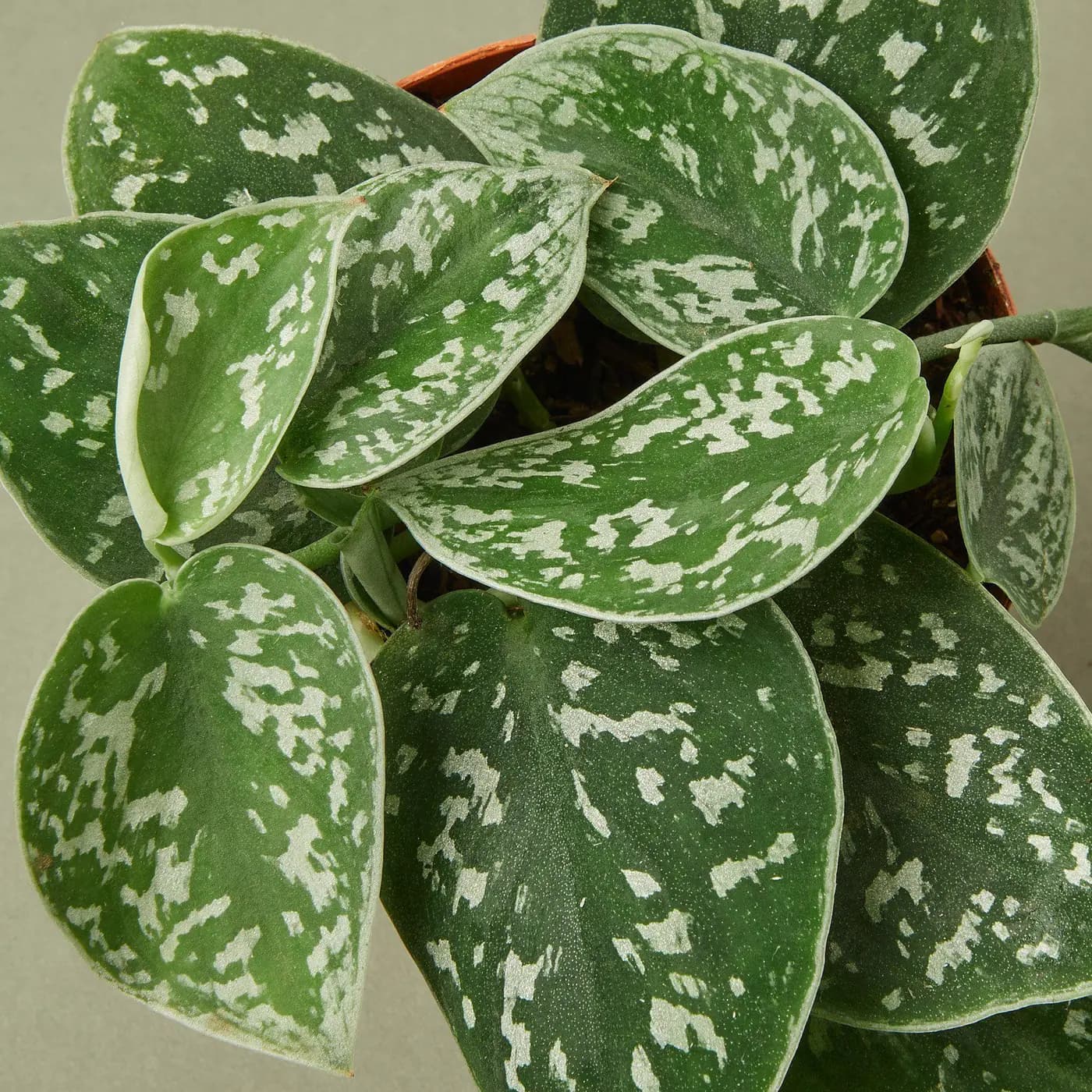
Golden Pothos, Neon Pothos, Satin Pothos, Heartleaf Philodendron and Dieffenbachia Camille can upset a pet that chews them. Keep those out of reach. More in our guide to pet-safe plants.
If something looks wrong
Yellow lower leaves and soggy soil usually mean too much water: let it dry out more between drinks. Crisp brown edges and dry soil mean too little. Pale, stretched growth means it wants more light.
Still worried? Send us a photo and we'll help.