- Guides
- Swiss Cheese Vine
Plant guide
Swiss Cheese Vine Care: The Holey Monstera That Climbs or Trails
A fast-growing vine with holey, heart-shaped leaves that climbs a pole or trails from a shelf, wants medium to bright indirect light and, though it isn't on the ASPCA list, should be treated as toxic to pets.
What is a Swiss cheese vine?
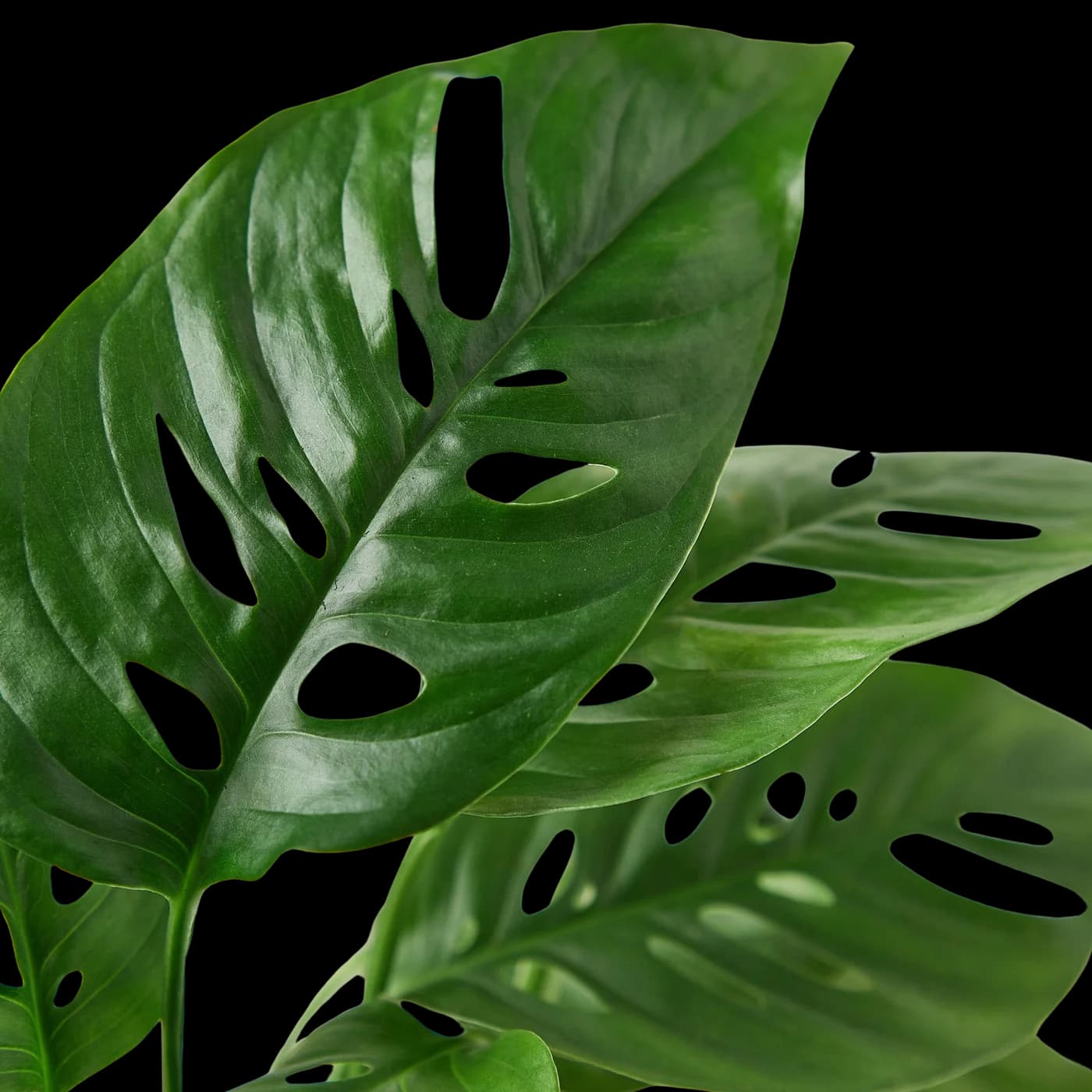
Swiss cheese vine is the common name for Monstera adansonii, a climbing vine with heart-shaped leaves full of oval holes. It's also sold as Adanson's monstera or five hole plant, and sometimes as Swiss cheese plant, a name it shares with Monstera deliciosa, the big split-leaf monstera. NC State Extension notes that M. deliciosa is the larger plant with bigger leaves, while M. adansonii stays smaller.
NC State gives its home as the rainforests of southern Mexico, Central America and South America, where it uses aerial roots to climb trees toward the light. It's in the arum family, Araceae, with golden pothos and heartleaf philodendron. Indoors, the RHS says it will climb if given support or trail if not, to about 6 feet (2 meters).
Here is what it does well, and where it falls short:
- It gives you the holey monstera look in a plant small enough for a shelf or a hanging planter.
- It grows fast. NC State rates its growth rate as rapid and lists it as easy to grow.
- It can trail or climb, so it fits the space you have.
- It rarely flowers indoors. NC State says houseplants typically don't bloom, so grow it for the leaves.
- It needs good light to make holes, and it isn't a plant for homes with pets that chew.
If your room is dim, our guide to low-light houseplants has better picks.
Why does Monstera adansonii have holes in its leaves?
Botanists call the holes fenestrations. On a Swiss cheese vine they are oval holes between the main veins, as the RHS describes them, while M. deliciosa leaves develop deep cuts as well as holes, Clemson Extension says.
No one knows for certain why monsteras evolved them. NC State's short explanation is that the holes help sunlight filter down to the plant. A 2013 study by biologist Christopher Muir in The American Naturalist offers a fuller idea. Monsteras grow in the shady rainforest understory, where brief sunflecks, patches of direct sun, often make up a large share of a plant's daily photosynthesis. His model found that holey leaves can make a plant's growth steadier in that patchy light. It's a testable hypothesis, not a settled answer.
What matters at home is that holes come with maturity and light. Muir describes fenestration as a trait of adult monstera leaves, which change shape noticeably as the plant grows up. Clemson Extension, writing about M. deliciosa, says its leaves are small and round at first and develop holes later, and that monsteras won't develop their perforations if the light is too low.
So a young plant, especially a Small, may have leaves with only one or two holes, or none at all. That's normal. Give it medium to bright indirect light and the new leaves should show more holes as the vine matures. Judge progress by the newest leaves.
Is Monstera adansonii toxic to cats and dogs?
Monstera adansonii isn't on the ASPCA's toxic and non-toxic plants list. When we checked in November 2026, the only monstera on it was Monstera deliciosa, filed under Swiss cheese plant, cutleaf philodendron and several other names. Because the two plants share the Swiss cheese name, it's easy to assume that entry covers this vine. It doesn't.
The ASPCA lists M. deliciosa as toxic to cats and dogs. Its toxic principle is insoluble calcium oxalate, and the signs include intense burning and irritation of the mouth, tongue and lips, heavy drooling, vomiting and difficulty swallowing. Swiss cheese vine belongs to the same aroid family, Araceae, and Clemson Extension notes that all parts of monsteras, philodendrons and pothos contain calcium oxalate crystals.
Sources that cover this species directly agree. NC State lists Monstera adansonii as toxic to people and pets if eaten, with calcium oxalate crystals in its leaves, stems, roots and sap, though it rates the severity as low. The RHS calls it harmful if eaten. The ASPCA also says its list isn't meant to be all-inclusive, so a missing entry tells you nothing either way. We don't call it pet safe. Treat it as toxic.
With a cat or dog that chews plants, keep it well out of reach and trim stems that trail low. Cats can reach most shelves, so if yours climbs, choose a plant the ASPCA lists as non-toxic, such as our rattlesnake plant, or see our guide to pet-safe houseplants. If your pet chews it, call your vet or the ASPCA Animal Poison Control Center at (888) 426-4435. A consultation fee may apply.
How much light does a Swiss cheese vine need?
Medium to bright indirect light. NC State Extension and the RHS both recommend bright, indirect light. A spot near an east-facing window, or a few feet back from a south- or west-facing one, works well.
Keep it out of strong direct sun, which NC State warns can scorch the leaves. If the only bright spot gets midday or afternoon sun, filter it with a sheer curtain.
Light also brings on the holes. Clemson Extension says monsteras won't develop their perforations when the light is too low, so a Swiss cheese vine in a dim corner tends to put out plain leaves. Pale or scorched patches mean too much sun. Plain new leaves mean too little.
How often should you water a Monstera adansonii?
Water when the top inch of soil feels dry. NC State Extension recommends moist, well-drained soil, and the RHS says to water freely in the growing season and sparingly in winter. Aim for soil that's moist below the surface, never soggy.
Check by touch every few days. Push a finger into the soil to the first knuckle, about an inch, and water when it feels dry at your fingertip.
When it's time, pour slowly around the base until the soil is evenly moist, then stop. Never leave the pot standing in water, and tip out anything that collects in a saucer or cover pot. NC State notes that overwatering can lead to root rot.
As a rough guide, a Small in a bright spot in summer may want water about once a week, and a Medium a little less often. In winter it can stretch to every week or two. Let the soil, not the calendar, decide.
Water at the soil, not the leaves, since NC State says keeping splashes off the foliage helps prevent leaf spots. Our guide to watering houseplants covers the basics.
Should a Swiss cheese vine climb or trail?
Either works. The RHS says it will climb if given support or trail if not, and lists hanging baskets among good places to grow it.
To let it trail, set it on a shelf or in a hanging planter and let the stems spill over the edge. Turn the pot every few weeks so all sides get light, and trim stems that get too long.
To let it climb, give it something to hold. NC State suggests a stake, trellis or moss pole in the center of the container, which echoes the way it climbs trees in the wild. Tie the stems loosely with soft plant ties, and in time the aerial roots along the stems will grip the support. Leave those roots in place where you can, since they're how the plant holds on.
You can also train a few stems up a small pole and let the rest trail. Either way, good light is what brings on the holes.
Swiss cheese vine care: feeding, humidity, pruning and repotting
Feed it in spring and summer. The RHS suggests a balanced liquid fertilizer once a month in the growing season. Dilute it as the label directs and skip feeding in fall and winter.
It likes warmth and humidity. NC State says it prefers high humidity and suggests a humidifier or a tray of wet pebbles, with the pot sitting on the stones rather than in the water. It also warns against cold drafts and temperatures below 50°F, so keep it off frosty winter glass.
Prune whenever the vines get longer than you like, cutting just above a node, the spot where a leaf joins the stem. Wear gloves: NC State and the RHS both warn that the sap can irritate skin. NC State recommends stem cuttings for propagation, so root the trimmings in water and plant them back in the pot to fill it out.
It arrives potted, so there's nothing to repot this year. When roots fill the pot, usually after a year or more, move it up one pot size in spring. The RHS suggests a peat-free, loam-based potting mix, and NC State recommends soil that's moist, well-drained and slightly acidic. Our care notes cover the routine every Patina plant shares.
What to do when your Swiss cheese vine arrives
Your Swiss cheese vine is potted at the greenhouse and travels in one box, ready to set down. It usually arrives in about 3 to 8 business days, with extra protection packed in during cold weather; our shipping page has the details. Open the box the day it comes. For the first week:
- Lift it out by the pot, free the vines gently and set it in medium to bright indirect light, away from cold drafts and heating vents.
- Feel the soil. If the top inch is dry, water slowly until it's evenly moist and tip out anything that collects in a saucer or cover pot. If it's damp, wait a day or two.
- A yellowed or creased leaf after the trip is normal. Snip it off at the stem.
- Leave it in its pot and skip feeding while it settles in. If you want it to climb, add a small stake or moss pole after a week or two.
The pot is our grower's recycled eco pot, which they describe as recycled plastic blended with stone powder and wood dust. It comes in terracotta or black. If your plant arrives damaged or declines in its first 30 days, we'll replace it.
Common Monstera adansonii problems and fixes
Most problems come down to light, water or dry air, and the leaves tell you early:
- New leaves with few or no holes: the plant is young, the light is too low, or both. Move it somewhere brighter, out of direct sun, and give it time.
- Yellow leaves and soil that stays wet: too much water. Let the top inch dry before watering again, and don't leave water standing in a saucer or cover pot.
- Wilting with wet soil, mushy stems or a sour smell: root rot, which NC State links to overwatering. Let the soil dry, trim off soft brown roots and repot in fresh, well-drained mix.
- Drooping with dry soil: it went too long between drinks. Water slowly until the soil is evenly moist. The leaves should lift within a day or so.
- Crisp brown edges: the air may be too dry, or a heater may be too close. NC State says it prefers high humidity, so try a humidifier or move it away from the vent.
- Sticky leaves, white fluff, bumps on stems or fine webbing: pests. NC State lists spider mites, mealybugs, aphids, whiteflies and scale insects. Wipe the leaves with a damp cloth, dab mealybugs and scale with a cotton swab dipped in rubbing alcohol, and treat with insecticidal soap.
Our Swiss cheese vine comes potted in a Small or Medium eco pot in terracotta or black.
Questions
Why doesn't my Monstera adansonii have holes?
Usually it's young, short on light, or both. Holes are a feature of mature monstera leaves, and Clemson Extension says monsteras won't develop them in low light. Give it medium to bright indirect light and watch the next few leaves. They should show more holes as the vine matures.
What is the difference between Monstera adansonii and Monstera deliciosa?
Both get called Swiss cheese plant, but they are different species. M. deliciosa is the larger plant, with big leaves that develop deep cuts as well as holes. M. adansonii is a smaller vine with heart-shaped leaves and oval holes between the veins. The ASPCA lists M. deliciosa as toxic to cats and dogs. M. adansonii isn't on its list, and we treat it as toxic.
Does Monstera adansonii need a moss pole?
No. The RHS says it will climb if given support or trail if not, so a pole is a choice, not a requirement. A moss pole or trellis suits it if you want an upright plant, since it climbs trees with its aerial roots in the wild. Without one, it trails nicely from a shelf or hanging planter.
Is Swiss cheese vine toxic to people?
Yes, mildly. NC State Extension rates its poison severity as low, but chewing it can inflame the mouth and throat and cause drooling and vomiting, and the sap can irritate skin. The RHS adds that it can irritate eyes. Wear gloves when you prune and keep it out of reach of small children. If a child chews a leaf, call your pediatrician or your local poison control center.
Sources
- ASPCA Animal Poison Control: Swiss Cheese Plant (Monstera deliciosa)
- ASPCA Animal Poison Control: Toxic and Non-Toxic Plants List
- NC State Extension Plant Toolbox: Monstera adansonii
- RHS Plants: Monstera adansonii
- Clemson Cooperative Extension HGIC 1509: Philodendron (with pothos and monstera)
- Muir (2013), How did the Swiss cheese plant get its holes? The American Naturalist (PubMed)