- Guides
- Snake Plant Laurentii
Plant guide
Snake Plant Laurentii Care: How to Grow the Gold-Edged Snake Plant
An upright snake plant with yellow-edged leaves that copes with dim rooms, wants water only once its soil has dried out and is toxic to cats and dogs, according to the ASPCA.
What is a snake plant 'Laurentii'?
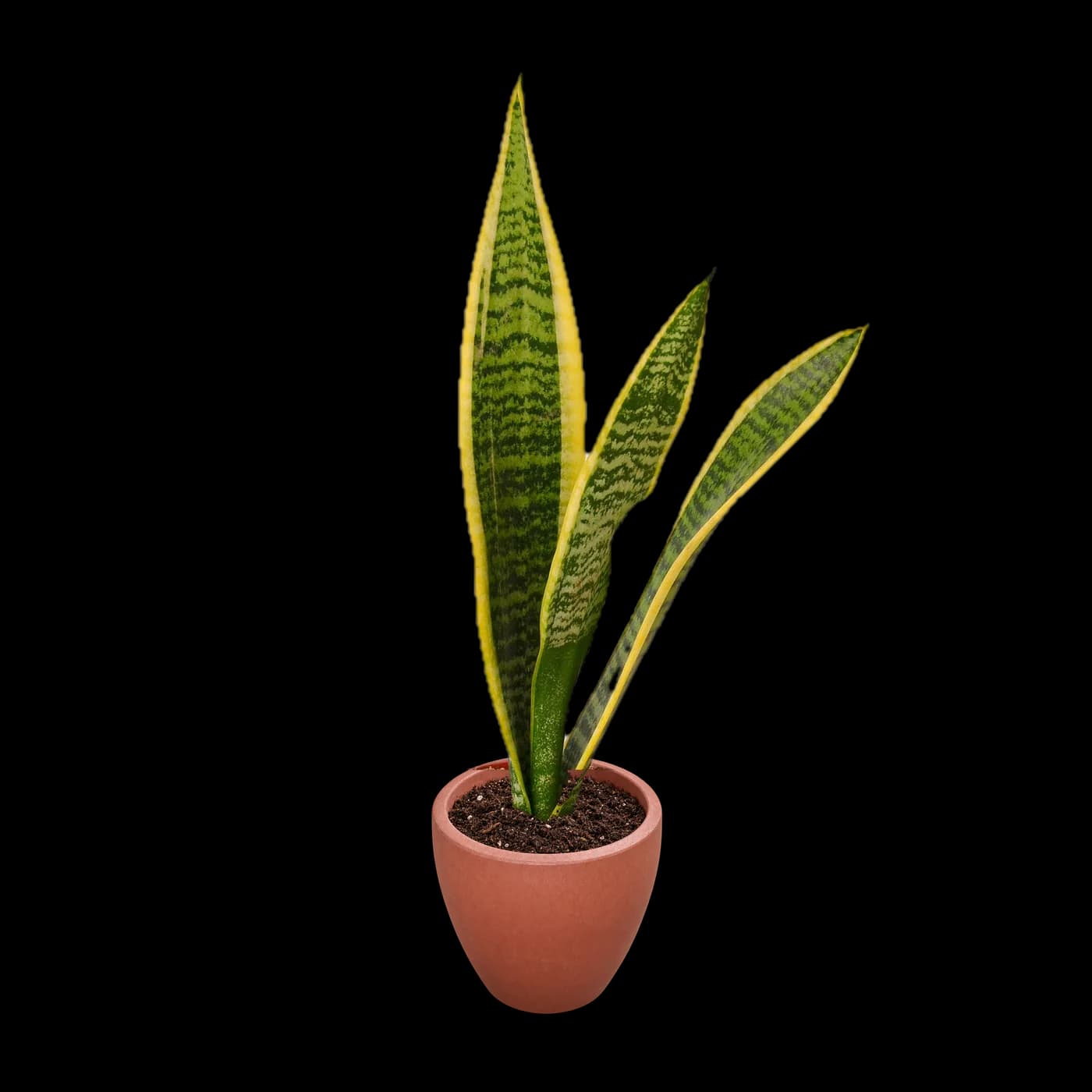
'Laurentii' is the snake plant most people picture: stiff, sword-shaped leaves standing straight up out of the soil, banded in dark green and gray-green and edged with a stripe of yellow. NC State Extension describes it as dark green with zigzags of lighter green and yellow edges.
For a long time it was sold as Sansevieria trifasciata, and many plant labels still use that name, as does the ASPCA. Clemson Extension explains that in 2017 botanists moved Sansevieria into the genus Dracaena based on DNA analysis, so its current name is Dracaena trifasciata 'Laurentii'. It also goes by mother-in-law's tongue. The Royal Horticultural Society (RHS), which still lists it as Sansevieria trifasciata var. laurentii and calls it the variegated snake plant, gives it its Award of Garden Merit.
Missouri Botanical Garden says the species is native to tropical western Africa, where its leaves can reach 4 feet. Indoors it's usually smaller, often about 2 feet. The leaves rise in a rosette from a thick rhizome, and over the years new shoots come up beside the old ones until the clump fills its pot.
Care comes down to one habit: let the soil dry out before you water. Most other things, from dim light to dry winter air, it takes in stride.
Is a snake plant a good houseplant for you?
It's one of the most forgiving plants we sell, for a few reasons:
- It copes with a dim room. Illinois Extension says it will grow in a room with very little natural light and also thrives in a brightly lit one.
- It's happy to be forgotten. Penn State Extension says it can go a month or so without water and be no worse for wear.
- It doesn't need humid air. The RHS says snake plants prefer low humidity, so dry winter heating suits them.
- It takes up little floor space. The leaves grow up rather than out, so it fits a narrow spot beside a sofa or on a desk or shelf. Our Small comes in a 4 in pot and our Medium in a 6 in pot.
It has limits. The ASPCA lists it as toxic to cats and dogs. It grows slowly, so it won't fill a corner quickly: the RHS gives it 5 to 10 years to reach its full height. And the RHS says overwatering is usually the main problem, since it can lead to root rot, so a heavy hand with the watering can is the main risk. If you've seen it sold as an air purifier, read what the research says about plants and indoor air before you count on it. The snake plant was on NASA's 1989 list, but a sealed test chamber is a long way from a living room.
It suits a beginner, a busy household, an office or a hallway with some daylight. Skip it if you have a cat or dog that chews leaves; the ASPCA lists our rattlesnake plant and money tree as non-toxic. Our guide to easy houseplants for beginners has more forgiving picks.
Is a snake plant safe for cats and dogs?
No. The ASPCA lists the snake plant, under its older name Sansevieria trifasciata, as toxic to both cats and dogs. It also appears there as mother-in-law's tongue, golden bird's nest and good luck plant. The toxic compounds are saponins, and the signs the ASPCA lists are nausea, vomiting and diarrhea. When we checked in November 2026, it was on the ASPCA's toxic lists for both cats and dogs.
NC State rates its poison severity as low. That's no reason to leave it within reach, since a cat or dog that chews the leaves can still be sick. The RHS adds that the sap can irritate skin, so wear gloves when you cut or divide it, and keep it away from small children.
If your pet chews it and seems unwell, call your veterinarian or the ASPCA Animal Poison Control Center at (888) 426-4435. A consultation fee may apply.
Don't confuse it with the rattlesnake plant, a calathea that the ASPCA lists as non-toxic. The names are close but the plants aren't related. Our guide to pet-safe houseplants covers the plants in our range the ASPCA lists as non-toxic.
How much light does a snake plant need?
Anything from a dim corner to a bright room, though it does best in between. Missouri Botanical Garden says it prefers a warm, bright spot but tolerates some shade, and the RHS says snake plants grow best in a bright, lightly shaded spot and cope with lower light. A few feet back from an east- or west-facing window, or right beside a north-facing one, suits it well.
Low light slows it down. Clemson says a snake plant in low light grows more slowly and needs less water, so water less often in a dim room than you would in a bright one. Most trouble in dim rooms comes from watering at a sunny-room pace.
Keep it out of hot sun. Missouri Botanical Garden says to protect it from hot afternoon sun, and the RHS warns that midday summer sun can scorch the leaves. Penn State and Clemson both say direct sun can burn it. In a south-facing room, set it back from the glass or behind a sheer curtain.
Light also shapes it. The RHS notes that snake plants in shade tend to grow taller, while those in sun stay more compact.
Keep it comfortable. The RHS puts the ideal range at 60 to 75°F and says to keep it out of cold drafts and away from radiators. NC State says it tolerates cool temperatures of around 50°F, so treat that as the floor in winter. If your whole home runs dim, our guide to low-light houseplants compares the plants that cope best.
How often should you water a snake plant?
Only once the soil has dried out. The RHS advice is to push a finger into the potting mix to check, rather than watering on a schedule. NC State says to let the soil dry between waterings from spring to fall and to water only every 1 to 2 months in winter.
For a rough idea, Clemson suggests every 2 to 4 weeks in the growing season and every 4 to 6 weeks in fall and winter, more often in brighter light. A Small in its 4 in pot dries out sooner than a Medium. Treat those numbers as a starting point and let the soil decide.
When it's time, water like this:
- Pour water onto the soil around the leaves, not into the center of the rosette. The RHS and Missouri Botanical Garden both warn against wetting the center.
- Water slowly until the soil is moist all the way through and some runs out of the drainage hole.
- Tip out any water left in a saucer or cover pot. The RHS names standing in water as a cause of root rot.
- Check less often in winter. The RHS says snake plants need very little water while growth is slow, unless they're somewhere particularly warm.
When in doubt, wait. Penn State notes that a snake plant can go a month or so without water, while overwatering can kill it. Our guide to watering houseplants covers the basics for every plant.
Everyday snake plant care: humidity, feeding, potting mix and repotting
Skip the humidifier. The RHS says snake plants prefer low humidity, suggests never misting them and advises against steamy bathrooms. NC State lists it as tolerant of low humidity.
Feed lightly in the warm months. The RHS suggests a liquid houseplant or cactus fertilizer once a month from April to September, and Penn State suggests an all-purpose fertilizer at half strength once a month in the growing season. Don't feed in fall and winter.
Use a free-draining mix when you repot. The RHS suggests a cactus potting mix, or two parts loam-based potting mix to one part horticultural grit. Penn State suggests cactus mix or one with added perlite. Choose a pot with a drainage hole, and a heavy one for a tall plant: Penn State notes that the weight of the leaves can tip a light pot, and Missouri Botanical Garden says clay pots wider than they are tall are often used to keep snake plants from toppling.
Repot rarely. Penn State's rule of thumb is about every 5 years. The RHS says to wait until the roots and leaves have filled the pot or are pushing it out of shape, then move up to a pot only slightly larger. It's happy in a snug pot, though Penn State warns that a badly rootbound plant can crack a clay one.
Wipe the leaves with a damp cloth now and then. Dust dulls the pattern and cuts the light the leaves can use.
How to divide a snake plant, and why leaf cuttings lose the yellow edge
'Laurentii' is easy to multiply, but the method matters. The RHS explains that leaf cuttings from variegated snake plants tend to revert to green, so the new plants lose their yellow edges. To keep the 'Laurentii' look, divide it instead.
Divide in spring; the RHS suggests March to May. Ease the plant out of its pot and split the clump so each section has one or more leaves with roots attached, then pot each piece in free-draining mix. Penn State calls division the easiest method. The RHS adds that well-rooted offsets, the young shoots beside the main clump, can be pulled away and potted up on their own.
Leaf cuttings work if you don't mind plain green plants. The RHS method is to cut a mature leaf into 2 in sections, let the cut ends dry for a day or two, then push the lower half of each section, bottom end down, into damp mix. Illinois Extension notes that leaf cuttings also root in water. Either way, the result is a snake plant, just not a 'Laurentii'.
What to do when your snake plant arrives
Your snake plant comes already potted at the greenhouse in a recycled eco pot, in terracotta or black, in one box. Unpack it soon after delivery, lift it by the pot rather than the leaves and take away all the packing, including any winter protection.
Feel the soil before you water. If it's dry an inch or two down, water slowly around the base of the leaves and tip out any extra. If it's still damp, leave it. With a snake plant, a missed watering is safer than an extra one.
Choose its spot: anywhere from a bright room to a dim corner, out of hot afternoon sun and away from cold drafts and heaters. Leave it in the pot it came in, since it won't need a bigger one for years. If it arrives in fall or winter, hold off on feeding until spring.
If it arrives damaged or declines in its first 30 days, we replace it. Delivery times are on our shipping page.
Common snake plant problems and how to fix them
Most snake plant problems start with water, so feel the soil first:
- Soft, mushy leaves at the base, or a plant that leans or topples: root rot, which the RHS says usually follows overwatering or a pot left standing in water. Let the soil dry out completely. If the base stays soft, ease the plant out of its pot and cut away anything soft and brown. Repot the firm sections in fresh, dry mix.
- Thin, wrinkled leaves and soil that's been bone dry for weeks: it's finally thirsty. Water thoroughly, then go back to checking the soil.
- Bleached or scorched patches: too much hot sun. Pull it back from the glass or add a sheer curtain.
- Tall, floppy growth in a dim spot: the RHS notes that snake plants in shade grow taller. Move it somewhere brighter, but check the soil too, since root rot can also make leaves lean.
- Marked or damaged leaves after a cold night by the window: too cold. NC State says it tolerates temperatures of around 50°F, so move it in from the glass in winter.
- Cottony white clusters where the leaves meet the soil: mealybugs, which the RHS says hide between the leaves at the base. Dab them off with a cotton swab dipped in rubbing alcohol and check again every week.
- Fine webbing and pale speckles: spider mites, usually a problem only in hot, dry conditions, the RHS says. Rinse the leaves and keep the plant away from heaters.
Every snake plant from our shop comes in a Small or Medium size, potted at the greenhouse in a recycled eco pot in terracotta or black, with our 30-day guarantee.
Questions
Is a snake plant toxic to cats?
Yes. The ASPCA lists the snake plant (Sansevieria trifasciata) as toxic to cats and dogs. It contains saponins, and the signs the ASPCA lists are nausea, vomiting and diarrhea. Keep it out of reach, and if your pet chews it, call your vet or the ASPCA Animal Poison Control Center at (888) 426-4435.
Is it Sansevieria or Dracaena?
Both names refer to the same plant. Clemson Extension says botanists moved Sansevieria into Dracaena in 2017 based on DNA analysis, so the current name is Dracaena trifasciata. The ASPCA and the RHS still list it as Sansevieria trifasciata, and many plant labels do too. The care is the same either way.
How often should I water a snake plant?
Only when the soil has dried out. Clemson suggests every 2 to 4 weeks in the growing season and every 4 to 6 weeks in fall and winter, and NC State says every 1 to 2 months in winter. Plants in dim, cool rooms need water least often, so check the soil rather than the calendar.
Will leaf cuttings from my 'Laurentii' keep the yellow edges?
Usually not. The RHS says leaf cuttings from variegated snake plants tend to revert to green. To get more plants with yellow edges, divide the clump in spring so each piece has its own roots and leaves.
Can I keep a snake plant in a bathroom?
It isn't the best spot. The RHS says snake plants prefer low humidity and suggests keeping them out of steamy bathrooms. A dry, bright living room, bedroom or office suits it better.
Does a snake plant flower?
Sometimes, but rarely indoors. Missouri Botanical Garden says mature plants can bloom in spring with small, fragrant, greenish-white flowers, followed by orange berries. NC State adds that the flowers are sticky. Most indoor plants never flower, and that's no sign of a problem.
Sources
- ASPCA Animal Poison Control: Snake Plant (Sansevieria trifasciata)
- ASPCA Animal Poison Control: Toxic and Non-Toxic Plants for Cats
- NC State Extension Plant Toolbox: Dracaena trifasciata
- Missouri Botanical Garden Plant Finder: Dracaena trifasciata
- Royal Horticultural Society: Sansevieria growing guide
- Royal Horticultural Society: Sansevieria trifasciata var. laurentii (variegated snake plant)
- Penn State Extension: Snake Plant, A Forgiving, Low-maintenance Houseplant
- Clemson Cooperative Extension (HGIC): Exciting Houseplant Selections for Beginners
- University of Illinois Extension: Brighten up dim interiors with low-light houseplants