- Guides
- Peace Lily
Plant guide
Peace Lily Care: How to Grow It and Get It to Bloom Again
A glossy, leafy plant whose white blooms come and go through the year, that droops when it's thirsty and that the ASPCA lists as toxic to cats and dogs.
What is a peace lily?
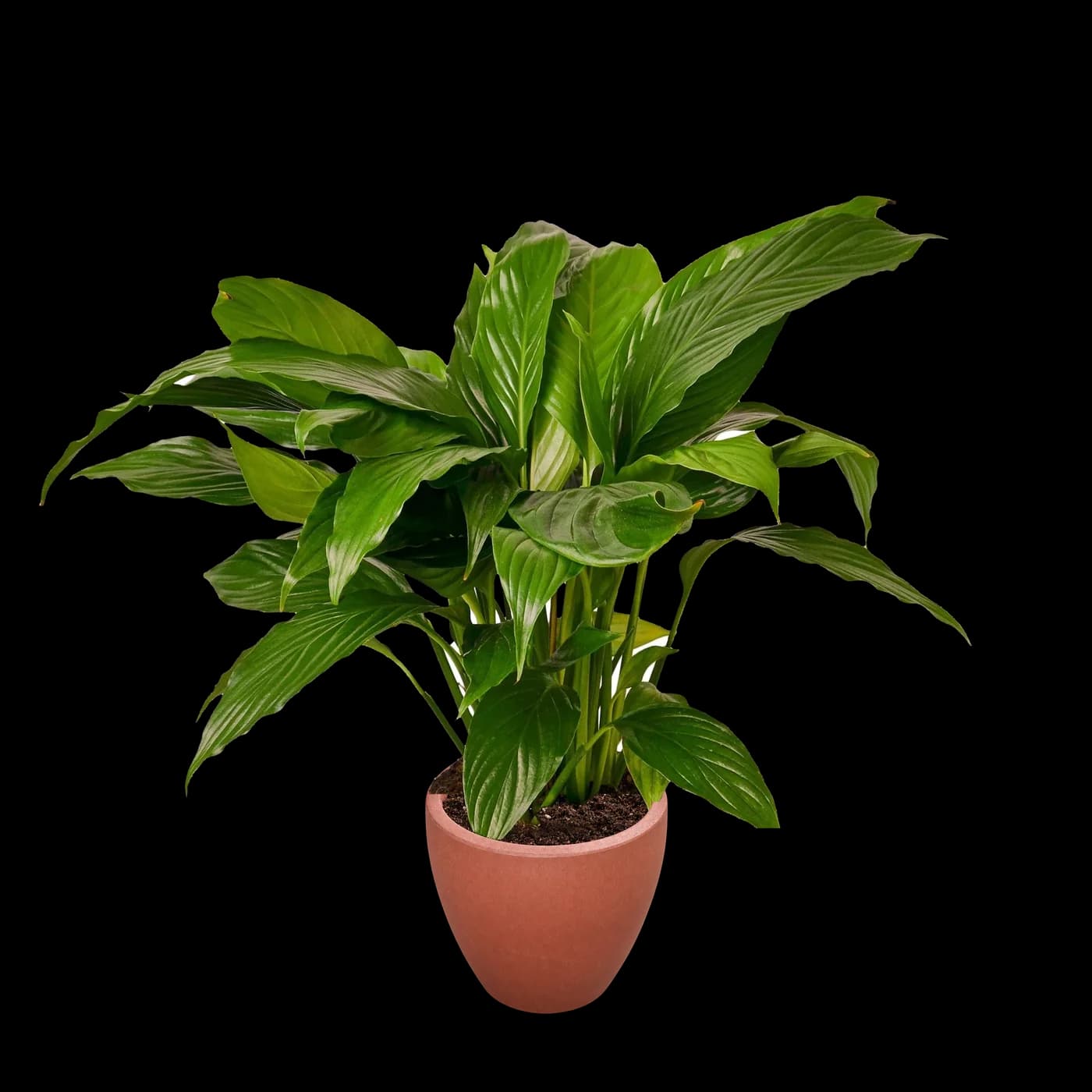
A peace lily is a clump of glossy, dark green leaves that rise straight from the soil, topped now and then by a white bloom on a tall stem. Clemson Extension describes the leaves as oval and narrowing to a point, and NC State Extension describes the blooms as white and sail-like, 4 to 12 inches long, held above the foliage.
Its botanical name is Spathiphyllum, a genus of 40 or more species, and despite the name it isn't a true lily. Clemson and the Royal Horticultural Society (RHS) both place it in the arum family, Araceae, alongside anthuriums and callas, and our ZZ plant belongs to the same family. Like other arums, its bloom is a spathe, a white, petal-like leaf wrapped around a central spike called a spadix, which holds the tiny true flowers. The RHS says the spathes resemble white flags, a symbol of peace, which is where the common name comes from.
Clemson says the species grow mainly in Central and South America, and the RHS says they come from tropical forests, which is why they want warmth and filtered light. Clemson puts most peace lilies at 1 to 4 feet tall and wide, with a few cultivars reaching 6 feet. Ours is sold simply as Spathiphyllum, without a cultivar name, so we can't say exactly how big it will get.
What it does well, and where it asks more of you:
- It's easy. NC State rates its maintenance as low, and UF/IFAS Extension says peace lilies are easy to grow and can provide years of enjoyment.
- It tells you when it's thirsty. The RHS says it can droop dramatically when it needs water, then soon perks up after a good drink.
- It copes with a dim room, but it flowers far more in a bright one. The RHS says it survives deeper shade but rarely flowers there.
- Its blooms come and go. NC State says it has no specific bloom time, so a plant can arrive between blooms.
- It's toxic to cats and dogs. The ASPCA lists it as toxic to both, so it's a poor fit for a home with a pet that chews plants.
- It comes in two sizes. Our Small comes in a 4 in pot and our Medium in a 6 in pot.
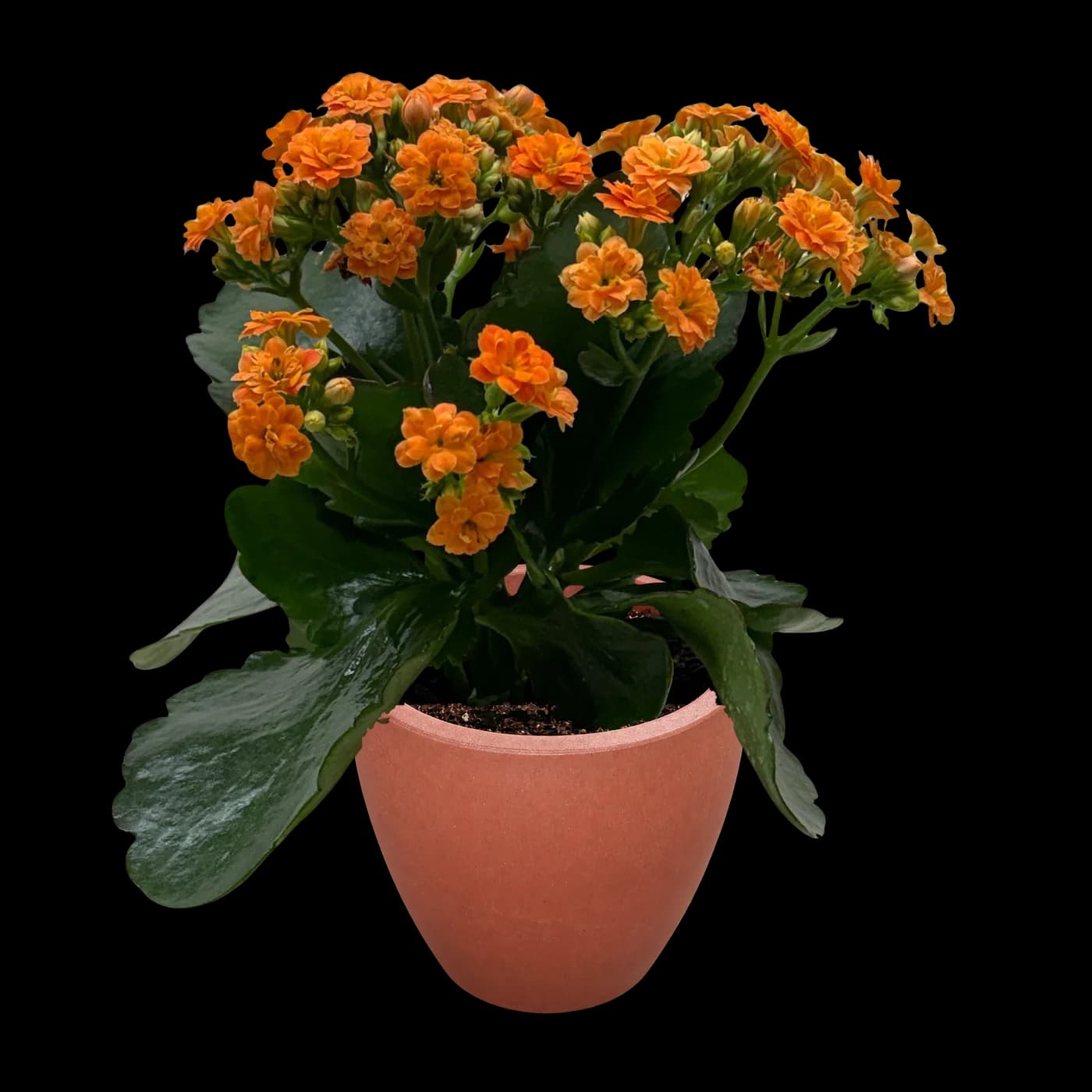
If you'd like a plant we call pet safe, look at the parlor palm or the spider plant 'Bonnie' instead. If you'd like flowers for a sunny window, our Kalanchoe Flaming Katy blooms in orange, though it's toxic to cats and dogs too.
Peace lily flowers: what to expect
Peace lilies flower on and off rather than on a set schedule. NC State says the plants have no specific bloom time but flower freely, and Clemson says they produce their white blooms periodically. The RHS says they're mainly produced in spring and summer.
Each bloom lasts a long time and changes as it ages. NC State says the white blooms turn pale green after about 10 days and then stay attractive for at least another month, and the RHS says they last several months before fading to green. The green stage is normal, not a sign of trouble.
We can't promise a peace lily will arrive in bloom. Because the blooms come and go, yours may arrive between them, with a bud on the way or with a bloom that's past its best.
Plants in shops often bloom more heavily than they will at home, and there's a reason. University of Arkansas Extension explains that growers can time flowering with a spray of gibberellic acid, a plant hormone, with blooms appearing about two months later. Left to itself, it says, a peace lily still flowers, but usually only a few blooms at a time and on an erratic schedule. That's the pattern to expect at home.
Young plants can take a while. Clemson says a lack of flowers usually comes down to a plant that's less than a year old or one growing in too little light. The next section covers the light.
How to get a peace lily to bloom again
Light is the main lever. The RHS says bright, indirect light, near a window but out of direct summer sun, ensures strong growth and flowering, and it names too little light as a common reason a peace lily doesn't flower. University of Arkansas Extension gives a handy test: put it somewhere bright enough to read a newspaper by.
Then keep the rest of its care steady:
- Move it closer to the light, not into the sun. A spot near a window that doesn't get hot direct sun is ideal, since direct sun scorches the leaves.
- Feed it in spring and summer. The RHS says regular liquid feeding from April to October boosts leaf production and flowering. Keep it light, as Clemson and NC State advise; the care section below has the details.
- Let it stay a little snug in its pot. Clemson says peace lilies like to be slightly pot-bound, and NC State says to keep it somewhat pot-bound.
- Give it time. Clemson says plants under a year old often don't flower yet, so a young Small may grow leaves for a while before it blooms.
- Cut spent blooms off at the base. The RHS says to snip fading flowers and leaves at the base of the stem. Wear gloves, since it says the sap can irritate skin.
Even in good light, expect blooms to come and go, with leafy spells between them. In between, it's grown for its glossy foliage, which NC State names alongside the blooms as the reason it's popular.
Is a peace lily safe for cats and dogs?
No. The ASPCA lists the peace lily, Spathiphyllum, as toxic to both cats and dogs, under the names Peace Lily and Mauna Loa Peace Lily. It names the toxic principle as insoluble calcium oxalates, and the signs it lists are oral irritation, intense burning and irritation of the mouth, tongue and lips, excessive drooling, vomiting and difficulty swallowing. When we checked in November 2026, it was on the ASPCA's toxic lists for both cats and dogs.
NC State Extension agrees. It rates the poison severity as medium, names calcium oxalate crystals in the leaves and marks the plant as a problem for cats, dogs, horses and children. The RHS says to keep it out of reach of children and pets, and to wear gloves when you handle it, since the sap can irritate skin.
It isn't a true lily, and that matters for cats in one way. The ASPCA warns that true lilies (Lilium) and daylilies (Hemerocallis) can cause severe kidney injury in cats. The peace lily works differently: the ASPCA says chewing it releases calcium oxalate crystals that cause mouth pain, drooling, vomiting or diarrhea, and that, very rarely, swelling in the mouth can make breathing difficult. It is still toxic, so keep it in a room your pets don't use. A high shelf isn't enough on its own, since cats climb.
If your pet chews it, call your veterinarian or the ASPCA Animal Poison Control Center at (888) 426-4435. A consultation fee may apply. Go to an emergency vet straight away if your pet has trouble breathing. Our guide to pet-safe houseplants covers the plants we do call pet safe.
How much light does a peace lily need?
Bright, indirect light for flowers, though it copes with less. Clemson says peace lilies tolerate low light but grow best in bright indirect light, and UF/IFAS says to keep one in a well-lit area, out of direct sunlight.
In a dim room, expect leaves rather than blooms. Sources differ on how much a peace lily flowers in low light: Clemson calls it one of the few foliage plants that will flower in low light, but the RHS says it survives deeper shade yet rarely flowers there and grows very slowly. University of Arkansas Extension says it tolerates very low light, down to 20 foot-candles, but probably won't flower at that level. If blooms matter to you, give it the brightest spot you have out of direct sun.
Keep it out of direct sun. NC State says not to place it in direct sun, Clemson says the heat will scorch the foliage, and NC State lists too much direct sunlight among the causes of brown leaf tips. The RHS suggests giving the pot a quarter turn each time you water, so it doesn't grow lopsided toward the window.
Keep it warm and out of drafts. Clemson puts its preferred range at 68 to 85°F by day, with nights about 10°F cooler, and says to avoid temperatures below 60°F, since cold damage may occur. NC State says 40 to 60°F slows growth considerably and that extended periods below 40°F can damage the leaves, stems and roots. Clemson also says to keep it where heating and air-conditioning vents don't blow on it. If your home runs dim, our low light houseplants guide compares the plants that cope best.
How often should you water a peace lily?
Water when the top of the soil starts to dry, and never leave it soggy. Clemson says to keep the soil moist but not soggy and let it dry out slightly between waterings, and NC State gives the same advice. The RHS says to water through the growing season, April to October, once the top few centimeters (about an inch) of potting mix have dried, and slightly less in winter as growth slows. A Small in its 4 in pot dries out sooner than a Medium in its 6 in pot.
Its droop is a useful signal. The RHS says a thirsty peace lily can droop alarmingly but should soon recover with no ill effects if you water it promptly. Don't make a habit of waiting for it, though. Clemson says that if the soil dries out too much, the plant wilts and its leaves and edges turn yellow, and NC State lists underwatering among the causes of brown leaf tips. Feel the soil every few days and water before it gets that far.
Feel the soil before you water a droopy plant, too. Clemson notes that wilting isn't always a sign a plant needs water: roots damaged by rot can't take up water either, so a plant in soggy soil wilts as well, and watering it then makes things worse.
When it's time, water like this:
- Pour slowly at the base until the soil is evenly moist all the way through. If the pot has a drainage hole, a little water running out is the sign it's had enough.
- Tip out any extra. Clemson warns that leaving a peace lily in a saucer of water leads to root rot, so empty the saucer or cover pot after watering.
- Use room-temperature water. Clemson recommends it for peace lilies, and its watering guide suggests 62 to 72°F.
- Use rainwater or filtered water if you can. The RHS says the fluoride in tap water can damage the leaves.
NC State says watering from below works very well for peace lilies. Only try it if the pot has a drainage hole: stand it in a shallow tray of water until the surface of the soil feels moist, then lift it out and let it drain. Our guide to watering houseplants covers the basics for every plant.
Everyday peace lily care: humidity, feeding, cleaning and repotting
Give it moderate humidity. The RHS says peace lilies like consistent warmth and moderate humidity, calls a bathroom an ideal spot and says very dry air can brown the leaves. In a dry, heated home, stand the pot on a tray of damp gravel, with the water kept below the tops of the stones so the pot never sits in it, and keep it away from radiators.
Feed sparingly. Clemson says peace lilies need very little fertilizer: a balanced liquid houseplant fertilizer at a quarter of the label strength, every six to eight weeks in spring and summer. NC State also suggests quarter strength, and flushing the soil with plain water between feeds if the pot has a drainage hole, since it says over-fertilizing and salt build-up can burn the leaf tips and roots. Stop feeding in fall and winter.
Wipe the leaves. Clemson, NC State and UF/IFAS all suggest wiping the broad leaves with a damp cloth now and then, and NC State notes that it also removes some of the pests that gather under the leaves.
Repot rarely. The RHS says a newly bought peace lily can usually stay in its pot for at least a year or two. Clemson says it likes to be slightly pot-bound and that it's time to repot when roots start circling on top of the soil or growing out through a drainage hole. Go up only 1 to 2 inches, since Clemson warns that a pot that's too big keeps the mix too wet. The RHS suggests repotting in spring, with perlite or grit mixed into the potting mix for drainage. If your pot has no drainage hole, choose one that does when you repot.
Divide it to make more. UF/IFAS and the RHS both suggest dividing a peace lily in spring: ease it out of its pot and pull or cut the root ball into smaller clumps, each with plenty of roots and several strong stems, then pot them up separately. Wear gloves, and wash your hands afterward. Our care notes cover the routine every Patina plant shares.
What to do when your peace lily arrives
It arrives already potted at the greenhouse in a recycled eco pot, in terracotta or black, in one box. In the first week:
- Unpack it the day it arrives. Lift it out by the pot rather than the leaves, and remove all the packing, including any winter protection added for a cold-weather trip.
- Don't worry if it looks limp. Feel the soil: if it's dry, water slowly until it's evenly moist and tip out any extra, and a thirsty peace lily should soon perk up, as the RHS notes. If the soil is still damp, don't add more water; give it a day or two somewhere warm and out of direct sun.
- It may arrive between blooms, or with a bud or a bloom that's past its best. Cut off any bloom or leaf that's creased or torn at the base of its stem, wearing gloves.
- Choose its spot: bright, indirect light, out of direct sun and away from vents, drafts and cold glass. Clemson says to avoid temperatures below 60°F.
- Leave it in its pot. The RHS says a new peace lily can usually stay in its original pot for a year or two. If it arrives in fall or winter, hold off on feeding until spring.
If it arrives damaged or declines in its first 30 days, we'll replace it. Our shipping page explains delivery times and the guarantee.
Peace lily problems and how to fix them
Most peace lily problems come back to water, light or feeding. Find the symptom:
- Drooping with dry soil: it's thirsty. Water it thoroughly, and the RHS says it should soon recover. Check a little sooner next time.
- Drooping with wet soil: likely root rot. Clemson says root and stem diseases are the most common peace lily problem and usually come from overwatering. Tip out any standing water and let the top of the soil dry before you water again. If it doesn't recover, ease it out of its pot, cut away soft, dark roots and repot in fresh mix.
- Yellow leaves and edges: Clemson links them to soil left to dry out too far, and the RHS says overwatering can turn leaves yellow or brown too. Feel the soil to tell which.
- Brown leaf tips: NC State names too much direct sun, underwatering and low humidity. Clemson and NC State add over-fertilizing, and the RHS says fluoride in tap water can damage the leaves. Move it out of the sun, raise the humidity, feed less and switch to rainwater or filtered water.
- No blooms: too little light or a plant under a year old, Clemson says. Move it somewhere brighter, out of direct sun, and give it time.
- White, cottony clusters on the leaves or stems: mealybugs, which NC State calls the most common indoor pest. Wipe them off and keep checking. Clemson adds fungus gnats, spider mites and scale to the pests to watch for.
You can get a peace lily in Small or Medium, potted in terracotta or black, covered by our 30-day guarantee.
Questions
Is a peace lily toxic to cats?
Yes. The ASPCA lists the peace lily (Spathiphyllum) as toxic to cats and dogs because of insoluble calcium oxalates, which cause intense burning and irritation of the mouth, drooling, vomiting and difficulty swallowing. It isn't a true lily, so it isn't one of the lilies the ASPCA warns can cause kidney injury in cats, but it is still toxic. Keep it in a room your cat doesn't use, and if your cat chews it, call your vet or the ASPCA Animal Poison Control Center at (888) 426-4435.
Will my peace lily arrive in bloom?
We can't promise it. NC State says peace lilies have no specific bloom time, so yours may arrive between blooms or with a bud on the way. In bright, indirect light, blooms come back on their own, though Clemson notes that a plant under a year old may not flower yet.
Why isn't my peace lily blooming?
Usually light or age. Clemson says a lack of flowers usually means the plant is less than a year old or growing in too little light, and the RHS names insufficient light as a common cause. Move it to a bright spot near a window, out of direct sun, and feed it lightly in spring and summer.
Why is my peace lily drooping?
Most often, it's thirsty. The RHS says a peace lily can droop alarmingly when it needs water and soon recovers after a drink. Feel the soil first, though: if it's wet, root rot is more likely, and Clemson warns that watering a wilting plant with damaged roots makes things worse.
Can a peace lily grow in low light?
It can live there, but it may not flower much. Clemson says it tolerates low light but grows best in bright indirect light, and the RHS says it survives deeper shade but rarely flowers there. In a dim room, treat it as a foliage plant, and move it closer to a window if you want blooms.
Should I cut off peace lily flowers when they turn green?
There's no rush. NC State says the white blooms turn pale green after about 10 days and stay attractive for at least another month. When a bloom starts to fade or brown, the RHS says to snip it off at the base of the stem. Wear gloves, since the sap can irritate skin.
Sources
- ASPCA Animal Poison Control: Peace Lily (Spathiphyllum)
- ASPCA Animal Poison Control: Toxic and Non-Toxic Plants for Cats
- ASPCA Animal Poison Control: Toxic and Non-Toxic Plants for Dogs
- ASPCA (April 2022): Which Lilies Are Toxic to Pets?
- NC State Extension Plant Toolbox: Spathiphyllum
- Clemson Cooperative Extension (HGIC 1512): Peace Lily
- Clemson Cooperative Extension (HGIC 1459): Indoor Plants: Watering
- Royal Horticultural Society: How to grow peace lilies
- Royal Horticultural Society: Peace lilies
- UF/IFAS Gardening Solutions: Peace Lily
- University of Arkansas Cooperative Extension, Plant of the Week: Spath (Peace Lily)