- Guides
- ZZ Plant
Plant guide
ZZ Plant Care: How to Grow the Glossy Plant That Stores Its Own Water
A slow, glossy plant from eastern Africa that copes with dim rooms, wants water only once its soil has dried out and isn't on the ASPCA's plant list, though extension services call it poisonous.
What is a ZZ plant?
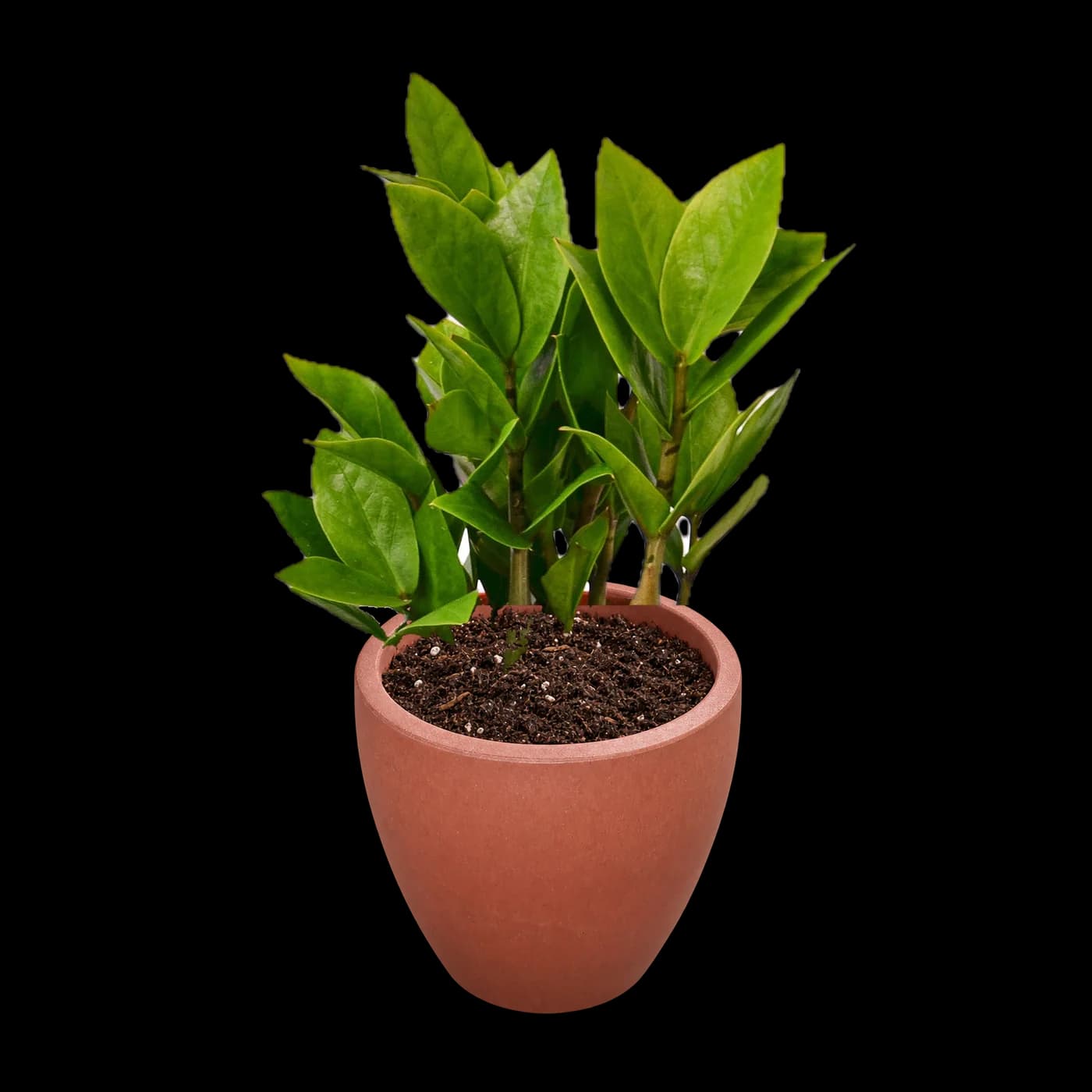
A ZZ plant is a glossy, upright plant made of thick stems lined with pairs of dark green leaflets. Each stem is really one leaf: Clemson Extension explains that the leaves are compound, growing straight up from the rhizomes and reaching up to 4 feet, with shiny, thick, leathery leaflets that give it the look of a small palm or cycad.
Its botanical name is Zamioculcas zamiifolia, and Clemson notes it's the only species in its genus. Missouri Botanical Garden explains the name: it joins Zamia, an unrelated cycad whose leaves it resembles, with culcas, an Arabic name for elephant's ear. It's an aroid, in the same family as the peace lily, Chinese evergreen and philodendron, and it also goes by aroid palm, eternity plant and Zanzibar gem.
It comes from eastern Africa, from Kenya to South Africa, where Clemson says it grows in dry, open savanna woodland. Below the soil it keeps thick, tuber-like rhizomes that store water, which is how it gets through long dry spells.
Care comes down to one habit: let it dry out between waterings. NC State Extension rates it slow growing and low maintenance, and Iowa State Extension says its growth comes in spurts, so expect to wait for new stems.
Is a ZZ plant a good houseplant for you?
It's a plant for people who forget to water and for rooms where other plants struggle:
- It copes with dim rooms. NC State, Iowa State and UF/IFAS Extension all say it tolerates very low light, and Illinois Extension notes it can grow under fluorescent lighting in a room with little natural light.
- It goes a long time between drinks. The water stored in its rhizomes carries it through dry spells, and Clemson suggests watering just 1 or 2 times a month.
- It's content with ordinary indoor air. Clemson says it thrives at regular indoor humidity, so there's no misting or pebble tray to keep up.
- It stays tidy. Because it grows slowly, it keeps its shape on a desk or shelf for a long time. Our Small comes in a 4 in pot and our Medium in a 6 in pot.
It has limits. It's slow: Clemson calls its growth very slow, so choose the size you want now rather than counting on it to fill out quickly. It isn't on the ASPCA's plant list, but extension services describe it as poisonous if eaten, so it's a poor fit for a home with a pet that chews plants or a toddler at floor level. And it dislikes cold: Clemson says to keep it above 60°F, which rules out a drafty winter windowsill.
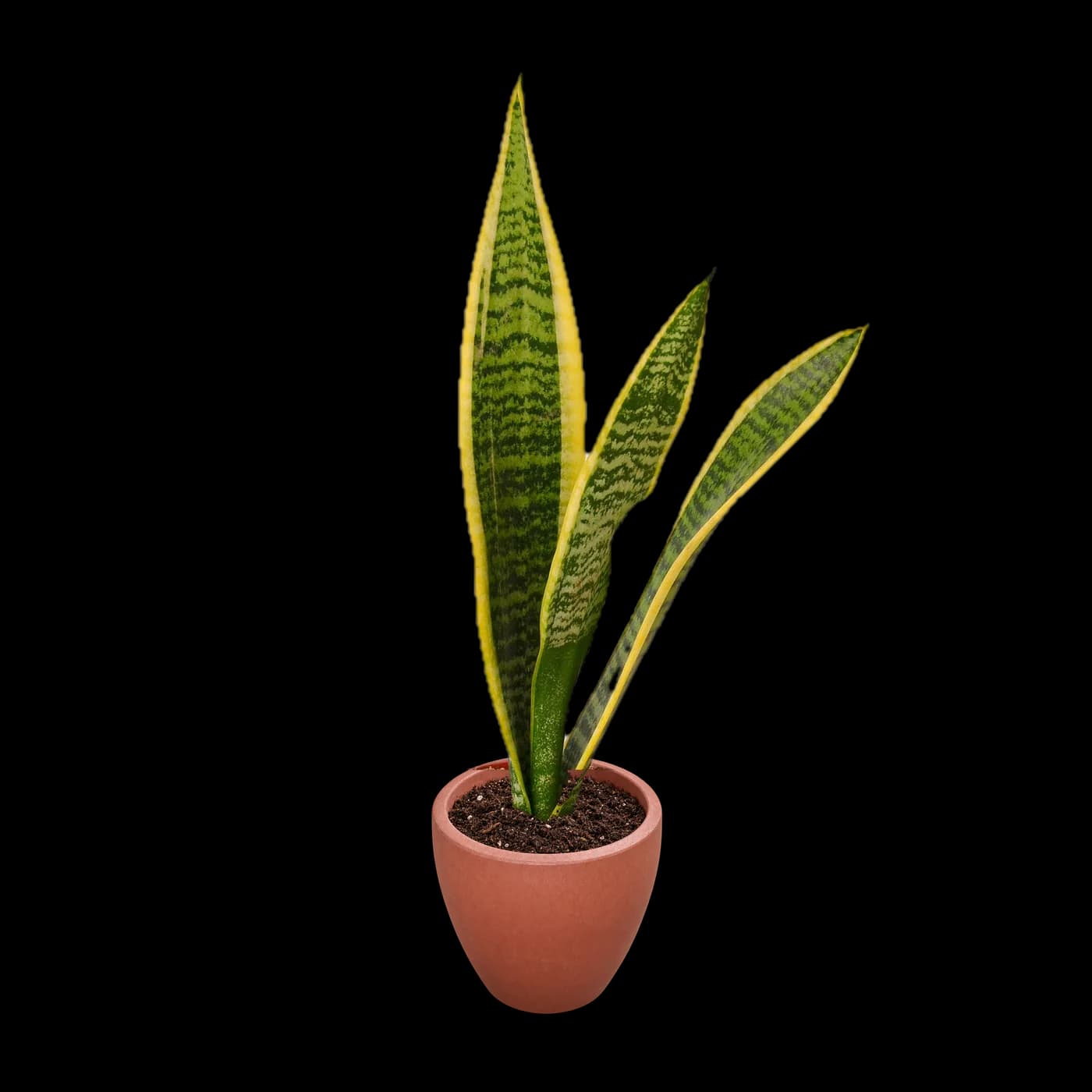
It suits an office, a dim hallway or anyone who travels. If you'd like a plant the ASPCA lists as non-toxic, look at the rattlesnake plant or the money tree instead. For another tough, upright plant that copes with low light, see the snake plant 'Laurentii', though the ASPCA lists it as toxic to cats and dogs.
Is a ZZ plant safe for cats and dogs?
It isn't on the ASPCA's plant list, so we don't call it pet safe. When we checked the ASPCA's cat and dog plant lists in November 2026, Zamioculcas zamiifolia wasn't there, under its botanical name or under common names like ZZ plant, aroid palm, eternity plant or Zanzibar gem. The ASPCA says its list isn't meant to be all-inclusive, so being left off it is no sign the plant is safe.
Other reputable sources treat it as a plant to keep away from pets. NC State Extension lists it as poisonous to cats and dogs, with medium severity: its leaves contain calcium oxalate and can cause vomiting and diarrhea if eaten in quantity. UF/IFAS Extension says all parts of the plant are toxic if ingested, and Iowa State Extension calls it poisonous to people and pets. Keep it out of reach of a chewer and away from small children.
Don't be thrown by the Zamia entries on the ASPCA list. Its name means "with leaves like Zamia," and the ASPCA lists several Zamia species, such as the cardboard palm, as toxic. Those are cycads, a different plant altogether, and their entries don't cover the ZZ plant.
If your pet chews it and seems unwell, call your veterinarian or the ASPCA Animal Poison Control Center at (888) 426-4435. A consultation fee may apply. Our guide to pet-safe houseplants covers the plants the ASPCA does list as non-toxic.
How much light does a ZZ plant need?
Bright, indirect light is best, but it gets by on very little. Iowa State, NC State and UF/IFAS all say it grows best in bright, indirect light and tolerates very low light, and Clemson says brighter light speeds up its growth. A spot a few feet from a window suits it, and it copes in a dim corner or a room lit mostly by overhead lights.
Keep it out of strong direct sun. Iowa State warns that direct afternoon sun may damage the leaves, and NC State says direct sun can scald and brown them. In a sunny room, set it back from the glass or behind a sheer curtain.
Low light slows it further. Illinois Extension notes that plants in low light grow more slowly and need less water, so in a dim room, stretch the time between waterings to match.
Watch the new growth. Illinois Extension says too little light can make plants leggy or turn them a pale greenish yellow. If new stems lean hard toward the window or come in weak and pale, move it closer to the light.
Keep it warm. Clemson says it's sensitive to cold and should stay above 60°F, and Missouri Botanical Garden and NC State both advise bringing it indoors before temperatures drop below 60°F. In winter, keep it off cold windowsills and away from drafty doors. Our guide to low-light houseplants covers more plants for dim rooms.
How often should you water a ZZ plant?
Less often than you might think. Let the potting mix dry out, then water thoroughly. Clemson says to water only after the mix has completely dried, and NC State says to let it dry out between waterings.
Sources give a wide range of timings: every 7 to 14 days from Iowa State, every week or two from UF/IFAS, every 2 to 3 weeks from Illinois Extension and 1 or 2 times a month from Clemson. NC State suggests about once a month in winter. The spread is the lesson. A ZZ in a warm, bright room dries out far faster than one in a cool, dim office, so check the soil instead of the calendar. A Small in its 4 in pot dries out sooner than a Medium.
When the mix is dry, water like this:
- Water slowly until some runs out of the drainage hole, as Iowa State suggests, so the whole root ball gets wet.
- Let it drain, then tip out whatever collects in the saucer or cover pot. UF/IFAS warns that roots left sitting in water may rot, and Clemson says the pot should drain fully before it goes back in a cover pot or on a saucer.
- Leave it until the mix is dry again. Push a finger well into the soil, and if it still feels cool or damp, wait.
If you're unsure, wait a few days. Iowa State notes that overwatering is what causes problems, and the rhizomes hold enough water to cover a late drink. Our guide to watering houseplants covers the basics for every plant.
Everyday ZZ plant care: humidity, feeding, potting mix and repotting
No extra humidity needed. Clemson says it thrives at regular indoor humidity, so skip the misting.
Feed sparingly. Clemson suggests a balanced fertilizer once or twice during the growing season, and NC State once or twice a year. A plant that grows this slowly has little use for more. Skip feeding in fall and winter.
Use a coarse, fast-draining mix when you repot. Clemson's recipe is half peat moss or coir-based potting soil, a quarter perlite and a quarter sand. NC State says it won't tolerate wet feet, so a pot with a drainage hole is a must.
Because it grows slowly, it can stay in the pot it came in for a good while. When the stems crowd the pot or the mix dries out within a few days of watering, move it in spring to a pot one size larger with a drainage hole.
Wipe the leaflets with a damp cloth now and then. Dust dulls the shine and cuts the light the leaves can use.
How to divide or propagate a ZZ plant
NC State, Missouri Botanical Garden and Iowa State all list division and leaf cuttings as ways to make more ZZ plants, and Illinois Extension calls division the best method.
To divide one, ease it out of its pot when it has filled it and gently pull or cut the rhizomes apart, keeping stems and roots with each piece. Pot each piece in the same coarse mix and water sparingly until new growth shows. Wash your hands afterward, since the plant is poisonous if eaten.
Leaf cuttings work too, and UF/IFAS says the plant is easily propagated that way. Expect to wait: Illinois Extension notes that leaf cuttings take a long time to root.
What to do when your ZZ plant arrives
Your ZZ plant comes already potted at the greenhouse in a recycled eco pot, in terracotta or black, in one box. Unpack it soon after delivery, lift it by the pot rather than the stems and take away all the packing, including any winter protection.
Feel the soil before you water. If it's dry, water slowly until some runs out of the drainage hole and tip out any extra. If it's still damp, leave it and check again in a week.
Choose its spot: somewhere warm, out of hot direct sun and away from cold drafts, ideally within a few feet of a window. It can stay in the pot it came in for a good while. If it arrives in fall or winter, hold off on feeding until spring.
Don't expect new stems right away; it grows slowly and in spurts. If it arrives damaged or declines in its first 30 days, we replace it. Delivery times are on our shipping page.
Common ZZ plant problems and how to fix them
A ZZ plant has few problems, and most of them come back to water or light:
- Yellowing leaflets with soil that stays damp, or stems that turn soft at the soil line: too much water. Clemson and UF/IFAS both warn that overwatering or roots left in water can lead to rot. Let the mix dry out completely before you water again. If stems are mushy at the base, ease the plant out of its pot, cut away soft or rotten rhizomes and roots, then repot in fresh, dry mix.
- Dark spots on the stems: normal. Clemson says black spots on the stems are nothing to worry about.
- Pale, stretched or leaning new growth: too little light. Illinois Extension links legginess and pale greenish yellow growth to low light. Move it closer to a window.
- Scorched or brown patches on the leaflets: too much direct sun, which NC State says can scald them. Pull it back from the glass.
- Small brown bumps on stems or leaflets: scale, the one pest NC State says to watch for. Dab each bump with a cotton swab dipped in rubbing alcohol and check weekly.
- No new growth for months: usually normal. NC State and Clemson both describe it as slow, and Iowa State says it grows in spurts. More light speeds it up, Clemson notes.
Every ZZ plant from our shop comes in a Small or Medium size, potted at the greenhouse in a recycled eco pot in terracotta or black, with our 30-day guarantee.
Questions
Is a ZZ plant toxic to cats and dogs?
It isn't on the ASPCA's plant list, so we don't call it pet safe or toxic by the ASPCA's measure. Other sources do call it poisonous: NC State lists it as a medium-severity problem for cats and dogs because of calcium oxalate in the leaves, and UF/IFAS says all parts are toxic if ingested. Keep it out of reach, and if your pet chews it, call your vet or the ASPCA Animal Poison Control Center at (888) 426-4435.
How often should I water a ZZ plant?
Only once the potting mix has dried out. Clemson suggests 1 or 2 times a month and NC State about once a month in winter, while Iowa State says every 7 to 14 days is usually fine. Check the soil rather than the calendar, and never leave the pot standing in water.
Can a ZZ plant live in an office with no windows?
Often, yes. NC State and Iowa State say it tolerates very low light, and Illinois Extension notes it can grow under fluorescent lighting in a room with little natural light. It will grow even more slowly there and need water less often. If the lights go off for long stretches, such as over holidays, take it home.
Why are there black spots on my ZZ plant's stems?
They're normal. Clemson Extension notes that black spots on ZZ stems are normal. Soft, mushy stems at the soil line are different and usually mean the soil has stayed too wet.
Why is my ZZ plant growing so slowly?
Because that's its nature. Clemson calls its growth very slow, and Iowa State says its growth comes in spurts. Brighter, indirect light speeds it up, Clemson says, but don't try to push it with extra water or fertilizer.
Does a ZZ plant flower?
Rarely. NC State says it seldom flowers, and when it does, Missouri Botanical Garden describes a green spathe wrapped around a creamy white spadix, the typical bloom of the arum family.
Sources
- ASPCA Animal Poison Control: Toxic and Non-Toxic Plants for Cats
- ASPCA Animal Poison Control: Toxic and Non-Toxic Plants for Dogs
- NC State Extension Plant Toolbox: Zamioculcas zamiifolia
- Missouri Botanical Garden Plant Finder: Zamioculcas zamiifolia
- Clemson Cooperative Extension HGIC 1570: ZZ Plant (Zamioculcas zamiifolia)
- UF/IFAS Gardening Solutions: ZZ Plant
- Iowa State University Extension: The ZZ Plant
- University of Illinois Extension: Brighten up dim interiors with low-light houseplants