- Guides
- Parlor Palm
Plant guide
Parlor Palm Care: How to Grow a Small Indoor Palm
A slow, compact palm that copes with dim rooms, wants water once the top of the soil is dry and never a soggy pot, and that the ASPCA lists as non-toxic to cats and dogs.
What is a parlor palm?
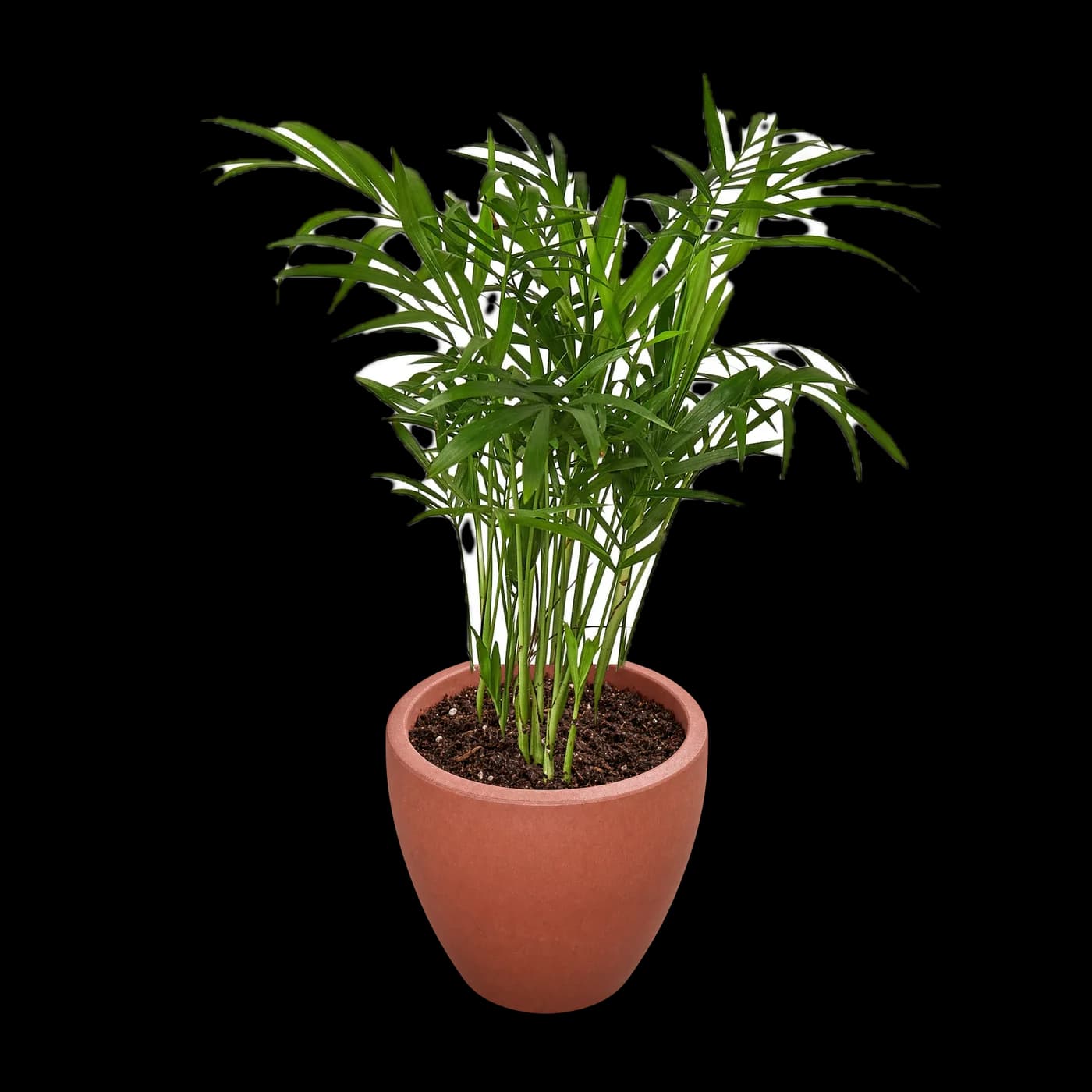
The parlor palm, Chamaedorea elegans, is a small palm with arching, feathery fronds, each split into many narrow leaflets. Missouri Botanical Garden counts 12 or more pairs of leaflets on a frond. It grows slowly and stays compact, and NC State Extension calls it one of the most sought-after indoor palms because it tolerates dry air and dim light.
In the wild it grows in the shade of larger trees. The Royal Horticultural Society (RHS) gives its range as southern Mexico to Guatemala, and NC State extends it to Honduras. It's sold under several names, including neanthe bella palm and good luck palm, and older references call it Collinia elegans or Neanthe bella.
Indoors it's patient. The RHS says most are 1 to 2 feet tall and can reach about 4 feet over time, and Missouri Botanical Garden also puts a typical houseplant at about 4 feet. Penn State Extension says it stays 2 to 3 feet as a houseplant but can reach 6 feet.
Care comes down to three habits: soft to bright indirect light, water when the top of the soil is dry and a pot that never sits in water.
Is a parlor palm a good houseplant for you?
A parlor palm gives you a soft, tropical look in very little space, and it has a few practical strengths:
- The ASPCA lists it as non-toxic to cats and dogs.
- It copes with low light. Missouri Botanical Garden says it often survives indoors with little natural light, though it grows best in bright, filtered light.
- It stays a manageable size for years. NC State rates its growth as slow and its maintenance as low.
- It fits small spaces while young. Our Small comes in a 4 in pot for a desk or shelf and our Medium in a 6 in pot for a table or sill.
It has limits. Being slow, it won't fill a corner quickly, and a small palm takes years to become a tall one. It dislikes soggy soil, hot direct sun and cold drafts, and its frond tips brown in dry air or with hard tap water. If you've seen it sold as an air-cleaning plant, read what the research says about plants and indoor air before you count on it.
It suits a home with pets and a shady room that still gets some daylight, and it makes an easy gift. Our low light houseplants guide compares the plants in our range that cope with dim rooms.
Is a parlor palm safe for cats and dogs?
Yes, according to the ASPCA. Its plant lists show the parlor palm, Chamaedorea elegans, as non-toxic to both cats and dogs. The same plant appears on the lists under several other names, including neanthe bella palm, good luck palm, dwarf palm and bamboo palm. When we checked in November 2026, it was on the ASPCA's non-toxic lists for both cats and dogs.
Non-toxic doesn't mean a pet should eat it. Chewing any plant can upset a pet's stomach, and soft fronds are easy for a cat to shred. If your pet eats some and seems unwell, call your veterinarian or the ASPCA Animal Poison Control Center at (888) 426-4435. A consultation fee may apply.
Don't go by the word palm. The sago palm, Cycas revoluta, belongs to the cycad family rather than the palm family, and the ASPCA lists it as toxic to cats, dogs and horses, with signs that range from vomiting to liver failure. The name bamboo palm is confusing too: the ASPCA uses it as another name for the parlor palm, while Missouri Botanical Garden uses it for a different, taller species, Chamaedorea seifrizii. Check every plant by its botanical name on the ASPCA list. Our guide to pet-safe houseplants covers the other plants in our range the ASPCA lists as non-toxic.
How much light does a parlor palm need?
Bright, indirect light gives the best growth, the RHS says, and it puts up with shade. NC State suggests a spot near a north- or east-facing window, and Missouri Botanical Garden says it adapts very well to the limited light in many homes and offices.
Keep it out of direct sun. The RHS warns that direct sun, especially in summer, scorches the leaves, and Missouri Botanical Garden says to protect indoor plants from full sun. If your only window faces south or west, set it several feet back or behind a sheer curtain.
Low light is fine, just slower. The RHS says partial shade slows growth, and that too little light causes yellowing and poor growth. If the fronds start to yellow in a dim corner, move it closer to a window.
How often should you water a parlor palm?
Water when the top of the soil is dry, not on a schedule. The RHS says to water when the surface of the potting mix is dry and to hold off while it's still damp. Penn State gives the same rule: keep it moist but not wet. NC State says overwatering can be a problem and suggests letting the soil dry slightly between waterings, though the palm grows more lushly in moist soil.
Push a finger into the soil to feel below the surface, as the RHS suggests, and water when the top feels dry. A Small in its 4 in pot dries out sooner than a Medium.
Water slowly until the soil is evenly moist, then tip out any water in the saucer or cover pot. Never leave it standing in water: the RHS says that can lead to root rot, and Penn State warns that excess water rots the roots.
Water less in winter, when growth slows, as the RHS and Missouri Botanical Garden both advise. Don't let the soil dry out completely, though. The RHS says too little water browns the leaf tips, and Penn State links browning all over the plant to a lack of humidity and water.
Water type matters a little. The RHS suggests room-temperature rainwater and advises against regular use of hard tap water, which is alkaline and can brown the leaves of a palm that prefers slightly acidic conditions. Clemson Cooperative Extension advises against softened water, which adds sodium and chloride to the soil. More in how to water houseplants.
Everyday parlor palm care: humidity, temperature, feeding and repotting
Humidity helps but isn't essential. The RHS says high humidity isn't needed, though dry air can brown the leaf tips, and NC State notes that it tolerates dry air. Penn State says palms appreciate high humidity and suggests a humidifier in dry winter weather. The RHS suggests misting the leaves regularly, which helps with dry air and deters spider mites.
Keep it warm and steady. The RHS puts the ideal at 68 to 80°F from spring to fall and says it tolerates cooler winters, down to around 55°F. Penn State says cold damage shows up as reddish-brown dead patches, usually at or below 45°F. Keep it away from cold drafts near windows and doors and from heating and air conditioning vents, as NC State and Penn State advise.
Feed lightly, in spring and summer only. Missouri Botanical Garden and the RHS suggest a balanced liquid fertilizer once a month in the growing season, and Missouri Botanical Garden and NC State say to stop in winter. Penn State is more cautious and suggests only two or three feedings a season, since too much can harm a palm over time.
Repot rarely. Penn State says palms are sensitive to repotting and like to be slightly root-bound, so don't change the container unless you need to; every 2 to 3 years is often enough, mainly to refresh the mix. The RHS says to repot in spring only when the roots are densely crowded, into a pot only about 1 in wider, since a much bigger pot risks root rot. Use a light, fast-draining mix; the RHS suggests 3 parts acidic potting mix to 1 part perlite. Handle the roots gently.
To make more plants, the RHS says you can divide a crowded clump by gently pulling the root ball apart into smaller pieces, each with its own stems and roots.
Stems, fronds and pruning: what's normal
A parlor palm in a pot is usually several plants. The RHS says they're often grown as a clump of single-stemmed palms in one pot, and NC State says growers often plant three or more stems together for a fuller look. Over time, NC State notes, some stems are outcompeted and die. That's normal in a crowded pot, not a sign you've done something wrong.
There's almost no pruning to do. The RHS says it needs none beyond removing old, dying fronds at the base now and then, and Missouri Botanical Garden advises against pruning except to remove a whole frond or stem. Don't trim the tops or shorten healthy fronds.
Penn State says the lowest fronds browning with age is normal, so cut those off at the base when they've died back. Dust the fronds with a damp cloth, and skip leaf-shine products, which Penn State says damage palm foliage.
Flowers are a bonus, not a given. With enough light, Missouri Botanical Garden says clusters of small yellow flowers may appear in spring. Each plant is male or female, and NC State says the round black fruit rarely forms indoors. If it does, NC State notes the fruit pulp can irritate sensitive skin.
What to do when your parlor palm arrives
Your parlor palm comes already potted at the greenhouse in a recycled eco pot, in terracotta or black, in one box. A few small steps help it settle:
- Open the box the day it arrives. Lift the plant out by its pot, not its fronds, and remove all the packing, including any winter protection.
- Feel the soil. If the top is dry, water until the soil is evenly moist and tip out any extra. If it's still damp, check again in a few days.
- Put it in its long-term spot, in bright, indirect light or gentle shade, away from direct sun, heating vents and cold drafts.
- Expect a frond or two to look creased after the trip. Leave healthy fronds alone and cut off only any that are broken, at the base.
- Leave it in its pot. Palms dislike being repotted, so it can stay where it is for a good while, and if it arrives in fall or winter it won't need feeding until spring.
If it arrives damaged or declines in its first 30 days, we replace it. Delivery times are on our shipping page.
Common parlor palm problems and how to fix them
Most parlor palm problems come back to water, light or dry air. Find the symptom:
- Brown leaf tips: dry air, hard tap water, direct sun or soil that's too wet or too dry, the RHS says. Check the soil before you water, raise the humidity and switch to rainwater if your tap water is hard. Trim the brown tips for looks; they won't turn green again.
- Brown, dry lower fronds: usually age, Penn State says. Cut them off at the base.
- Browning all over the plant: too little humidity and water, according to Penn State.
- Yellowing fronds: usually too little light, the RHS says. Move it closer to a window, out of direct sun.
- Scorched patches: too much direct sun. Pull it back from the glass or add a sheer curtain.
- Reddish-brown dead patches after a cold spell: cold damage, which Penn State says usually happens at or below 45°F. Move it away from cold glass and drafts.
- Poor growth and soggy soil: overwatering can damage the roots, the RHS warns. Let the soil dry further, tip out standing water and make sure the pot isn't much bigger than the root ball.
- Fine webbing and pale speckles, or white cottony clusters: spider mites or mealybugs, the pests NC State, Missouri Botanical Garden and Penn State all name. Penn State suggests wiping the fronds with a damp cloth or a gentle spray of water. Watch for scale too.
- One stem dying while the rest look fine: in a pot of several palms, NC State says some stems are eventually crowded out. Cut it off at the soil line.
Every parlor palm from our shop comes in a Small or Medium size, potted at the greenhouse in a recycled eco pot in terracotta or black, with our 30-day guarantee.
Questions
Is a parlor palm toxic to cats?
No. The ASPCA lists the parlor palm (Chamaedorea elegans) as non-toxic to cats and dogs. Eating any plant can still upset a pet's stomach, so call your vet or the ASPCA Animal Poison Control Center at (888) 426-4435 if you're worried. Not every palm is safe, though: the ASPCA lists the sago palm as toxic.
Why are the tips of my parlor palm turning brown?
The RHS names dry air, hard tap water, direct sun and watering that's too heavy or too light. Check the soil before each watering, keep it out of direct sun, add humidity in winter and use rainwater if your tap water is hard. Penn State adds that the oldest, lowest fronds browning now and then is just age.
How fast does a parlor palm grow?
Slowly. NC State rates its growth as slow, and the RHS says most parlor palms are 1 to 2 feet tall and reach about 4 feet over time. That makes it a good pick for a small space, but not for filling a corner quickly.
Is a parlor palm the same as a bamboo palm?
It depends who's using the name. The ASPCA lists bamboo palm as another name for the parlor palm, Chamaedorea elegans. Missouri Botanical Garden uses bamboo palm for Chamaedorea seifrizii, a taller relative that can reach 10 feet. If you're checking pet safety, go by the botanical name.
Can a parlor palm live in low light?
Yes. Missouri Botanical Garden says it often survives indoors with little natural light, and NC State says it tolerates low light. It grows best in bright, indirect light, though, and the RHS says too little light causes yellowing and poor growth.
Should I cut the brown fronds off my parlor palm?
Yes, once a frond has died back, cut it off at the base. The RHS says removing old, dying fronds is the only pruning a parlor palm needs, and Missouri Botanical Garden advises against pruning except to remove a whole frond or stem. Don't trim the tops.
Sources
- ASPCA Animal Poison Control: Parlor Palm (Chamaedorea elegans)
- ASPCA Animal Poison Control: Sago Palm (Cycas revoluta)
- ASPCA Animal Poison Control: Toxic and Non-Toxic Plants for Dogs
- NC State Extension Plant Toolbox: Chamaedorea elegans
- Royal Horticultural Society: How to grow parlour palms
- Royal Horticultural Society: Parlour palms
- Missouri Botanical Garden Plant Finder: Chamaedorea elegans
- Missouri Botanical Garden Plant Finder: Chamaedorea seifrizii (bamboo palm)
- Penn State Extension: Palms as Houseplants
- Clemson Cooperative Extension (HGIC 1459): Indoor Plants: Watering