- Guides
- Monstera Deliciosa
Plant guide
Monstera Care: How to Grow the Split-Leaf Swiss Cheese Plant
A fast-growing climber with leaves that split and fill with holes as it matures, which wants bright, indirect light, soil that dries a little between drinks and a sturdy support in time, and is toxic to cats and dogs.
What is a monstera?
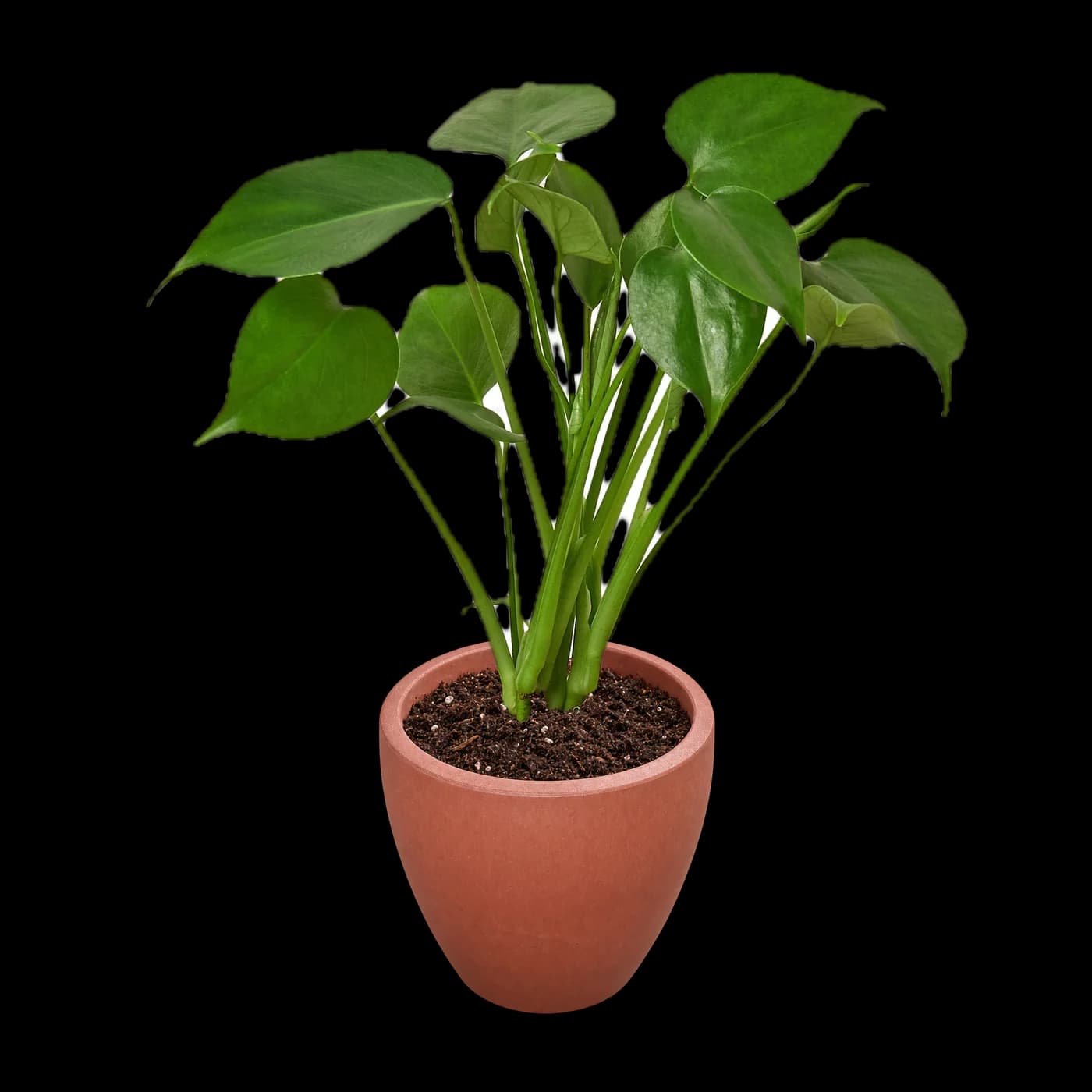
Monstera deliciosa is the plant most people picture when they hear "monstera": a climbing tropical vine with big, glossy leaves cut with deep splits and oval holes. It also goes by Swiss cheese plant, split-leaf philodendron, ceriman and Mexican breadfruit. Despite that second name, NC State Extension says it isn't actually a philodendron. Clemson Extension calls the two closely related, and the University of Wisconsin-Madison Extension notes that monstera was once placed in the genus Philodendron.
UW-Madison says it grows wild in the rainforests of Central America from southern Mexico to Panama, as an evergreen vine that climbs into the canopy and lets down long aerial roots. In the wild it can reach 70 feet. Indoors it stays far smaller: NC State says a houseplant is usually 6 to 8 feet, and it rates the growth rate as rapid.
It's in the arum family, Araceae, with golden pothos and heartleaf philodendron. Its smaller cousin, the Swiss cheese vine, shares the holey look on a much smaller scale.
Here is what it does well, and where it asks more of you:
- It grows fast in good light and fills out into a large, leafy plant over a few years. The RHS gives it its Award of Garden Merit.
- It's not fussy about pests. NC State reports no significant problems, though UW-Madison says aphids, mealybugs, scale and spider mites can turn up.
- It needs room. A young plant fits a table, but in time it wants floor space and something sturdy to climb.
- Its leaves split only with age and good light, so a young plant may show few splits or none.
- It's toxic to cats and dogs, so it isn't a good pick for a home with a pet that chews plants.
If your brightest spot is still fairly dim, our guide to low-light houseplants has plants that cope better.
Why do monstera leaves split, and when will yours?
Botanists call the splits and holes fenestrations. UW-Madison describes adult leaves as glossy, heart-shaped and leathery, with deep clefts and oblong holes. They can reach 18 inches wide on foot-long stalks. Young leaves look nothing like that. They're small, with no lobes or holes, and NC State puts it simply: only mature leaves have the holes.
No one knows for certain why monsteras evolved them. UW-Madison mentions one idea, that the holes may let strong winds pass through without tearing the leaves. It's a hypothesis, not a settled answer.
At home, two things bring on splits: age and light. Clemson Extension says new monstera leaves start small and round and develop holes and deep cuts as they mature, and that monsteras won't develop their perforations if the light is too low. UW-Madison agrees that the leaves won't form holes when the light isn't enough.
So be patient with a young plant. Our Small comes in a 4 in pot and our Medium in a 6 in pot, and plants that size may have solid leaves or only a notch or two. That's normal. Give it bright, indirect light and judge progress by the newest leaves, which should get bigger and more deeply cut as the plant matures. UW-Madison adds that a fertile mix and ample root room help it make larger leaves.
Is a monstera toxic to cats and dogs?
Yes. The ASPCA lists Monstera deliciosa as toxic to cats and dogs. Look for it there as Swiss cheese plant or cutleaf philodendron; the same entries list split-leaf philodendron, hurricane plant, ceriman, Mexican breadfruit and window leaf plant as other names. When we checked in November 2026, it was on the ASPCA's toxic lists for both cats and dogs.
Its toxic principle is insoluble calcium oxalate. The ASPCA lists the signs as oral irritation, intense burning and irritation of the mouth, tongue and lips, heavy drooling, vomiting and difficulty swallowing. NC State rates the poison severity as low and says it's mainly a problem if eaten in large quantities, but UW-Madison says every part of the plant is poisonous except ripe fruit, which a houseplant almost never produces.
The sap can bother people too. NC State says skin contact with the sap may cause irritation, and the RHS lists it as harmful if eaten and a skin and eye irritant. Wear gloves when you prune or take cuttings, and keep it out of reach of small children. If a child chews a leaf, call your pediatrician or your local poison control center.
With a cat or dog that chews plants, choose a spot well out of reach, and remember that cats can get to most shelves. If you'd rather not worry, our red prayer plant and rattlesnake plant are on the ASPCA's non-toxic list, and our guide to pet-safe houseplants covers the rest. If your pet chews a monstera, call your vet or the ASPCA Animal Poison Control Center at (888) 426-4435. A consultation fee may apply.
How much light does a monstera need?
Bright, indirect light. NC State says it prefers moderate brightness but not direct sunlight, and suits dappled light or partial shade. The RHS also recommends bright, indirect light. A spot near an east-facing window, or a few feet back from a south- or west-facing one, works well.
Keep it out of strong midday and afternoon sun, which can scorch the leaves. UW-Madison notes that a plant moved suddenly into much brighter light needs time to adjust, or its leaves can sunburn. In winter, when the sun is weaker, UW-Madison says it can take direct sun, so moving it a little closer to the window for the darker months is fine as long as the leaves don't touch cold glass.
Light is what brings on the splits. A monstera in a dim corner survives, but it grows slowly and keeps putting out plain leaves. Turn the pot a quarter turn every few weeks so it doesn't lean toward the window.
Keep it warm. NC State puts its comfortable range at 60 to 85°F, and UW-Madison says it stops growing below 50°F. Keep it away from cold drafts and heating or air conditioning vents.
How often should you water a monstera?
Water thoroughly, then let the top of the soil dry before you water again. NC State's advice is to let the top quarter to third of the soil dry between waterings, and UW-Madison likewise says to let the mix dry slightly. In our pots that works out to about the top inch in a Small and about 1.5 inches in a Medium.
Check by touch rather than by the calendar. Clemson Extension suggests pushing a finger into the mix up to the first joint. When it's time, water slowly until water runs out of the drainage hole, then let the pot drain and tip out anything left in the saucer or cover pot. Clemson recommends water between 62 and 72°F and says to skip softened water, which adds sodium to the soil.
Too much water is the more common mistake. UW-Madison says the leaves can "sweat" droplets when the mix stays too wet, a sign to water less before root rot sets in. A plant kept a little on the dry side simply grows more slowly.
Water less in fall and winter. The RHS says to water while it's growing and keep it just moist in winter, and UW-Madison also suggests watering less in winter. If you add a moss pole, UW-Madison suggests wetting the moss as well, so the aerial roots can take up water. Our guide to watering houseplants covers the basics.
Does a monstera need a moss pole?
Not at first, but it will in time. Monstera deliciosa is a climber: NC State says it starts out on the ground in the wild and climbs once it reaches a sturdy tree, and the RHS notes that it climbs by aerial roots. Indoors, NC State warns that sturdy support is needed to keep the stems from breaking, and UW-Madison says the same of vigorous plants.
A young Small or Medium can stand on its own for a while. Once the stems start to lean or sprawl, add a support. UW-Madison suggests tree bark or a strong, moss-covered support set in the pot, which gives the aerial roots something to grip. Push it in close to the main stem, ideally when you repot so you disturb the roots least, and tie the stems to it loosely with soft plant ties.
Aerial roots are the thick, cord-like roots that grow out from the stems. UW-Madison describes them as long and tentacle-like, says they cling to trees in the wild and notes they will root if they reach the ground. On a moss pole they can take up water, so guide them onto the pole or tuck them into the soil rather than cutting them off.
Everyday monstera care: humidity, feeding, pruning and repotting
It likes humid air. NC State says it prefers high humidity and suggests a humidifier or a tray of wet pebbles, while UW-Madison says medium to high humidity suits it and that it's fairly tolerant once it settles in. Brown leaf edges are the sign the air is too dry, UW-Madison says. If you use a pebble tray, keep the water below the tops of the pebbles so the pot never sits in it.
Feed from spring through fall. UW-Madison recommends fertilizing regularly in that season, and the RHS suggests a balanced liquid fertilizer once a month while it's growing. Dilute it as the label directs and stop in winter.
Wipe the big leaves with a damp cloth now and then. NC State and UW-Madison both suggest dusting them regularly.
Prune in spring, which NC State suggests for both pruning and repotting. Cut a stem that's grown too long just above a node, the point where a leaf joins the stem, and wear gloves for the sap. A cut tip can become a new plant: UW-Madison suggests cutting just below an aerial root and potting the cutting.
It arrives potted, so there's nothing to repot this year. UW-Madison notes that monsteras in containers need frequent repotting and grow larger leaves with ample root room. When roots fill the pot, move it up one size in spring into a pot with a drainage hole. NC State suggests a loam rich in organic matter that drains well, and the RHS a peat-free, loam-based potting mix. Our care notes cover the routine every Patina plant shares.
What to do when your monstera arrives
Your monstera is potted at the greenhouse in a recycled eco pot, in terracotta or black, and travels in one box, ready to set down. Delivery times are on our shipping page. Open the box the day it comes. For the first week:
- Lift it out by the pot, not the stems, and remove all the packing, including any winter protection added for a cold-weather trip.
- Set it in bright, indirect light away from cold drafts and heating vents, and leave it there while it settles.
- Feel the soil. If the top inch is dry, water slowly until it drains and tip out the saucer. If it's still damp, check again in a few days.
- A creased or yellowed leaf after the trip is normal. Cut it off at the base of its stalk, wearing gloves.
- Leave it in its pot through its first growing season, and if it arrives in fall or winter, hold off on feeding until spring.
If it arrives damaged or declines in its first 30 days, we'll replace it.
Common monstera problems and how to fix them
Most monstera problems come back to light, water or dry air. Find the symptom:
- New leaves with no splits or holes: the plant is young, the light is too low or both. Clemson and UW-Madison both link missing holes to low light. Move it somewhere brighter, out of harsh direct sun, and give it time.
- Droplets on the leaves and soil that stays wet: too much water. UW-Madison says the leaves sweat when the mix stays too wet. Let the top of the soil dry before watering again, and never leave the pot standing in water.
- Wilting with wet soil, mushy stems or a sour smell: root rot from soil that stays soggy. Let the soil dry, trim off soft brown roots and repot in fresh, well-drained mix.
- Brown, crispy leaf edges: dry air, according to UW-Madison. Add humidity and move it away from heating vents.
- Pale or scorched patches: too much direct sun, or a sudden move into much brighter light. Pull it back from the window or add a sheer curtain.
- Leaning, floppy stems: it's ready for support. Add a moss pole or stake and tie the stems in loosely.
- Sticky leaves, white fluff, brown bumps or fine webbing: pests. UW-Madison lists aphids, mealybugs, scale insects and spider mites, and NC State flags fern scale. Wipe the leaves with a damp cloth, keep the plant apart from your others and check weekly. Insecticidal soap helps if they come back.
Our monstera comes in a Small or Medium size, potted at the greenhouse in a recycled eco pot in terracotta or black, with our 30-day guarantee.
Questions
Is a monstera toxic to cats?
Yes. The ASPCA lists Monstera deliciosa, filed as Swiss cheese plant and cutleaf philodendron, as toxic to cats and dogs. Its insoluble calcium oxalate crystals can cause burning and irritation of the mouth, heavy drooling, vomiting and difficulty swallowing. Keep it out of reach, and call your vet or the ASPCA Animal Poison Control Center at (888) 426-4435 if your pet chews it.
Why doesn't my monstera have split leaves?
Usually because it's young, short on light or both. NC State says only mature leaves have holes, and Clemson Extension says monsteras won't develop them if the light is too low. Give it bright, indirect light and watch the newest leaves. They should get bigger and more deeply cut as the plant matures.
Is a monstera a philodendron?
No, though it's often sold as split-leaf philodendron. NC State says it isn't actually a philodendron, and Clemson calls the two closely related. Both are in the arum family, Araceae, and UW-Madison notes that monstera was once placed in the genus Philodendron.
What is the difference between Monstera deliciosa and Monstera adansonii?
Size and leaf shape. Monstera deliciosa is the big one, usually 6 to 8 feet indoors according to NC State, with large leaves that develop deep cuts as well as holes. Monstera adansonii is a smaller vine with heart-shaped leaves and oval holes between the veins. The ASPCA lists M. deliciosa as toxic to cats and dogs, and M. adansonii isn't on its list. Our Swiss cheese vine guide covers the smaller plant.
Can you eat monstera fruit?
Only when it's fully ripe, and a houseplant almost never fruits. NC State says monsteras rarely flower or fruit indoors and that only ripe fruit is edible, with a taste like banana and pineapple. UW-Madison says the fruit takes a little over a year to ripen and that unripe fruit contains calcium oxalate crystals that cause painful throat irritation. NC State also notes that some people are allergic.
Sources
- ASPCA Animal Poison Control: Swiss Cheese Plant (Monstera deliciosa)
- ASPCA Animal Poison Control: Cutleaf Philodendron (Monstera deliciosa)
- NC State Extension Plant Toolbox: Monstera deliciosa
- University of Wisconsin-Madison Extension, Wisconsin Horticulture: Swiss-Cheese Plant, Monstera deliciosa
- RHS Plants: Monstera deliciosa
- Clemson Cooperative Extension HGIC 1509: Philodendron (with pothos and monstera)
- Clemson Cooperative Extension (HGIC 1459): Indoor Plants: Watering