- Guides
- Lemon Lime Prayer Plant
Plant guide
Lemon Lime Prayer Plant Care: How to Grow Maranta 'Lemon Lime'
A low, spreading maranta with a lime-green center and yellow-green stripes on dark leaves that fold up every evening, that wants evenly moist soil, humid air and no direct sun, and that the ASPCA lists as non-toxic to cats and dogs.
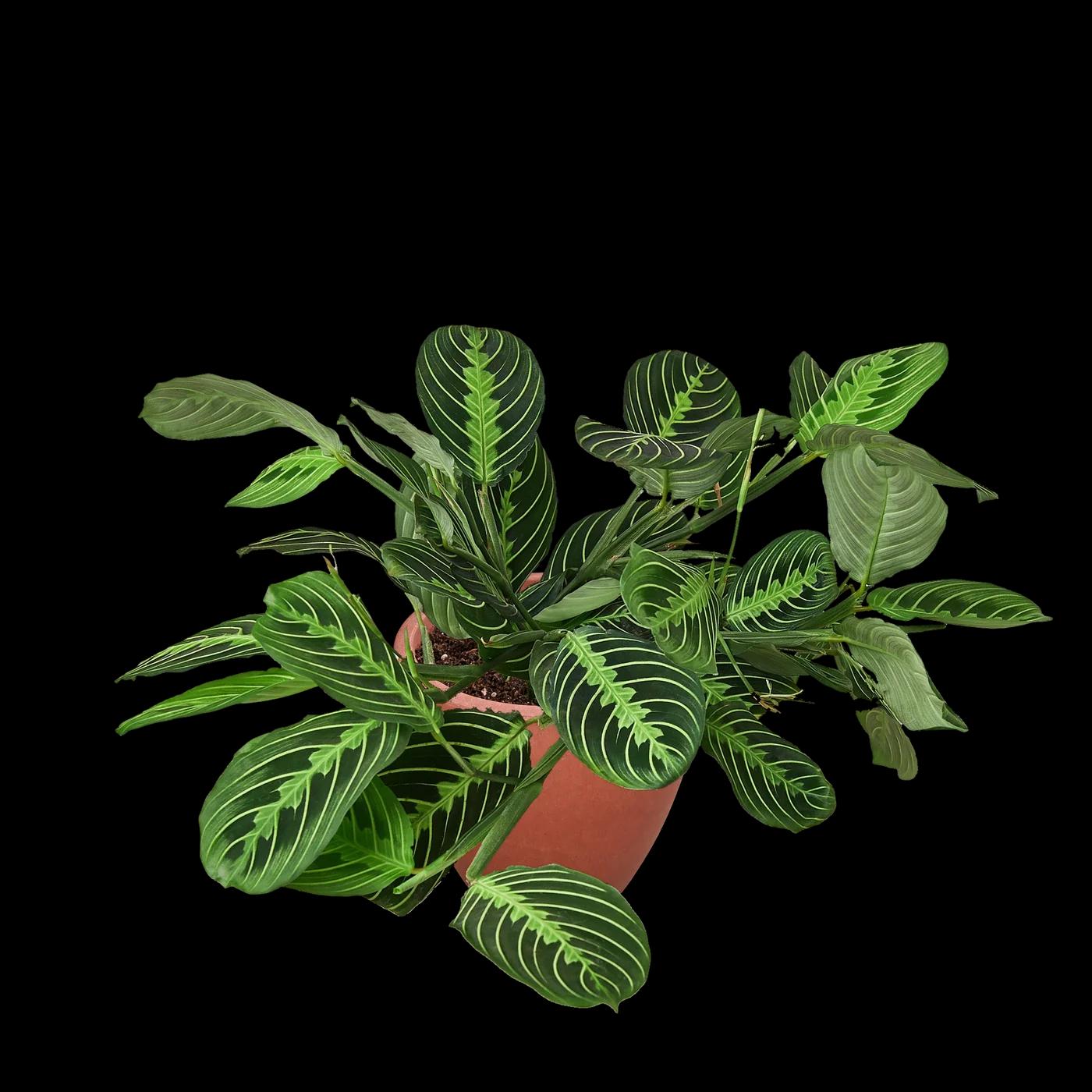
What is a lemon lime prayer plant?
The lemon lime prayer plant is a low, spreading houseplant grown for its leaves. NC State Extension lists it as a cultivar of the prayer plant, Maranta leuconeura, under the names 'Lemon' or Lemon Lime Prayer Plant, and describes a dark green leaf with a yellowish-green center and striping. Every evening the leaves lift and fold together, which is where the name prayer plant comes from.
It's the same species as our red prayer plant, so it grows the same way and wants the same care; the difference is the color of the markings. The Royal Horticultural Society (RHS) files it as Maranta leuconeura var. erythroneura 'Lemon Lime', under the red-veined variety, but marks that name as unresolved and gives no care details for the cultivar. No university or botanical garden we found publishes a care sheet for 'Lemon Lime' itself, so the advice in this guide is for the species, which is how its sources write about it.
NC State and Missouri Botanical Garden give the species' home as Brazil. It belongs to the arrowroot family, Marantaceae, which also holds the calatheas, such as our rattlesnake plant. NC State puts its size at 6 to 12 in tall and 6 in to 2 feet wide, and Missouri Botanical Garden says it typically grows 12 to 15 in tall and as wide. It grows from rhizomes and spreads sideways rather than up, so it suits a shelf, a low table or a hanging basket.
What it does well, and where it asks more of you:
- The striped leaves are the draw, and they move through the day, rising and folding at night.
- The ASPCA lists prayer plants as non-toxic to cats and dogs, with a naming caveat we explain below.
- It doesn't need sun. NC State says it tolerates low to medium light, and that too much sun bleaches the leaf colors.
- It stays small enough for a desk or shelf. Our Small comes in a 4 in pot and our Medium in a 6 in pot.
- It's fussier than a pothos about water and air. NC State says it requires high humidity, and the New York Botanical Garden (NYBG) links brown leaf tips and edges to soil that isn't kept moist enough or air that's too dry.
If you've never kept a houseplant, one of our easy houseplants for beginners is a gentler start. If a small routine of checking the soil and the air appeals to you, this one repays it.
Why do prayer plant leaves fold up at night?
Prayer plants move their leaves on a daily rhythm. NC State describes it this way: by day the leaves are held flat, parallel to the ground, and at night they move to an upright "prayer" position. It calls this sleep movement. NYBG says the common name comes from this habit of raising and folding the leaves at night.
Watch for it in the evening. As the leaves lift, their undersides show, and by morning they're back down and open to the light.
It's normal and healthy, not a sign of a problem. Leaves that curl, or whose tips and edges turn brown, are a different matter. NYBG links browning, curling and falling leaves to soil that needs to stay more consistently moist or air that needs more humidity.
Is a lemon lime prayer plant safe for cats and dogs?
The ASPCA lists the prayer plant as non-toxic to cats, dogs and horses. Its Prayer Plant entry gives Maranta among its other names, and separate entries titled Maranta and Red Veined Prayer say the same. When we checked in November 2026, all three were on the ASPCA's non-toxic lists for cats and dogs, and none of its Maranta or prayer plant entries was on its toxic lists.
The caveat is the same as for our red prayer plant. All three entries give the scientific name as Calathea insignis, which is the botanical name of the rattlesnake plant, not Maranta leuconeura, and the ASPCA's lists have no entry under Maranta leuconeura or 'Lemon Lime'. The entries' common names match this plant, and we follow them. The rattlesnake plant, a close relative, is non-toxic on the same lists, and NC State's page for Maranta leuconeura gives no poison rating.
Non-toxic doesn't mean it's meant to be eaten. Eating any plant can still upset a pet's stomach, so keep it away from a determined chewer. If your pet eats some and seems unwell, call your vet or the ASPCA Animal Poison Control Center at (888) 426-4435. A consultation fee may apply.
Check each plant's listing rather than assuming a whole shelf is safe. The monstera, for example, is on the ASPCA's toxic list for cats and dogs. Our guide to pet-safe houseplants covers the plants we carry that the ASPCA lists as non-toxic.
How much light does a lemon lime prayer plant need?
Soft, indirect light. NC State recommends bright, indirect light indoors and says it tolerates low to medium light. NYBG suggests partial shade, such as a shady window or a spot shielded from the strongest light by a sheer curtain, and the RHS rates the species for partial or full shade. A spot a few feet back from a bright window works well.
Keep it out of direct sun. NC State calls it intolerant of direct sunlight and says too much sun bleaches the leaf colors, and Missouri Botanical Garden gives the same warning. Too little light dulls it as well: NC State notes that the leaves lose color in low light and when the plant is underfed.
If your whole home runs dark, our low light houseplants guide compares the plants that cope best.
How often should you water a lemon lime prayer plant?
Keep the soil evenly moist through spring and summer, never soggy and never bone dry. NC State says to keep the potting soil evenly moist throughout the growing season, NYBG says to keep it thoroughly moist from March through September, and UF/IFAS Extension in Nassau County puts it as evenly moist, but not wet. In practice, feel the soil every couple of days and water when the surface just starts to feel dry. A Small in its 4 in pot dries out faster than a Medium.
When it's time, water like this:
- Pour slowly onto the soil around the base, not into the center of the clump. UF/IFAS Extension in Nassau County warns that water left standing on the crowns rots the stems, and says to water at the root area only.
- Keep going until the whole root ball is moist, then let the extra drain away.
- Tip out the saucer or cover pot after about 15 minutes, as NYBG suggests. NC State lists root rot as a problem in poorly drained soil.
- Use tepid water. NYBG recommends it, and Clemson suggests water between 62 and 72°F.
Ease off in fall and winter. NC State says to hold back so the soil can dry out in the winter months, and NYBG suggests letting the top inch of mix dry between waterings then. The RHS says to keep it just moist in winter, so don't let it dry out completely.
Water quality matters more here than with most plants. NC State says the leaves burn with high fluoride, and NYBG advises against hard water, which leaves mineral deposits on the leaves. If your tap water is hard or fluoridated, rainwater or distilled water is the safer choice. Skip softened water too, which Clemson Extension says adds sodium and chloride to the soil. Our guide to watering houseplants covers the basics for every plant.
Humidity and warmth: what a prayer plant needs most
Humid air is the part most homes have to add. NC State says it requires high humidity and suggests a humidified room or a pot standing on a tray of wet pebbles, and Missouri Botanical Garden suggests the same. NYBG goes further: it suggests keeping humidity well above 50 percent, checked with a hygrometer, and warns that a pebble tray or daily misting may not be enough in winter.
The surest fix in a dry home is a humidifier nearby. NYBG also suggests a terrarium, which suits a Small. If you use a pebble tray, keep the water below the tops of the pebbles so the pot never sits in it.
Keep it warm and steady. NYBG puts the ideal at 65 to 70°F, says it should always stay above 55°F and warns against sudden changes. It also notes that once a room is warmer than the low 60s, the plant needs more humidity. Missouri Botanical Garden says it prefers temperatures that don't dip below 60°F, and NC State says it dislikes cold and cold drafts, so keep it away from heating and air conditioning vents, drafty doors and cold window glass in winter.
Lemon lime prayer plant care: feeding, trimming, repotting and dividing
Feed it while it's growing. The RHS suggests a balanced liquid fertilizer once a month, and NYBG a standard liquid fertilizer every two weeks from March through September. Either way, dilute it as the label directs, and cut back sharply from fall to late winter, as Missouri Botanical Garden suggests. More isn't better: NC State says the leaves burn with over-fertilization.
Trimming is optional. The RHS says no pruning is required, but UF/IFAS Extension in Nassau County says it responds to being trimmed at least twice a year, unless you'd like it to trail from a hanging pot. Cut yellow or brown leaves off at the base of the stalk with clean scissors.
Repot in spring, and only when it needs it. NYBG suggests repotting every one or two years in spring, in a soil-based mix with some added peat and sharp sand, and says the pot must have a drainage hole. UF/IFAS Extension notes that its roots are shallow, so a shallow pot suits it, and suggests repotting only once the plant has outgrown its container.
Spring is also the time to make more plants. The RHS recommends division in spring, and NC State and UF/IFAS Extension both propagate it by dividing the roots: ease the clump out of its pot and separate it into pieces that each have roots and a few leaves, then pot them up on their own. Missouri Botanical Garden adds that it can be grown from cuttings too.
Wipe dust off the leaves with a damp cloth now and then. Our care notes cover the routine every Patina plant shares.
What to do when your lemon lime prayer plant arrives
It arrives already potted at the greenhouse in a recycled eco pot, in terracotta or charcoal, or in its plain nursery pot, so there's nothing to assemble. A few small steps in the first week help it settle:
- Open the box the day it arrives. Lift the plant out by its pot rather than its leaves, and remove all the packing, including any winter protection added for a cold-weather trip.
- Feel the soil. If the surface is dry, water at the base until it's moist right through and tip out the extra. If it's still damp, check again in a day or two.
- Put it straight into its long-term spot, out of direct sun and away from vents, drafts and cold glass. It dislikes sudden changes, so try not to move it around while it settles.
- Give it a few days. After time in a dark box, some leaves may be folded, curled or creased. Cut off any leaf that's torn or badly bent at the base of its stalk.
- It may come with a few small white flowers on thin stalks. That's normal: leave them, or snip the stalks off as they fade.
- Leave it in its pot through its first growing season, and if it arrives in fall or winter, hold off on feeding until spring.
If it arrives damaged or declines in its first 30 days, we'll replace it. Our shipping page explains delivery times and the guarantee.
Lemon lime prayer plant problems and how to fix them
Most prayer plant problems come back to water, dry air or light. Find the symptom:
- Brown tips and edges, curling or dropping leaves: NYBG says these usually mean the soil needs to stay more consistently moist or the air needs more humidity. Check both. Damaged edges won't turn green again, so judge progress by the next new leaf.
- Burned edges even with good watering and humid air: fluoride, hard water or too much fertilizer. NC State says the leaves burn with high fluoride and with over-fertilization. Switch to rainwater or distilled water and feed less.
- Faded, washed-out stripes: too much sun, which NC State says bleaches the leaves. Move it back from the window. Dull color in a dim spot can mean too little light or too little food.
- Limp stems and soil that stays wet: rot. NC State and Missouri Botanical Garden both warn of root rot in poorly drained soil, and UF/IFAS Extension says water standing on the crowns rots the stems. Let the surface dry, water the soil only and make sure the pot never stands in water. If it doesn't recover, repot into fresh, well-drained mix.
- Fine webbing and pale speckles: spider mites, which NC State, Missouri Botanical Garden and the RHS all list. Rinse the leaves, raise the humidity and use insecticidal soap if they return.
- White, cottony clusters where leaves meet stems: mealybugs, also on NC State's and Missouri Botanical Garden's lists. Wipe them off and keep checking. Missouri Botanical Garden adds thrips, and the RHS whitefly, to the pests to watch for.
You can get a lemon lime prayer plant in Small or Medium, potted in terracotta or charcoal, or in its plain nursery pot for $6 less, covered by our 30-day guarantee.
Questions
Is a lemon lime prayer plant safe for cats?
The ASPCA lists the prayer plant as non-toxic to cats, dogs and horses, under the names Prayer Plant, Maranta and Red Veined Prayer. Those entries give the scientific name as Calathea insignis rather than Maranta leuconeura, and none names 'Lemon Lime', so we flag the mix-up, but their common names cover this plant, the same species as our red prayer plant. Eating any plant can still upset a pet's stomach, so keep it away from a determined chewer.
Is a lemon lime prayer plant the same as a red prayer plant?
They're the same species, Maranta leuconeura, with different markings. NC State lists 'Lemon' or Lemon Lime Prayer Plant as a cultivar of the species, and the RHS files it under the red-veined variety, var. erythroneura. Their care is the same, and our red prayer plant guide covers the red-veined one.
Why do prayer plant leaves fold up at night?
It's normal. NC State says the leaves lie flat by day and rise to an upright "prayer" position at night, a habit it calls sleep movement, and NYBG says that's where the common name comes from. Leaves that curl or brown at the edges are a different matter, and usually mean the plant wants more consistent moisture or more humidity.
Can I use tap water for a lemon lime prayer plant?
If your tap water is soft and low in fluoride, yes. NC State says the leaves burn with high fluoride, and NYBG advises against hard water, which leaves mineral deposits on the leaves. If you're not sure about your water, rainwater or distilled water is the safer everyday choice. Avoid softened water, which Clemson Extension says adds sodium and chloride to the soil.
Does a lemon lime prayer plant flower?
Sometimes, but rarely indoors. NC State says it blooms under ideal conditions, with flowers it calls small and insignificant, and Missouri Botanical Garden describes white, two-lipped flowers with purple spots on slender spikes that seldom appear on houseplants. A plant may arrive with a few small white flowers on thin stalks. The leaves are the main event.
Can I grow a lemon lime prayer plant in a hanging pot?
Yes. It spreads sideways rather than up, and NC State says it's commonly used indoors in hanging baskets. UF/IFAS Extension in Nassau County suggests trimming it at least twice a year unless you want it to hang, so in a hanging pot you can let it spill over the edge.
Sources
- ASPCA Animal Poison Control: Prayer Plant (Maranta; listed as Calathea insignis)
- ASPCA Animal Poison Control: Maranta (listed as Calathea insignis)
- ASPCA Animal Poison Control: Red Veined Prayer (Maranta, Prayer Plant; listed as Calathea insignis)
- NC State Extension Plant Toolbox: Maranta leuconeura (cultivar 'Lemon' or Lemon Lime Prayer Plant)
- RHS Plants: Maranta leuconeura var. erythroneura 'Lemon Lime'
- RHS Plants: Maranta leuconeura var. erythroneura
- Missouri Botanical Garden Plant Finder: Maranta leuconeura var. erythroneura
- New York Botanical Garden: Prayer Plant (Maranta leuconeura) Research Guide
- UF/IFAS Extension Nassau County: Q: What is a prayer plant?
- Clemson Cooperative Extension (HGIC 1459): Indoor Plants: Watering


